The strongest Shopify dropshipping store examples in 2026 make one promise clear, prove the product in seconds, and set believable delivery expectations. Use the ten stores below as a practical swipe file for niche selection, product pages, creative angles, trust signals, and fulfillment planning. Shopify’s own Help Center describes dropshipping as selling products while a third party ships orders, and Shopify reported merchants cleared $100.7 billion in Q1 2026 GMV, so the platform is big enough for new stores but crowded enough to punish lazy supplier-page clones.
Quick answer: This page is the examples page for Shopify store inspiration, separate from the how-to setup guide.
Related USAdrop resources: Shopify dropshipping overview, and Shopify setup guide.
Shopify Store Examples
Strong Shopify dropshipping store examples in 2026 include Meowingtons, Notebook Therapy, Warmly, Pillow Slides, Cloudsharks, BlendJet, Inspire Uplift, Aesthentials, Mooshe Socks, and BlueCrate. Study their positioning, page structure, creative testing, trust signals, and delivery promises before copying their products.
A quick caveat: private supplier contracts aren’t public. Some of these brands started with classic dropshipping, some moved into bulk inventory or custom product lines, and a few are better studied as “dropshipping that grew up.” That matters. The goal isn’t to copy a SKU. The goal is to see how a thin product idea becomes a brand people trust with a credit card.
| Store | Niche | What to study | Watch-out |
|---|---|---|---|
| Meowingtons | Cat products | Community-first niche branding | Humor can’t hide weak products |
| Notebook Therapy | Stationery | Aesthetic collections and content | Generic stationery feels cheap fast |
| Warmly | Home decor | High-ticket product presentation | Bulky items need strong logistics |
| Pillow Slides | Comfort footwear | One-product positioning | Easy to copy, easy to underprice |
| Cloudsharks | Novelty slides | Visual product hook | Trend fatigue hits hard |
| BlendJet | Portable blender | Hero-product brand building | Quality control gets serious |
| Inspire Uplift | Viral gifts | General-store merchandising | Operations become messy |
| Aesthentials | Youth fashion | Identity-led product curation | Sizing and returns can eat margin |
| Mooshe Socks | Socks | Bundles and subscriptions | Low AOV needs repeat orders |
| BlueCrate | Personalized gifts | Funny gifting angles | Paid ads need constant testing |
Meowingtons is the cleanest niche lesson in the group. A cat-themed store can look silly from the outside, but cat owners buy identity products: mugs, apparel, home goods, accessories, and gifts that say “yes, I’m that person.” The store works because the niche is narrow enough to make every product feel related. A beginner mistake is selling pet beds, dog leashes, aquarium lights, and cat earrings under one “pet supplies” logo. Meowingtons shows the stronger route: own one emotional buyer group.
Notebook Therapy is useful because stationery is brutally easy to commoditize. A plain dotted journal is a plain dotted journal until the brand wraps it in a specific mood: East Asian-inspired design, soft photography, themed collections, and journaling rituals. The lesson is product development, even if you start with supplier products. Your store needs a collection logic. “Pink journal, blue journal, black pen” won’t carry you. “Tsuki bullet journal setup for spring planning” has a buyer scene built in.
Warmly sits in the high-ticket lane. Lighting, chairs, tables, and home decor need bigger trust signals than $19 accessories. The product page has to answer room scale, material, dimensions, shipping expectations, and return friction before the customer starts imagining a damaged box at their door. This style works better for founders who can write detailed specs and source suppliers carefully. It’s rough for impulse-only sellers.
Pillow Slides is a classic one-product example. The product promise is simple: your feet hurt, these feel softer. That kind of offer is easy to explain in a TikTok ad, a homepage hero, and a product title. The danger is sameness. Once a comfort product goes viral, twenty lookalikes show up with the same foam sole, same walking-on-clouds line, and same supplier images. The winner is usually the store that improves the offer: better sizing, clearer shipping, stronger reviews, and packaging that doesn’t scream “random parcel.”
Cloudsharks proves that novelty can sell when the product reads in one second. Shark-shaped slides don’t need a long explanation. You see them, you get the joke, you decide if they’re gift-worthy. This is why visual products perform well on short-form video. The product itself does the first five seconds of the ad. The downside is shelf life. Novelty products often spike, flatten, and need a second winner quickly.
BlendJet is worth studying as a grown-up version of the one-product path. Portable blenders are demo-friendly: fruit goes in, smoothie comes out, someone drinks it at a gym, desk, car, or beach. Simple. But the lesson gets sharper as volume rises. Any product with blades, batteries, heat, food contact, or skin contact needs more supplier checks than a phone case. Scaling a physical product turns product quality from a nice bonus into the whole business.
Inspire Uplift is the general-store case. General stores can still work, but only when the merchandising is tight. The homepage needs clear categories, a search path, a gift logic, and a reason to browse. “Trending products” alone is thin. A general store also needs stronger customer service because every category adds new questions: sizing for apparel, voltage for gadgets, materials for kitchen items, safety for toys.
Aesthentials shows how fashion dropshipping rises or falls on identity. The product is clothing, but the customer buys a look: cute streetwear, K-pop-adjacent styling, school-inspired outfits, accessories, and photography that helps the buyer picture the whole fit. This model needs original visuals more than almost any category. Supplier flat-lays won’t cut it.
Mooshe Socks is small-product discipline. Socks are low-risk, easy to ship, and giftable, but the average order value can be painful if you sell one pair at a time. Bundles, subscriptions, and “buy more, save more” offers matter here. A sock store that sells four pairs per order has a different business than a sock store paying ads to sell one $9.99 pair.
BlueCrate belongs in the gifting bucket. Personalized mugs, funny prints, gag gifts, and custom messages sell because the buyer has a recipient in mind. The store doesn’t need to convince someone they need a product for themselves; it needs to help them find the right laugh for a dad, friend, partner, coworker, or pet owner. The hidden work is creative testing. A joke that wins in March may feel stale by June.
Product Page Patterns
Most weak dropshipping pages fail before the customer reaches the cart. You click a product from an ad. The headline is vague. The first image looks like it came straight from a supplier feed. Shipping says “7-20 business days.” Reviews have no photos. You leave. Nobody needed a heatmap to explain that bounce.
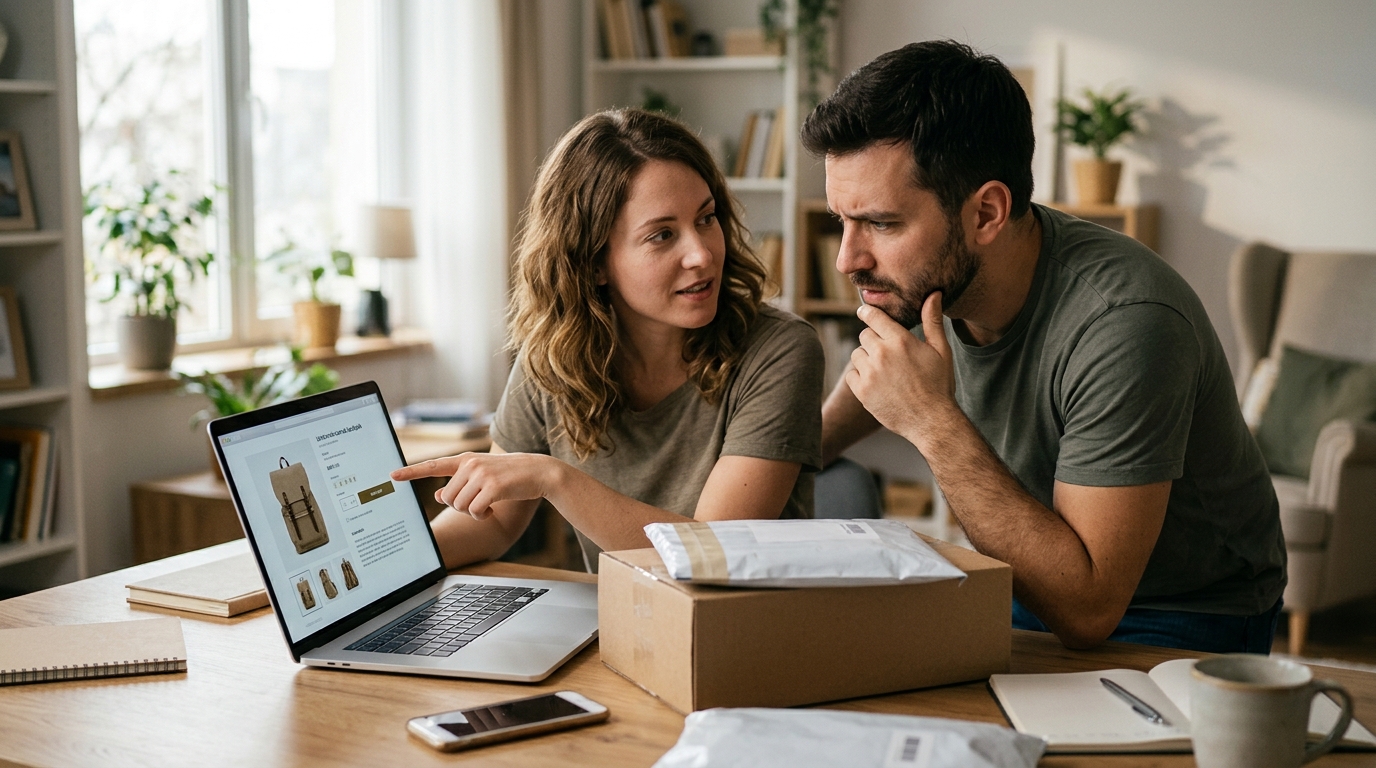
The best product pages in the examples above do a few visible things well. They make the buyer understand the product in one glance, then remove the next objection before it becomes a reason to leave. For a one-product footwear store, that means comfort, sizing, colors, returns, and delivery. For home decor, it means dimensions, materials, real-room photos, and damage policy. For stationery, it means paper weight, page count, binding, pen bleed, and collection theme.
Use this product-page build order before you install another pop-up app:
| Page element | What it must answer |
|---|---|
| Product title | Who is this for and why now? |
| First image | Can the buyer understand the product instantly? |
| Benefit section | What problem disappears after purchase? |
| Detail photos | What does the customer get in the box? |
| Size or spec guide | Will it fit the buyer’s body, room, desk, pet, or routine? |
| Shipping block | When will it arrive, and from where? |
| Reviews | Do real buyers confirm the main claim? |
| FAQ | What would make a cautious buyer hesitate? |
This is where beginners overbuild. They add countdown timers, spinning discount wheels, sticky bars, and trust badges before fixing the product explanation. Trust doesn’t come from a badge alone. Trust comes from a page that behaves like the seller has handled this order hundreds of times already.
One practical test: read your product page out loud as if a customer just asked, “Why should I buy this from you?” If the answer sounds like “premium quality, best price, fast shipping,” rewrite it. If the answer sounds like “these shark slides are a $29 gag gift that ships from a U.S. warehouse, comes in men’s and women’s sizing, and has a 30-day return window,” you’re closer.
Traffic Channels
A store’s traffic channel should match the product’s buying behavior. Warmly-style home decor fits Pinterest, Google, and room-inspiration content because shoppers save ideas before buying. Cloudsharks-style novelty products fit TikTok, Instagram Reels, and creator ads because the joke lands fast. Notebook Therapy fits Instagram, YouTube desk setups, Pinterest boards, and email launches because stationery buyers like rituals and collections.
Don’t pick TikTok because everyone talks about TikTok. Pick TikTok when your product has motion, surprise, before-and-after proof, or a gift reaction. Before shifting budget from Shopify ads to TikTok Shop, read our honest breakdown of is TikTok Shop profitable so your margin math includes platform fees, creator commissions, returns, and fulfillment pressure.
Here’s the cleaner channel match:
| Product type | Best first channel | Why it works |
|---|---|---|
| Novelty gifts | TikTok/Reels | The product hook is visual |
| Home decor | Pinterest/SEO | Buyers research and save ideas |
| Stationery | Instagram/Pinterest | The purchase is aesthetic and routine-based |
| Pet niche | Instagram/email | Community content drives repeat visits |
| Fashion | Creator content | Fit and styling need real people |
| Gadgets | Short video/search | Demo plus problem-solving intent |
| Socks/accessories | Email/bundles | Repeat orders protect margin |
Paid ads expose weak offers quickly. That’s painful, but useful. If 1,000 clicks hit your page and nobody adds to cart, the market gave you data. Fix the product angle before you blame the theme. If add-to-cart is healthy but checkout dies, inspect shipping cost, delivery time, payment options, and returns language.
Organic channels are slower, but they create a cleaner business. A Meowingtons-style store can publish cat-care articles, gift guides, meme content, and email campaigns around holidays. A Warmly-style store can build room guides, lighting-size explainers, and “small apartment” collections. A Notebook Therapy-style store can create planner templates, journaling prompts, and seasonal setup guides. None of that is glamorous. It compounds.
Fulfillment Lessons
Dropshipping breaks when the promise on the website doesn’t match the box that arrives. A beautiful Shopify theme can’t rescue 18-day silence, fake tracking, crushed packaging, or a support inbox full of “where is my order?” emails. The customer doesn’t care which supplier caused the delay. The customer paid your store.

For U.S. shoppers, shipping claims also have legal weight. The Federal Trade Commission says online sellers need a reasonable basis for advertised shipping times, and if no time is stated, the seller should have a basis to ship within 30 days under the Mail, Internet, or Telephone Order Merchandise Rule. If your supplier misses the promise, your brand owns the conversation.
Use a supplier scorecard before you scale a product:
| Supplier check | Minimum standard |
|---|---|
| Processing time | Same day to 72 hours |
| Tracking scan | Real carrier scan, not just label created |
| Warehouse location | Match your main buyer market |
| Defect handling | Clear replacement or refund policy |
| Packaging | Product survives normal shipping |
| Variant accuracy | Correct size, color, plug, model, or trim |
| Stock sync | Inventory updates before ads overspend |
| Landed cost | Product, shipping, payment fees, returns |
This is where U.S.-focused sellers should be strict. If your main customer is in Texas, Ohio, Florida, or California, a domestic warehouse changes the whole offer. “Arrives in 3-7 days” beats “please allow 12-20 business days” for most impulse products, especially gifts. Faster shipping also helps customer support because fewer people email you before the first scan.
The tradeoff is cost. U.S. warehousing can raise the product price, and some bulky items still make more sense through regional overseas suppliers or pre-order models. That’s fine if the page says so clearly. The mistake is hiding slow shipping until after checkout. That turns a marketing problem into a refund problem.
Shopify Launch Checklist
Use the examples as a filter before you build. Pick one customer, one core product type, one first channel, and one fulfillment promise. If you can’t explain those four choices in a few plain sentences, you’re probably building a product feed instead of a store. For deeper platform setup, our Shopify dropshipping resource can sit next to this checklist while you choose apps, suppliers, and launch steps.

A 2026 Shopify dropshipping launch should be small on purpose. Ten products is enough for most new stores. Three products can be enough if the offer is clear. Fifty products usually creates more work than learning: more photos, more descriptions, more supplier issues, more dead collection pages, more customer questions.
Use this launch sequence:
1. Choose one buyer group, such as cat owners, college desk-setup fans, new apartment renters, gym commuters, or gift shoppers.
2. Pick 5-10 products that solve related problems or fit the same buying mood.
3. Order samples before running paid traffic.
4. Shoot or request better product photos, including scale, packaging, and in-use shots.
5. Build one strong product page before building ten average pages.
6. Set delivery promises based on real supplier data.
7. Run a small creative test with 5-8 ad angles.
8. Keep winners, cut weak products, and improve the offer before adding more SKUs.
The next question is usually, “Which example should I copy first?” Copy Warmly if you’re patient, detail-oriented, and good at specs. Copy Meowingtons if you understand a community deeply. Copy Pillow Slides or Cloudsharks if you’re strong at short-form creative and can move fast. Copy Notebook Therapy if you can create original visuals and themed collections. Copy Mooshe if you want small, bundle-friendly products with repeat-order potential.
A final filter: would the store still make sense without a discount? If the answer is no, the brand is too thin. Discounts can help conversion, but they shouldn’t be the only reason someone buys. The best examples give the customer a reason before the price drops.
FAQ
Are Shopify dropshipping stores profitable?
Yes, Shopify dropshipping stores can be profitable when product margin, ad cost, return rate, and shipping time work together. A store selling a $35 product with $12 landed cost has room to test; a $19 product with slow shipping and paid ads usually struggles.
What niche works best?
Pet products, home decor, stationery, comfort footwear, fashion accessories, and gifts work well because buyers understand them quickly. The best niche is one where you can create better photos, clearer pages, and faster delivery than generic supplier listings.
Should beginners use one product?
One-product stores work when the product has a clear problem, visual demo, and enough margin for ads. Beginners should avoid one-product stores when the product is easy to copy, has sizing issues, or needs complex customer education.
Is TikTok good for dropshipping?
TikTok is good for products that show motion, surprise, humor, transformation, or a gift reaction in the first few seconds. It’s weaker for products that need long comparison shopping unless you pair TikTok with retargeting, email, and detailed Shopify pages.
How fast should shipping be?
For U.S. buyers, 3-7 day delivery is a strong target for impulse products and gifts. Longer shipping can work for custom, handmade, or high-ticket items, but the delivery window needs to be clear before checkout.
USADROP helps sellers turn store research into a real launch plan: product sourcing, supplier checks, branding, and ecommerce fulfillment through 18 global warehouses. With 80M+ orders handled, 10+ years in fulfillment, average 8.66% lower pricing, and launch support in 24 hours, USADROP is built for Shopify stores that need products and delivery promises they can stand behind.