What turns a dropship vendor from a name in your order system into a dependable business partner? It is not constant bargaining or friendly messages alone. Long-term relationships with dropship vendors grow from accurate product information, realistic forecasts, measurable standards, fair problem-solving, and plans that benefit both sides.
Your vendor controls part of the experience your customer receives. Product consistency, packing accuracy, dispatch speed, tracking, and replacement handling can all affect reviews and repeat orders. The strategies below help store owners build vendor relationships that remain useful as order volume changes.
Why Dropship Vendor Relationships Matter
A dropshipping store does not handle every product before delivery, so vendor performance becomes part of the brand promise. A vendor that understands the exact SKU, target market, and packaging rules can prevent mistakes that advertising cannot fix.
A strong relationship may also improve planning. When a vendor receives useful sales information early, they have more time to check materials, capacity, stock, and shipping routes. That does not guarantee discounts or uninterrupted supply. It does make both businesses less dependent on last-minute messages.
Treat important dropship vendors differently from replaceable catalog sources. A vendor supporting a proven bestseller, custom package, or difficult-to-source component deserves closer coordination because a failure will have a larger customer impact.
Set Clear Dropship Vendor Expectations
Good relationships begin with written operating rules. Avoid sending a product link with “please ship this” and expecting the vendor to infer the rest.
Create one approved product record
For each active SKU, record the approved model, material, dimensions, color, included parts, packaging, label, target country, and shipping method. Attach sample photos where appearance matters. If the product changes, approve a new version instead of editing an old chat message.
USAdrop’s About and service FAQ explains why separate variants need separate quotes: size and color combinations can change product and shipping costs. Exact variant records also reduce the risk of fulfilling the wrong version.
Define response and escalation rules
Agree on who owns routine orders, quality questions, stock shortages, and logistics exceptions. Set a reasonable response target for each type of request and an escalation contact for urgent issues. “Reply quickly” is vague; “acknowledge a stock exception within four working hours” is measurable.
Give Dropship Vendors Better Forecasts
Dropship vendors cannot prepare for demand they cannot see. Share a simple rolling forecast for proven products, especially before a campaign, holiday, creator post, or new-market launch.
Separate three numbers:
- Recent daily sales by SKU and destination
- Expected range for the next two to four weeks
- Firm quantities you have actually committed to buy or pre-stock
Label forecasts as estimates. Inflated projections can damage trust when volume never arrives, while late warnings can leave the vendor without materials or capacity. Update the forecast on a regular schedule and explain major changes.
For fast-moving campaigns, follow a test-to-stock model. USAdrop’s TikTok dropshipping fulfillment guide recommends validating demand with controlled order volume before moving proven variants into available warehouse stock. That gives a vendor evidence for planning instead of excitement alone.
Measure Dropship Vendor Performance
A long relationship should become more transparent over time. Use a small scorecard that connects vendor work to customer outcomes.
| Vendor measure | What to record | Useful review question |
|---|---|---|
| Order accuracy | Correct SKU, variant, and quantity | Which errors repeat and why? |
| Processing time | Paid order to dispatch | Is variability rising? |
| First carrier scan | Dispatch to valid carrier event | Where do handoffs stall? |
| Defect rate | Verified product faults by batch | Does one material or factory cause the issue? |
| Stock reliability | Confirmed units versus available units | How much warning preceded shortages? |
| Case response | Time to acknowledge and resolve exceptions | Are owners and evidence requirements clear? |
Review trends, not one isolated order. A scorecard should support a useful conversation: what changed, what caused it, what will be corrected, who owns the action, and when the result will be checked. It should not be a surprise punishment sent only when the store is angry.
Solve Vendor Problems Fairly
Even reliable dropship vendors face defects, shortages, and carrier delays. The quality of the relationship often depends on what happens after a failure.
Send evidence before blame
Provide the order number, SKU, variant, photos or video, packaging condition, tracking events, and requested resolution. Separate confirmed facts from customer assumptions. This helps the vendor identify whether the cause sits with production, picking, packing, data mapping, or the carrier.
Agree on corrective action
A refund may solve one order but not the process. For repeated issues, ask for a root-cause explanation and a specific change: an added inspection point, revised pack material, inventory buffer, SKU label, or different route. Record the action and check whether the defect or delay rate improves.
Before writing customer promises, align your store policy with the vendor’s evidence and remedy rules. Review USAdrop’s refund and replacement policy as an example of why issue types and proof requirements must be understood before a case occurs.
Pay Dropship Vendors Predictably
Relationships weaken when a store demands priority but pays late, disputes agreed costs without evidence, or changes requirements after work begins. Confirm the quote scope, currency, payment timing, and included services before orders are released.
Compare the landed cost, not only the unit price. Product cost, domestic freight, packaging, processing, international shipping, and exception allowance can all affect margin. If you need a lower cost, discuss which specification, packaging choice, route, or volume commitment could change it. Do not pressure a vendor to hide a cost that will reappear as poorer quality or slower service.
Improve With Dropship Vendors
Once a product is stable, invite the vendor into improvement work. They may know that a different carton reduces damage, a consolidated component is easier to source, or an earlier order cutoff improves dispatch consistency.
Run a short monthly review for priority vendors:
- Review sales, returns, defects and delivery exceptions.
- Confirm the next campaign and forecast range.
- Check material, capacity, inventory, and route risks.
- Choose one improvement with an owner and due date.
- Record decisions in a shared document.
Improvement can also support branding. When the base SKU is consistent, explore a controlled next step such as an insert, label, or packaging change. USAdrop’s guide to building a branded dropshipping workflow shows why product and packaging rules should remain documented across orders.
Protect Every Vendor Partnership
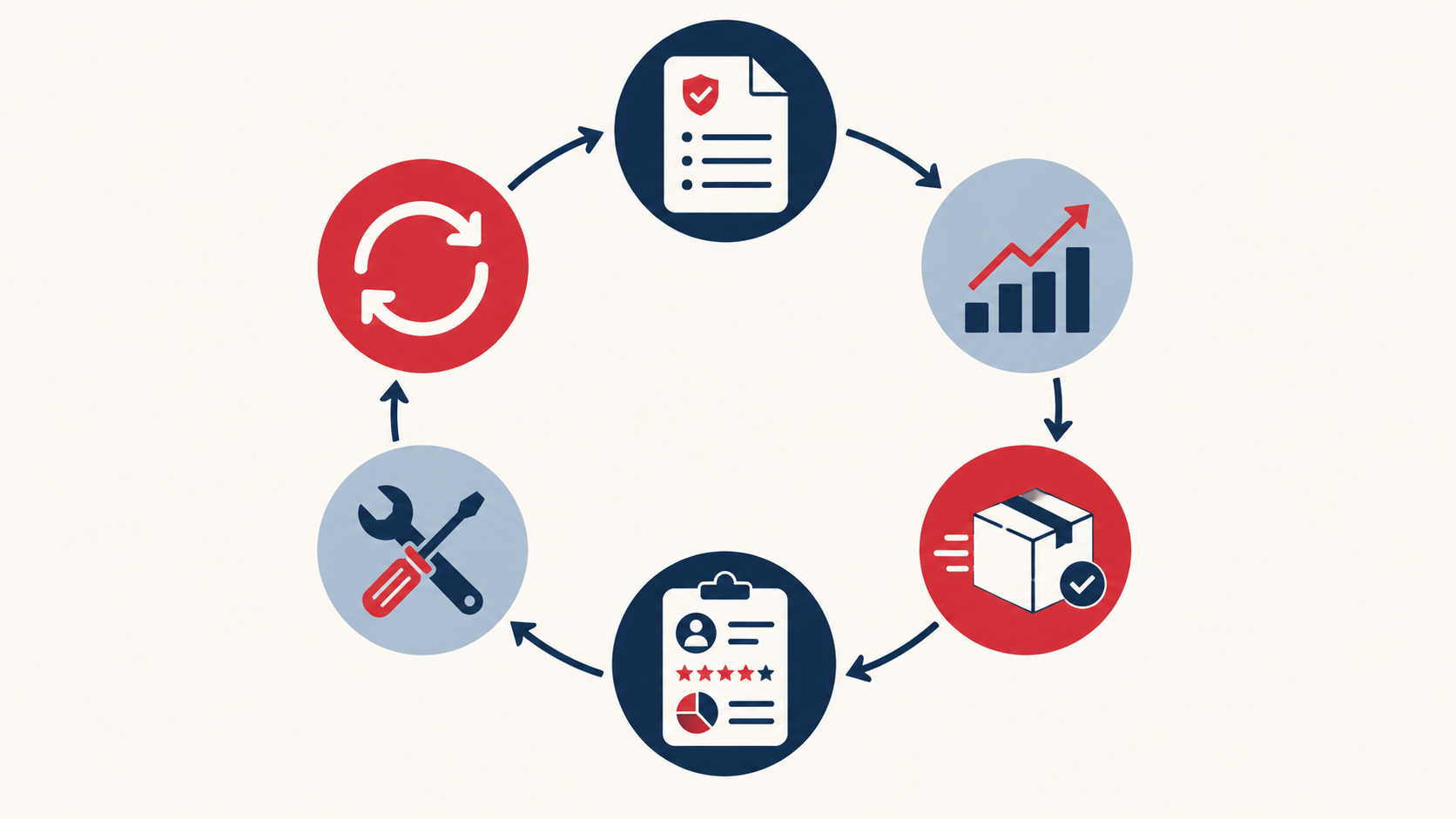
A long-term relationship is not the same as blind dependence. Protect both sides with current product records, access controls, written change approvals, backup contacts, and a contingency plan for important SKUs.
Keep an alternative source or route for products that would materially damage revenue if unavailable. Tell the primary vendor that resilience is a business requirement, not a threat. Meanwhile, avoid moving orders between vendors only to chase tiny price differences. Constant switching removes the learning that makes quality and fulfillment more predictable.
USAdrop describes itself as an end-to-end dropshipping fulfillment partner that coordinates sourcing, quality checks, warehousing, and delivery. A coordinating partner can reduce the number of disconnected vendor conversations, but the store should still maintain accurate specifications, forecasts, and performance records.
Grow With Reliable Dropship Vendors
Start with one priority vendor and one proven SKU. Document the approved product, share a realistic forecast, review five or six useful metrics, and create a clear exception path. After several review cycles, use actual performance to decide whether to increase volume, pre-stock inventory or add branding.
The goal is not to make dropship vendors agree with every request. It is to build a working system where both sides see the same product, the same demand signals, and the same definition of good performance. That is what turns individual orders into a relationship that can support a growing store.
Dropship Vendors FAQ
How often should I contact dropship vendors?
Match communication to activity. Use operational messages for real exceptions, a weekly forecast for fast-moving SKUs, and a monthly performance review for priority vendors. Avoid daily check-ins that do not contain new information.
What should I include in a dropship vendor scorecard?
Track order accuracy, processing time, first carrier scan, defect rate, stock reliability, and case response. Use consistent definitions and review trends by SKU, batch, destination, or warehouse.
Should I share sales data with dropship vendors?
Share the minimum data needed for planning, such as SKU-level sales ranges, destinations, and campaign dates. Separate estimates from firm commitments and avoid sharing customer personal data that the vendor does not need.
Can I negotiate better terms with a long-term vendor?
Yes, but use evidence. Stable volume, accurate forecasts, low operational rework, and a clear commitment may support a discussion about price, payment, packaging, or capacity. Better terms are negotiated outcomes, not guaranteed rewards.
Should a store use more than one dropship vendor?
Often, yes. A backup source or route can reduce concentration risk for critical products. Keep the primary relationship meaningful, and ensure any alternative can meet the same approved product and fulfillment requirements.