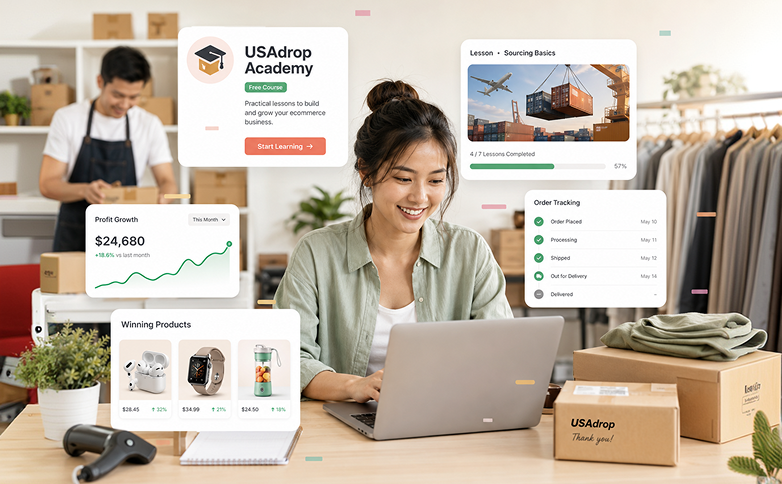
Organic dropshipping is a business model where you sell products online without holding inventory and drive all your traffic through free channels — no paid ads, no ad spend budget, no Facebook Ads Manager headaches. You rely on content, search engines, and social media algorithms instead of your credit card.
If you’ve been burned by $50-a-day ad budgets that return nothing, or you’re starting with limited capital, this approach deserves your attention. The tradeoff is real: organic traffic takes longer to build but costs nothing per click and compounds over time. A TikTok video you post today can still send buyers to your store eight months from now. A Google ad stops the second you pause your campaign.
We’ve worked with over 80 million orders at USADROP across the past decade, and we’ve watched the organic dropshipping model grow from a niche tactic into a primary strategy for thousands of sellers — particularly those launching their first store. Here’s exactly how it works, which platforms deliver, and where the model breaks down.
Organic vs. Paid Dropshipping
Organic dropshipping means every visitor who lands on your store found you through unpaid channels. That includes Google search results, TikTok’s For You page, Pinterest pins, YouTube videos, Instagram Reels, blog posts, Reddit threads, or email lists you’ve built without paying for subscribers.

Paid dropshipping means you’re buying that traffic. Facebook Ads, Google Shopping, TikTok Ads Manager, influencer sponsorships — money goes out before any money comes in.
The difference isn’t philosophical. It’s financial.
| Factor | Organic Dropshipping | Paid Dropshipping |
|---|---|---|
| Startup cost | $0–$200 (store + domain) | $500–$3,000/month ad spend |
| Time to first sale | 2–8 weeks | 1–7 days |
| Profit margin per order | Higher (no ad cost per click) | Lower (ad cost eats 20–40%) |
| Scalability ceiling | Slower, content-dependent | Fast but budget-dependent |
| Long-term asset value | High (content keeps working) | Low (traffic stops when ads stop) |
| Skill required | Content creation, SEO | Media buying, analytics |
A 2024 Shopify merchant survey found that stores relying primarily on organic traffic reported an average net margin of 28%, compared to 17% for stores running paid traffic as their primary channel (Shopify, 2024). That 11-point gap is entirely the cost of advertising.
But here’s the honest catch: paid ads let you test products in 48 hours. Organic methods might need 48 days. If you’re trying to validate whether a product sells at all, paid traffic is faster feedback. Organic works best once you’ve confirmed demand and want to build a sustainable, high-margin channel alongside (or instead of) paid.
If you’re still wrapping your head around the broader model, our guide on how does dropshipping work covers the fundamentals before you layer on traffic strategy.
TikTok Organic: Still Dominant
You film a 30-second video of a product doing something visually interesting. You post it. The algorithm shows it to 200–500 people. If those people watch it all the way through, TikTok shows it to 5,000. Then 50,000. Then 500,000.
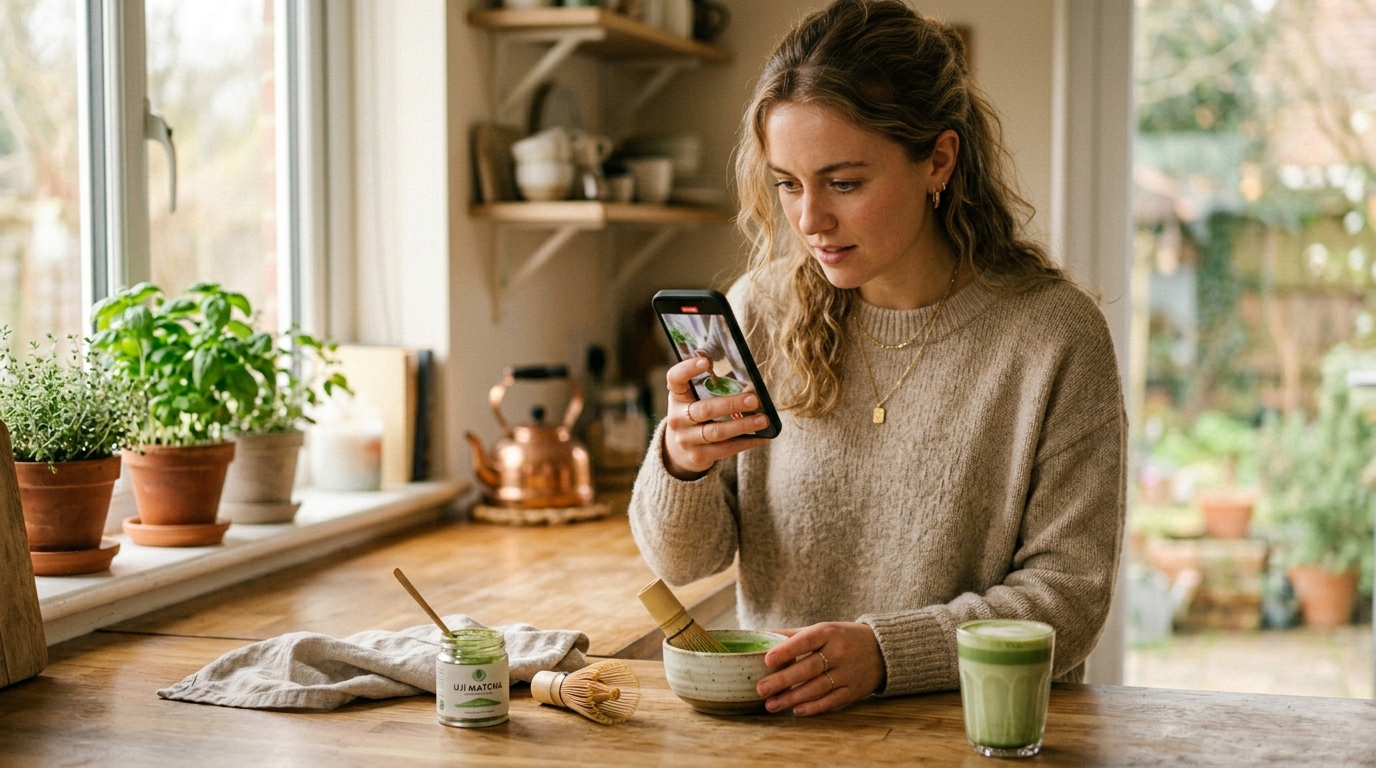
That’s the TikTok organic flywheel, and in 2026 it still works — but the bar has shifted.
In 2023, you could post a product demo with text overlay and trending audio and reliably hit 10K views. Now? TikTok’s algorithm heavily rewards what the platform calls “original content with narrative structure.” Translation: you need a story, not just a product showcase.
What actually performs on TikTok for dropshipping stores right now:
- Problem-solution hooks. “I’ve been dealing with [specific problem] for years. Then I found this.” The first 1.5 seconds determine whether someone swipes. Lead with the problem, not the product.
- POV/day-in-my-life integration. Show the product in use during a real routine. A posture corrector shown during a morning routine outperforms a standalone product demo by roughly 3× on average engagement, according to CreatorIQ’s 2025 benchmark data.
- “I tested this for 30 days” format. Before-and-after content with a time element creates watch-through incentive. TikTok’s algorithm weights completion rate above almost everything else.
- Comment-reply videos. Post a video. Wait for a question in the comments. Film a reply video answering that question while showing the product again. This is free content ideation and the algorithm boosts reply videos because they signal community engagement.
Posting frequency matters more than production quality. Three videos a day, filmed on your phone, with natural lighting, will outperform one polished video per week. The algorithm needs volume to find your winners. Most TikTok organic dropshippers report that roughly 1 in 15 videos “hits.” You can’t predict which one. You just post.
One USADROP seller we work with — running a pet accessories store — went from zero to $14,000/month in revenue within 11 weeks using nothing but TikTok organic. She posted 2–3 videos daily, filmed entirely on an iPhone 14 in her living room. No editing software. No ring light. Her best-performing video (2.3 million views) was 17 seconds long: her dog reacting to a new automatic ball launcher.
The catch with TikTok organic is you’re renting the algorithm. Account bans happen. Reach can drop overnight for no visible reason. That’s why smart organic dropshippers never rely on a single platform.
SEO for Dropshipping Stores
Search engine optimization is the slowest organic channel and the most durable one. A blog post ranking on page one of Google for a buyer-intent keyword can drive sales for years without you touching it again.

Most dropshipping stores ignore SEO entirely. They build a Shopify store, list 20 products with manufacturer descriptions, and wonder why Google sends them zero traffic. The problem is duplicate content (hundreds of other stores use those same descriptions) and zero topical authority.
Here’s what actually moves the needle for dropshipping SEO in 2026:
Product page optimization. Rewrite every product description from scratch. Include the product name, use case, dimensions, materials, and comparisons to alternatives. Google’s helpful content system (updated March 2025) specifically rewards product pages that demonstrate first-hand experience. If you’ve tested the product, say so. Include specifics: “The silicone grip held firm after 6 weeks of daily use” beats “high-quality materials.”
Blog content targeting long-tail buyer queries. You’re not going to rank for “wireless earbuds.” But you can rank for “best wireless earbuds for running under $30” or “wireless earbuds that don’t fall out during CrossFit.” These long-tail queries have lower volume (200–800 searches/month each) but extremely high purchase intent. A single blog post targeting a cluster of 4–5 related long-tails can generate 20–40 sales per month from organic search alone.
Category page architecture. Google treats well-structured category pages as shopping resources. If you sell kitchen gadgets, your category page for “kitchen organization” should have a unique 300-word introduction, filter options, and internal links to related blog content. Not just a grid of products.
Technical basics you can’t skip:
- Page speed under 2.5 seconds (test with Google PageSpeed Insights)
- Mobile-first design (76% of ecommerce traffic is mobile, per Statista 2025)
- Schema markup on product pages (Product, Review, and FAQ schema)
- Internal linking between blog posts and product pages
When you’re building a store from scratch, working with reliable dropshipping suppliers who provide high-quality product images, accurate descriptions, and fast shipping makes SEO dramatically easier — you’re building content on a foundation that actually delivers when someone clicks “buy.”
The realistic timeline: publish 2 blog posts per week for 3 months. By month 4, you’ll start seeing organic search traffic. By month 6, certain posts will generate consistent sales. By month 12, your blog might be your highest-ROI channel.
I won’t pretend that’s easy. It requires consistent writing (or hiring a writer at $0.08–$0.15/word). But the math is compelling: 50 blog posts at $40 each = $2,000 invested. If those posts collectively drive even 100 sales per month at $25 profit each, you’re looking at $2,500/month from a one-time content investment.
Pinterest: The Underrated Channel
Everyone talks about TikTok. Almost nobody in the dropshipping space talks about Pinterest. That’s a mistake.

Pinterest isn’t a social media platform. It’s a visual search engine. People go to Pinterest specifically looking for products to buy, ideas to try, problems to solve. The purchase intent baked into Pinterest traffic is closer to Google than to Instagram.
And Pinterest content has an absurdly long shelf life. A pin you create today can drive traffic 6, 12, even 24 months from now. Compare that to an Instagram post that dies in 48 hours.
Pinterest organic strategy for dropshipping:
Create pins for every product, every angle, every use case. One product should generate 8–15 different pins with different images, titles, and descriptions. Pinterest treats each pin as its own piece of content that can rank independently.
Use keyword-rich pin titles and descriptions. Pinterest’s search algorithm is keyword-driven, similar to Google. If you’re selling a portable blender, your pin title shouldn’t be “Love This 💕” — it should be “Portable Blender for Smoothies On the Go — USB Rechargeable.” Boring? Yes. Effective? Extremely.
Idea Pins (formerly Story Pins) for tutorials. Show your product in a step-by-step format. “3 Ways to Style This Scarf” or “Morning Smoothie Recipe Using Our Portable Blender.” Idea Pins get massive distribution in 2026 because Pinterest is actively pushing the format.
Niche boards with consistent pinning. Create 10–15 boards around your niche. If you sell home decor, have boards for “Small Apartment Living Room Ideas,” “Modern Kitchen Organization,” “Boho Bedroom Inspiration.” Pin your products alongside curated content from other sources. Pinterest rewards accounts that contribute to the ecosystem, not ones that only self-promote.
The numbers are real. Tailwind’s 2025 Pinterest Commerce Report found that the average Pinterest user spends 80% more per order than users referred from other social platforms. And organic reach on Pinterest has actually increased year-over-year since 2023, while organic reach on Facebook and Instagram continues to decline.
A kitchen gadget dropshipping store using Pinterest as its primary channel reported $8,200/month in revenue from 47 product pins and 12 blog-to-pin pieces. No ad spend. Setup time: roughly 5 hours per week maintaining the account and creating new pins.
Building a Multi-Channel System
Relying on one organic channel is a fragile strategy. TikTok could restrict your reach tomorrow. Google could push your blog to page two after a core update. Pinterest could change its algorithm.

The strongest what is organic dropshipping answer in practice isn’t “pick TikTok or SEO or Pinterest.” It’s “build all three, staggered.”
Month 1–2: Start with TikTok. It’s the fastest organic channel to see results. Post 2–3 videos daily. Find your content style. Get your first sales to validate your products and confirm that your fulfillment pipeline works.
Month 2–4: Add SEO. Start publishing blog content while TikTok drives immediate revenue. Your blog posts won’t rank yet, but you’re planting seeds.
Month 3–5: Add Pinterest. Take your best-performing product images and blog content, repurpose them into pins. This requires minimal additional effort because you’re recycling assets.
Month 6+: All three channels are generating traffic simultaneously. TikTok drives impulse buyers. Google sends high-intent searchers. Pinterest catches planners and wishlist builders. If one channel dips, the others provide stability.
You might also layer in email marketing (free through tools like Mailchimp up to 500 contacts) and YouTube Shorts (which uses TikTok-style content you’ve already created). Every piece of content should serve at least two platforms.
One thing that makes or breaks this system: fulfillment speed. You can drive all the organic traffic in the world, but if orders take 3 weeks to arrive, your reviews tank, your return rate climbs, and your organic momentum collapses. USADROP operates 18 global warehouses — including US-based locations — specifically because 3–5 day domestic delivery turns first-time buyers into repeat customers who leave positive reviews that fuel more organic growth. The loop matters.
Understanding what is dropshipping at a fundamental level helps you see why fulfillment infrastructure directly impacts your organic strategy: faster delivery → better reviews → higher conversion rates → search engines and algorithms reward your content more.
ROI: Organic vs. Paid
Let’s put real numbers on this.
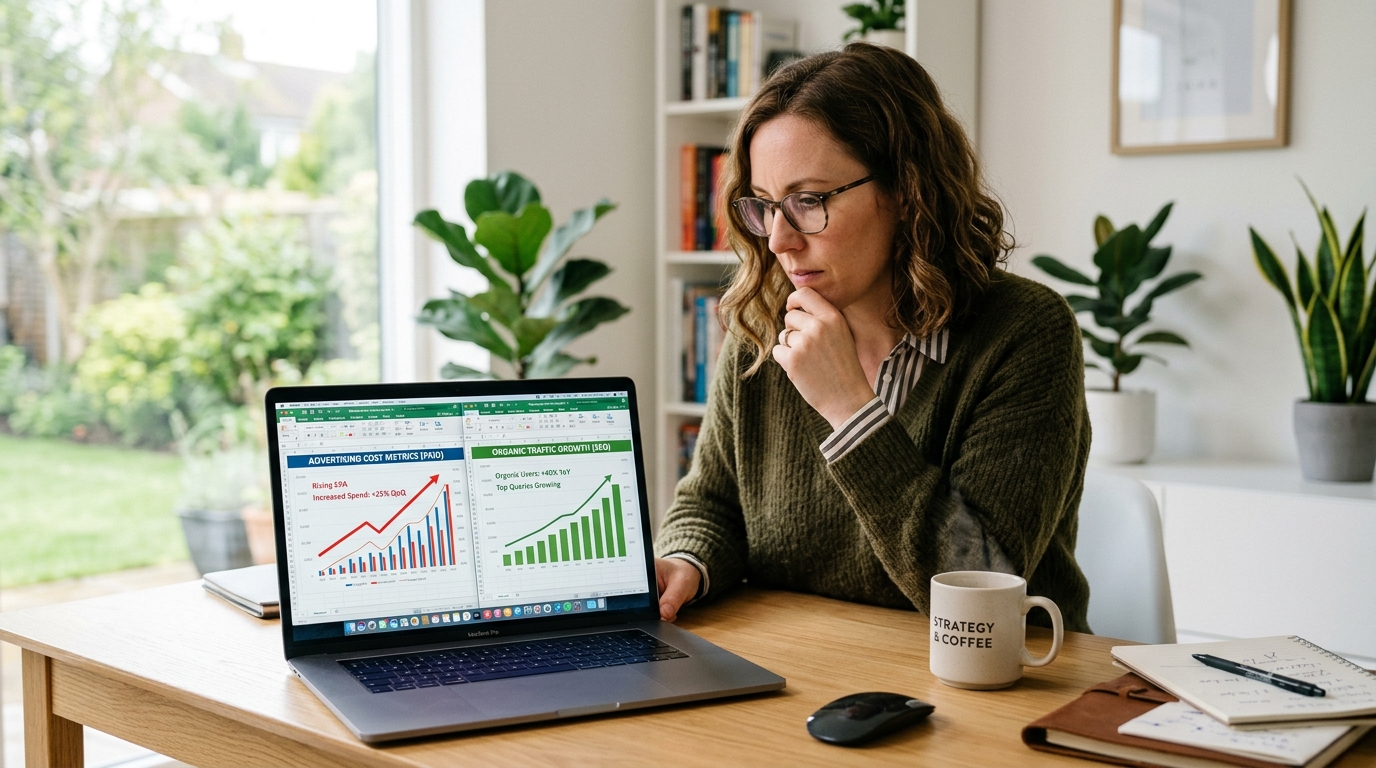
Scenario: Paid dropshipping store
- Monthly ad spend: $2,000
- Cost per click: $0.80
- Clicks: 2,500
- Conversion rate: 2.5%
- Orders: 62
- Average order value: $38
- Revenue: $2,356
- Product cost + shipping: $1,178 (50% COGS)
- Profit after ad spend: -$822
That’s a loss. And it’s common in the first 1–3 months while you’re testing products and optimizing ad creative. You’re paying to learn.
Scenario: Organic dropshipping store (month 6)
- Monthly content cost: $300 (tools + optional freelancer)
- TikTok visitors: 4,000
- SEO visitors: 1,200
- Pinterest visitors: 800
- Total visitors: 6,000
- Conversion rate: 2.2% (organic traffic converts slightly lower than highly targeted ads)
- Orders: 132
- Average order value: $35
- Revenue: $4,620
- Product cost + shipping: $2,310
- Profit after content cost: $2,010
The organic store is profitable and the traffic source doesn’t disappear when you stop spending. You do need to keep creating content, but even if you paused for a month, your existing content would continue driving visitors.
The honest comparison: paid ads win on speed and testability. Organic wins on margin, sustainability, and long-term asset value. The smartest dropshippers we work with at USADROP use organic as their foundation and add paid ads selectively — running $10–$20/day retargeting campaigns to people who already visited through organic channels. That hybrid approach outperforms either method alone.
With USADROP’s pricing averaging 8.66% lower than competing fulfillment providers, your per-order margin on organic sales stretches even further. When you’re not paying for traffic and you’re paying less for fulfillment, the math gets very favorable very fast.
FAQ
Is organic dropshipping really free?
The traffic is free, but you’ll still pay for your store ($29–$39/month on Shopify), domain name ($12/year), and potentially content tools like Canva Pro ($13/month). Total overhead runs $50–$80/month versus $2,000+ monthly with paid ads.
How long until organic traffic generates sales?
TikTok can produce sales within 2–4 weeks if you post daily. SEO typically takes 3–6 months to generate consistent traffic. Pinterest falls in between at 4–8 weeks for initial traction.
Can you scale organic dropshipping past $10K/month?
Yes, but it requires multiple channels working simultaneously and high content volume. Stores hitting $10K–$50K/month organically typically post 60+ TikToks monthly, publish weekly blog content, and maintain active Pinterest accounts.
Does organic dropshipping work for all niches?
It works best in visually demonstrable niches — pet products, kitchen gadgets, beauty tools, home organization, fitness accessories. Commodity products like phone cases or generic clothing struggle because the content isn’t interesting enough to earn organic reach.
Should I combine organic and paid traffic?
Start organic to validate products with zero financial risk, then add small retargeting ad budgets ($10–$15/day) once you have consistent organic traffic. This hybrid approach typically delivers 2–3× better ROAS than cold-traffic ads alone.
Ready to build an organic dropshipping store that doesn’t depend on ad budgets? USADROP lets you launch in 24 hours with access to vetted suppliers, US-based warehouses for fast domestic shipping, and pricing that’s 8.66% lower than the industry average. Your organic content drives the traffic — we handle everything after the customer clicks “buy.” Get started with USADROP today and put your margins to work.