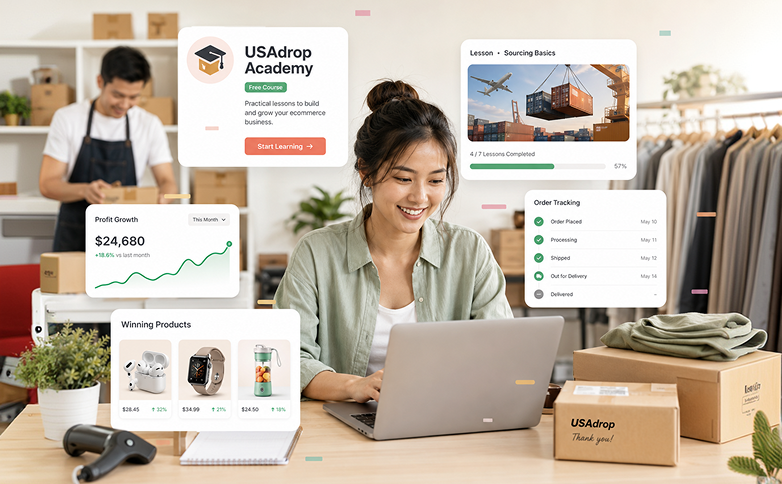
Every dropshipping business hits walls. The biggest dropshipping challenges in 2026 aren’t the ones you read about in 2019 — they’ve shifted, mutated, and gotten sneakier. Long shipping times still sting, but now you’re also fighting algorithm changes, margin compression from tariff hikes, and customers who expect Amazon-level service from a store they discovered on TikTok three minutes ago.
This article breaks down the seven problems most likely to stall or kill your store this year, with specific fixes for each. Some of those fixes involve better tools and partners (including what we offer at USADROP). Others are operational habits you can start today for free.
If you’re still deciding whether this model is right for you, our breakdown of the pros and cons of dropshipping covers the full picture. But if you’re already in the game — or about to jump — these are the fires you need to plan for.
Long Shipping Times
The single fastest way to lose a customer forever? Make them wait 21 days for a phone case.

A 2024 Baymard Institute study found that 22% of cart abandonments happen because the delivery estimate is too slow. That number climbs higher when the buyer has already purchased — they don’t abandon the cart, they just file a chargeback or leave a 1-star review. Either outcome costs you more than the original sale was worth.
Here’s what actually happens: a customer in Dallas orders a trending LED desk lamp on Monday night. If that product ships from a warehouse in Shenzhen, it clears Chinese customs in 2–4 days, crosses the Pacific in 7–12 days, clears US customs (which in 2026 means Section 321 scrutiny that didn’t exist two years ago), then enters USPS or UPS last-mile delivery. Total? Somewhere between 14 and 25 days. By day 10, that customer has already messaged you twice and opened a PayPal dispute.
The fix isn’t “find faster shipping.” The fix is stock closer to the buyer.
US-based or regional warehousing changes the math completely. When a product sits in a warehouse in California or New Jersey, delivery drops to 2–5 business days. That’s the difference between a dispute and a repeat customer.
We operate 18 warehouses globally — with US-based fulfillment that gets orders out the door fast. The infrastructure matters more than the product sometimes. A mediocre product delivered in 3 days outsells an incredible product delivered in 3 weeks.
One more thing most guides skip: be honest about shipping times on your product pages. “Ships in 1–2 business days, arrives in 3–5” beats a vague “fast shipping” badge every time. Customers don’t hate waiting — they hate being surprised.
Supplier Reliability Problems
You find a supplier on AliExpress with great reviews and a $4.20 unit cost. You run ads. Orders come in. Then on Thursday, the supplier ghosts you. Or sends 40 units of the wrong color. Or the quality drops so badly that your refund rate triples in a single week.
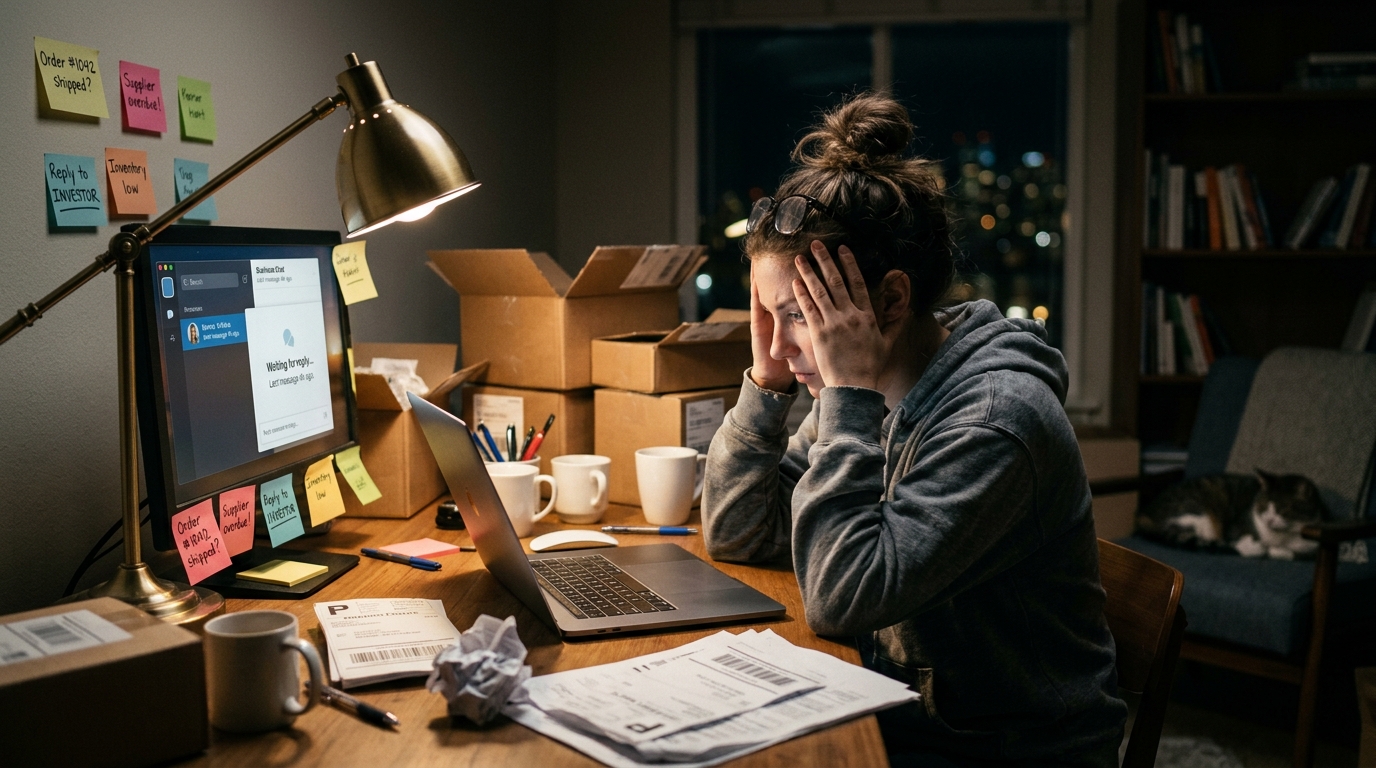
This isn’t a rare horror story. It’s Tuesday in dropshipping.
A 2023 survey by Jungle Scout found that 34% of e-commerce sellers experienced supply chain disruptions that directly impacted revenue. For dropshippers who rely on a single overseas supplier with no contract and no leverage, that percentage is almost certainly higher.
The real problem is structural: when you source from a marketplace (AliExpress, 1688, even some Alibaba suppliers), you’re a tiny buyer with zero negotiating power. The supplier has no reason to prioritize your 15-unit order over a bulk buyer ordering 5,000 units. So when inventory runs low, guess whose order gets bumped?
What actually works:
- Use a fulfillment partner that vets and maintains direct relationships with manufacturers. At USADROP, we’ve processed over 80 million orders across 10+ years — which means our supplier relationships carry weight yours won’t as a solo operator.
- Never rely on a single supplier for your best-selling product. Always have a backup source identified and tested before you need it.
- Order samples quarterly, not just once. Quality drifts. A supplier that sent great units in January might cut corners by June.
And if you’re wondering whether a dropshipping fulfillment partner is worth it versus managing suppliers yourself — if you’re selling more than 20 orders a day, the answer is almost always yes. Below that, you might manage. Above it, something will break.
Thin Profit Margins
Here’s a number that should make you uncomfortable: the average net profit margin for a dropshipping store in 2025 was between 10% and 15%, according to Shopify’s own benchmark data. That’s before returns, before ad spend spikes, before a supplier raises prices by $0.80 per unit without warning.
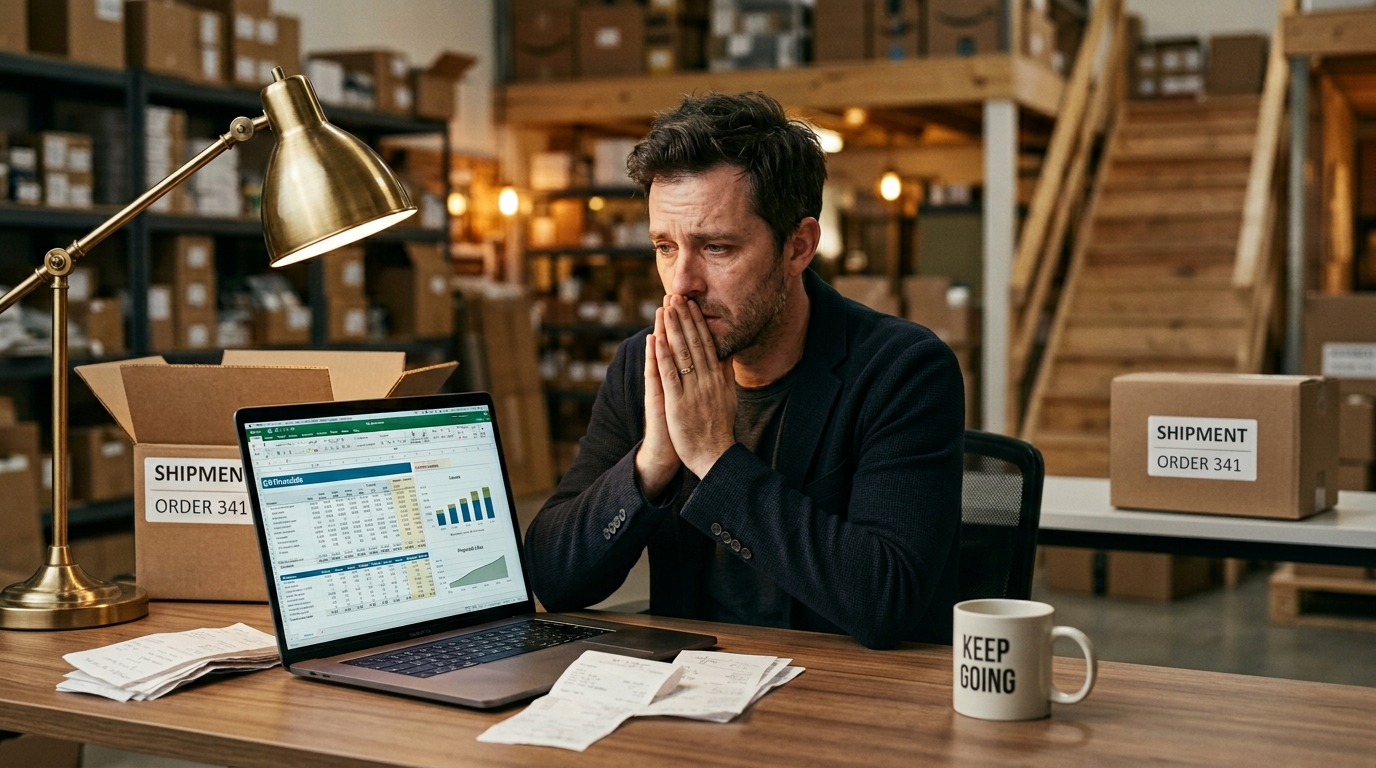
Margin pressure in 2026 comes from four directions at once:
| Pressure Source | Impact |
|---|---|
| Rising ad costs (Meta CPMs up ~18% YoY per Revealbot data) | Higher customer acquisition cost |
| Tariff changes on Chinese goods (Section 301 adjustments) | Higher landed product cost |
| Competitor pricing (race to the bottom on trending products) | Lower selling price |
| Return/refund rates (averaging 20–30% in fashion categories) | Lost revenue on fulfilled orders |
When all four squeeze simultaneously, a product that looked profitable at $24.99 with a $6 cost basis suddenly isn’t — because your real all-in cost is $14.50 after ads, returns, and payment processing fees.
How to protect your margins:
Start with product cost. At USADROP, our pricing runs 8.66% lower than standard sourcing channels because we negotiate directly with manufacturers at volume. On a product with a $7 base cost, that’s roughly $0.60 saved per unit. Sell 1,000 units a month and you’ve recovered $600 — which might be your entire monthly software stack.
Then work the other levers. Bundle products (a phone case + screen protector bundle has higher perceived value than either alone). Upsell on the thank-you page. Build an email list so you can generate repeat purchases without paying Meta again.
But here’s the uncomfortable truth nobody in the “passive income” crowd mentions: some products just don’t have enough margin to be viable as dropship items. If your product costs $12, sells for $19.99, and your ad spend is $6 per acquisition, you’re making $1.99 before returns. That’s not a business. That’s a hobby that charges your credit card.
Know your numbers at the SKU level, not the store level.
Customer Service at Scale
When you’re doing 5 orders a day, customer service is answering a couple of emails between lunch and dinner. When you’re doing 50 orders a day, it’s a full-time job. At 200 orders a day, it’s a team.
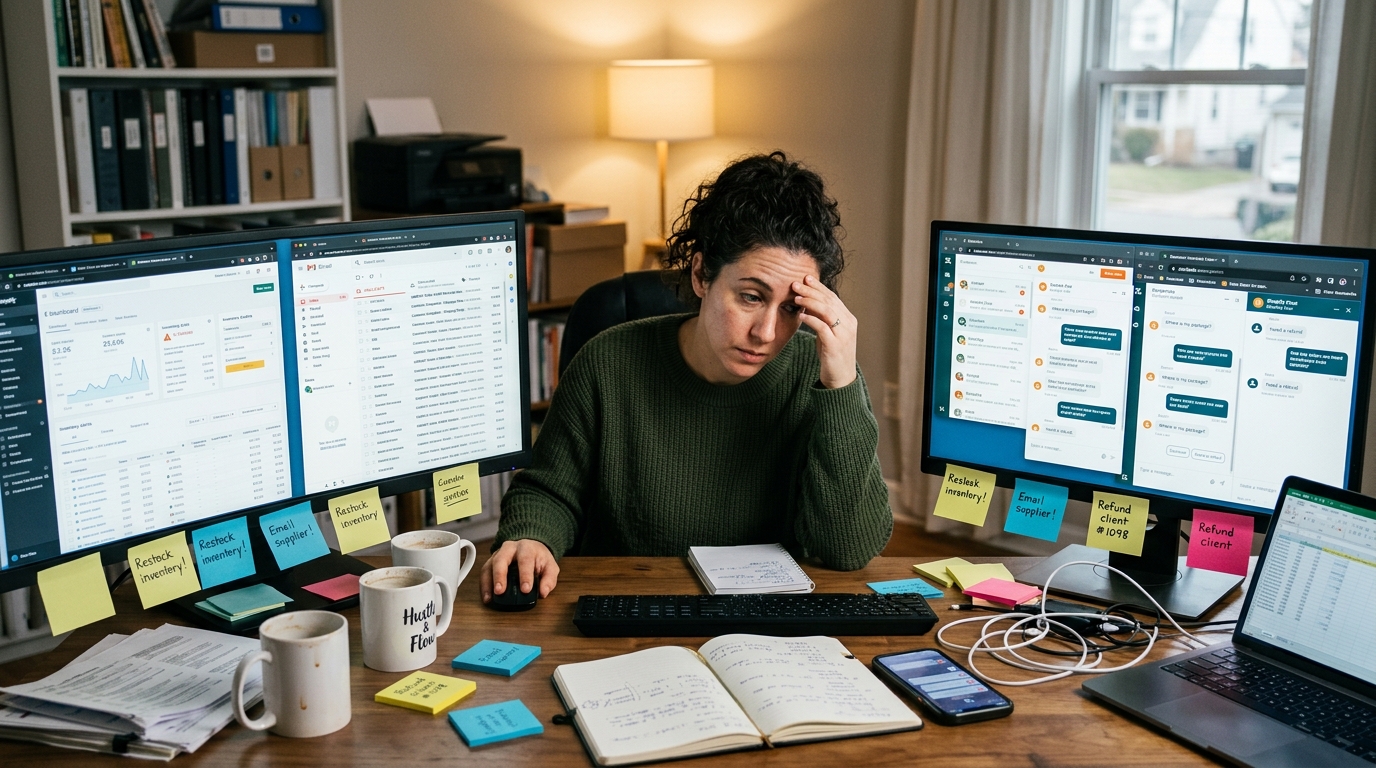
The dropshipping-specific problem? You don’t control the product, the packaging, or the shipping — but the customer doesn’t know that (and wouldn’t care if they did). To them, you’re the brand. When something goes wrong, they’re messaging you, not your supplier in Guangzhou.
Most customer complaints in dropshipping fall into predictable buckets:
- “Where’s my order?” (tracking not updated, or shipping is slower than expected)
- “This doesn’t match the listing” (supplier sent wrong variant or quality differs from photos)
- “It arrived damaged” (poor packaging, rough transit)
- “I want a refund” (buyer’s remorse, often triggered by slow delivery)
You can preempt at least 60% of these with three specific actions. First, send proactive shipping updates — an automated email or SMS when the order ships, when it clears customs (if applicable), and when it’s out for delivery. Customers who know where their package is don’t open support tickets.
Second, use real product photos, not the supplier’s stock images. Order samples. Photograph them yourself or hire someone on Fiverr for $30. When the product matches the listing, “doesn’t match” complaints drop dramatically.
Third, set up templated responses for the top 5 inquiry types. Not robotic copy-paste, but frameworks that your VA or support agent can personalize in 30 seconds instead of writing from scratch each time.
If managing all of this feels like building a second company (because it is), working with a fulfillment partner who handles shipping, tracking, and quality checks removes most of the triggers. That’s a big part of why stores come to us — we’ve been doing dropshipping fulfillment long enough to know which problems are avoidable and which just need faster resolution.
Refunds and Chargebacks
A 2% chargeback rate doesn’t sound scary until you realize that Stripe and PayPal will freeze or terminate your account at 1%. That’s not a hypothetical. Search “PayPal limited my account” on Reddit and clear your afternoon.

Dropshipping stores face higher chargeback rates than traditional e-commerce for one core reason: the gap between expectation and reality is wider. Longer shipping, inconsistent quality, and vague product descriptions all contribute. And in 2026, with banks increasingly issuing automatic chargebacks through apps like Visa’s Rapid Dispute Resolution, the window to resolve issues before they become chargebacks is shrinking.
Prevention beats resolution every time. Here’s what high-performing stores do:
1. Display realistic delivery windows (not “fast shipping” — actual date ranges)
2. Use a recognizable billing descriptor (if your store is “CozyLampCo” but your Stripe descriptor shows “JWANG LLC,” customers will dispute the charge because they don’t recognize it)
3. Respond to refund requests within 4 hours during business hours — a customer who gets a quick, empathetic refund doesn’t file a chargeback
4. Include a packing slip with your brand name and a return/support email inside every package
That fourth point matters more than people think. A physical piece of paper with your brand on it reduces chargebacks because customers contact you instead of their bank. Ask your fulfillment partner to include branded inserts — it’s usually a few cents per order.
On the refund policy itself: a clear, visible, 30-day refund policy actually reduces refunds. It sounds counterintuitive, but Narvar’s 2024 returns report showed that stores with transparent return policies saw 16% fewer returns than stores that hid or complicated theirs. Customers feel safe buying when they know they can return — and then most of them don’t.
Competition and Saturation
Someone is selling the same viral TikTok product you are. Probably 200 someones. They saw the same winning product ad you did, sourced from the same supplier, and launched their Shopify store with the same Debutify theme.

This is real. And it’s the dropshipping challenge that makes people quit.
But “saturation” is a lazy diagnosis. The actual problem is undifferentiation. You can sell the same category as 500 other stores and still win if you do something they don’t. The stores that struggle are the ones that copy everything — same product photos, same generic product descriptions, same “Premium Quality ✨” badge that means nothing.
What differentiation actually looks like in 2026:
You sell resistance bands. So does everyone. But you create a 4-week workout program PDF that comes free with every purchase, and you build an Instagram community around home fitness for people over 40. Now you’re not “another resistance band store.” You’re a fitness brand that happens to sell resistance bands.
Or you pick a niche narrow enough that competition thins out naturally. Not “pet products” — “elevated feeding stations for large-breed dogs.” Not “phone accessories” — “MagSafe-compatible car mounts for Ford F-150 dashboards.” The narrower you go, the less you compete on price and the more you compete on relevance.
If you’re still figuring out how to start dropshipping in a way that avoids the commodity trap, niche selection is 80% of the battle. Product quality, shipping speed, and customer experience are the other 20% — but they’re the 20% that determines whether anyone comes back.
Speed helps too. When you can launch a new product in 24 hours (which is what we built USADROP’s system to do), you can test faster, fail cheaper, and find winners before the copy-paste crowd catches up.
Platform Dependency Risks
Your Shopify store is your business. Until Shopify changes its terms and your payment provider pulls out. Your Facebook ads drive 90% of revenue. Until your ad account gets disabled at 2 AM on a Friday with no explanation and a 72-hour review queue.

Platform dependency is the dropshipping challenge nobody talks about until it happens to them. And in 2026, it’s getting worse, not better. Meta’s automated ad review system flags accounts more aggressively than ever. TikTok Shop’s policies shift monthly. Even Shopify’s own checkout changes (like their push toward Shop Pay) can alter your conversion rates overnight.
The mitigation playbook:
- Diversify traffic sources. If Facebook generates more than 60% of your revenue, you have a single point of failure. Add Google Shopping, TikTok organic, email marketing, or SEO content. None of them replace Facebook overnight, but each one reduces the blast radius when something breaks.
- Own your customer list. Every order should capture an email and (with consent) an SMS number. Your email list is the one marketing asset no platform can take from you. A store with 10,000 email subscribers can survive an ad account ban. A store with zero cannot.
- Have a backup storefront. This doesn’t mean building a second Shopify store. It means knowing that WooCommerce, BigCommerce, or even a simple Gumroad page exists as a fallback. Export your product data monthly.
The deeper issue is psychological. When everything’s working — ads are profitable, orders are flowing — you don’t want to spend time on backup plans. That’s human nature. But the stores that survive year over year are the ones that build redundancy before they need it.
At USADROP, we integrate with multiple platforms precisely because we’ve watched stores scramble when their primary platform changes something. Your fulfillment shouldn’t be locked to one storefront.
FAQ
Is dropshipping still profitable in 2026?
Yes, but margins are tighter than 2020–2022. Stores that control shipping speed, product cost, and customer acquisition through diversified channels still clear 15–25% net margins on well-selected products.
What’s the biggest reason dropshipping stores fail?
Poor supplier management and slow shipping cause most failures. Customers who wait 3+ weeks for delivery generate chargebacks and negative reviews that tank store reputation before momentum builds.
How do I reduce shipping times without holding inventory?
Partner with a fulfillment service that stocks products in US-based warehouses. USADROP’s 18 global warehouses, including US locations, cut delivery to 2–5 business days without requiring you to buy bulk inventory upfront.
Can I dropship and still offer good customer service?
Absolutely. Proactive tracking notifications, honest delivery estimates, branded packing slips, and fast refund responses handle 80%+ of customer concerns before they become complaints.
How many products should a new dropshipping store carry?
Start with 3–5 products in a tight niche. Testing too many products simultaneously spreads your ad budget thin and makes it impossible to identify what’s actually working.
Ready to solve these dropshipping challenges instead of reading about them? USADROP gives you US-based warehousing, 8.66% lower product costs, and a system built to get your store live in 24 hours. With 80 million+ orders fulfilled across a decade, we’ve already hit (and fixed) every problem on this list. Start with USADROP today and skip the expensive lessons.