If you’re asking how old do you have to be to dropship, the practical U.S. answer is usually 18 if you want to run the store under your own name. Dropshipping does not have one special federal age law, but store platforms, payment processors, banks, supplier contracts, tax accounts, and refund liability all push a real operating store toward adult ownership.
Dropshipping Age Rules
In the U.S., there isn’t a special dropshipping age law. The practical minimum is 18 because store, payment, bank, tax, and supplier contracts usually require an adult or the age of majority. A minor can learn, research products, and help run operations, but an adult should own the accounts and sign contracts when the store starts taking orders.

That distinction matters. A 16-year-old can study product research, build a Shopify theme in preview mode, write product pages, make TikToks, and learn ad math. The problem starts when the store accepts money from customers, because now there are contracts, chargebacks, taxes, refund policies, and supplier obligations.
Under Shopify’s Terms of Service, an account owner must be the older of 18 or the age of majority where the person lives. Shopify also makes the store owner responsible for the account, the checkout, and customer-facing policies.
| Dropshipping activity | Under 18? | Practical rule |
|---|---|---|
| Product research | Yes | Safe learning work |
| Store design | Usually | Use a supervised account |
| Supplier outreach | Maybe | Adult should sign terms |
| Accepting payments | Usually no | Adult account holder needed |
| Business banking | Usually no | Bank rules control |
| Filing business paperwork | State-specific | Check state and parent setup |
So, how old do you have to be to dropship in real life? If you want to run the store under your own name, take payments, sign supplier terms, and handle refunds without a parent or guardian, plan around 18.
Minor Dropshipping Options
If you’re under 18, don’t fake your age. Payment processors can freeze funds, close accounts, or ask for ID after you’ve already made sales. That’s a rough lesson when $2,000 in order revenue is stuck and suppliers still need to be paid.
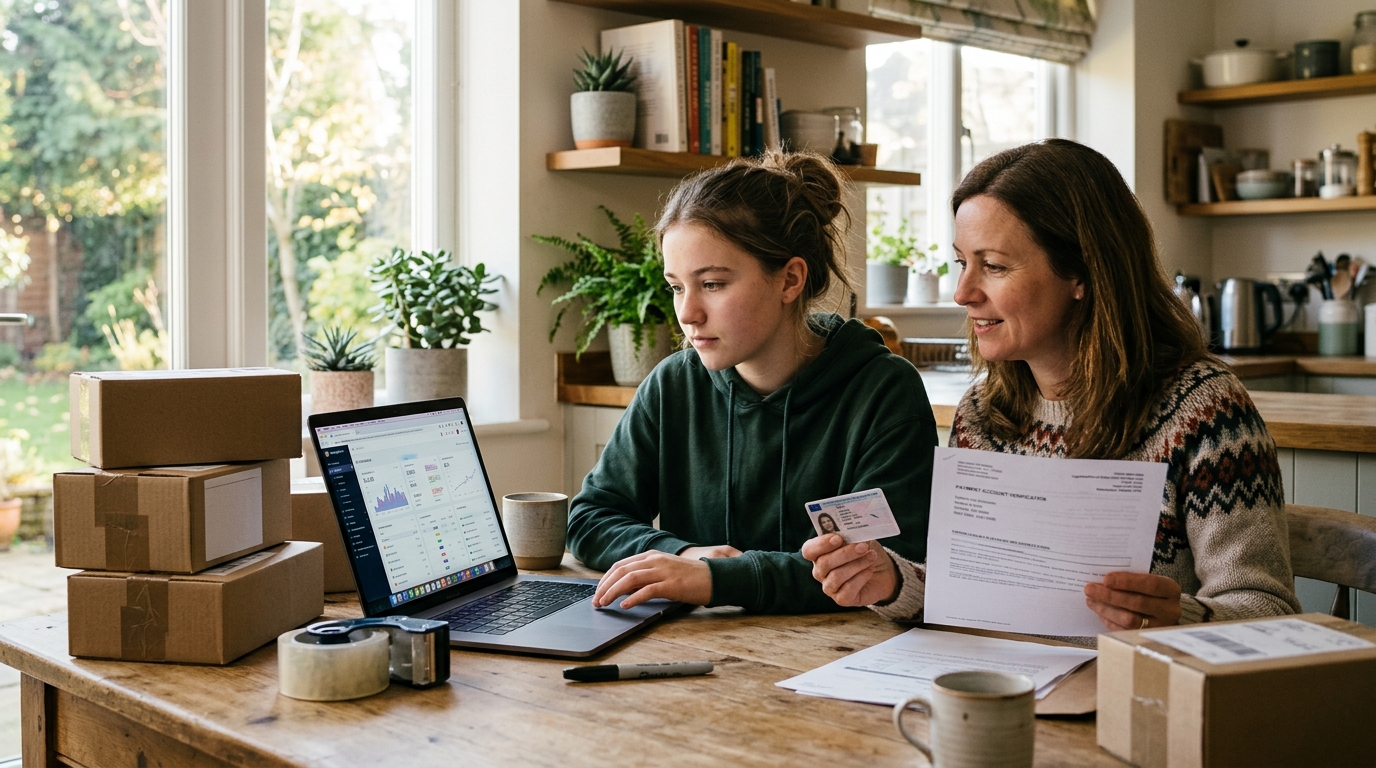
A cleaner setup is adult ownership with teen participation. A parent or legal guardian owns the store account, payment account, bank account, and supplier agreements. The younger founder can handle product research, content, creative testing, customer insight, and operations training.
Put the roles in writing, even if it’s a family business. Spell out who approves products, who pays supplier invoices, who handles refunds, who receives tax forms, and when ownership can transfer later. A one-page agreement beats a memory contest later.
A simple family-run setup can look like this:
- Adult opens the store account and payment account.
- Adult opens or connects the business bank account.
- Teen works on product research, content, and store buildout.
- Adult approves products, pricing, ad spend, and refund rules.
- Adult reviews tax, customer, and supplier obligations monthly.
- Teen takes over ownership later when age rules allow it.
One more thing: emancipation doesn’t automatically solve platform rules. Even if state law gives you some adult-like rights, a private platform can still require an adult account holder under its own terms.
Dropshipping Payment Accounts
Payments are the real gatekeeper.

You can build a store without much trouble. You can even make it look professional. Then the checkout asks for legal name, date of birth, Social Security number or tax ID, bank account, business address, and identity documents. That’s where age stops being theoretical.
Payment processor rules vary, but they all care about identity and liability. For example, the Stripe Services Agreement requires an adult representative when the user or representative is under 18 or under the age of majority, and that representative can be responsible for the account.
For a U.S. dropshipping store, check these accounts before you spend money on logos or ads:
| Account | What to verify |
|---|---|
| Store platform | Minimum age, store owner rules, prohibited products |
| Payment processor | Age, ID, bank name match, reserve policies |
| Bank account | Business account access, EIN or formation document requirements, account holder rules |
| Supplier account | Contract signer, billing name, product restrictions |
| Ad account | Age rules, billing card, restricted categories |
| Tax account | Income tax reporting, state tax ID needs, and required business records |
The SBA’s business bank account guidance recommends opening a business account once you are ready to accept or spend money as a business. The IRS business tax guidance also ties tax filing to business structure, income, and the type of tax owed.
A teen using a parent’s card quietly can create a mess. Imagine this: the store sells 80 LED desk lamps in a week. Then 12 customers ask where their tracking numbers are, the supplier invoice is due, and the payment processor asks for ID. If the names don’t match, the store may lose access right when cash flow matters most.
If you’re setting up the adult-owned store properly, choose tools that reduce operational drift. A dropshipping platform can help keep sourcing, fulfillment, order tracking, and support in one operating flow instead of scattering the business across random spreadsheets and message threads.
Dropshipping Legal Setup
Start plain. A sole proprietorship is the easiest path for testing, but it gives the owner personal liability. An LLC can make sense once the store has steady sales, ad spend, supplier commitments, or products with higher complaint risk. The SBA’s business-structure guidance explains that structure affects taxes, paperwork, fundraising, and personal liability, so this decision should not be treated like a branding choice.

For most first stores, the order should be practical:
- Pick the adult owner or legal business owner.
- Choose a business structure.
- Register the business if your state requires it.
- Get an EIN if needed for banking, an LLC, employees, or tax setup.
- Check federal and state tax ID rules.
- Open the payment account under the correct legal owner.
- Set refund, shipping, privacy, and contact policies before launch.
- Confirm the supplier’s processing times and return rules.
- Keep revenue, ad spend, product cost, refunds, and fees in one tracker.
Don’t skip the policy pages. They’re boring until a customer claims the item arrived late, broken, or not as described. Then your shipping policy and refund policy become evidence.
Product choice also affects legal risk. Phone cases, plush toys, and home organizers are different from skincare, supplements, baby products, electronics, and anything making health claims. A beginner should avoid regulated or safety-sensitive products until the business has a real compliance process.
The same thinking applies to ethics and religious rules. If your audience asks whether the business model or product category is acceptable, don’t hand-wave it. We covered that angle in our guide on is dropshipping halal, including supplier conduct and product selection.
Dropshipping Compliance Mistakes
The age question gets attention, but customer protection rules are where stores get hurt.

The FTC’s advertising guidance says advertising claims must be truthful, not deceptive or unfair, and backed by evidence. For dropshippers, that means your product page can’t promise “3-day U.S. delivery” if the supplier normally takes 9 to 14 days. It also means you shouldn’t copy supplier claims about weight loss, medical benefits, safety certifications, or “Made in USA” status unless you can prove them.
The fastest way to fail is to sell a product you don’t understand.
Before listing anything, ask four questions:
- Can I prove the delivery estimate?
- Can I prove the product claim?
- Can I process a refund without arguing with the supplier for two weeks?
- Can I explain the product honestly to a customer who has never seen it?
Age doesn’t protect you from chargebacks. Neither does “I’m just dropshipping.” If your store takes the customer’s money, your store is responsible for the customer experience.
That’s why new sellers should keep the first catalog tight. Ten tested products beat 300 copied listings. USADROP has handled 80M+ orders over 10+ years, and the pattern is clear: fewer moving parts make it easier to control shipping time, product quality, and customer messages. Boring discipline wins here.
FAQ
Can minors legally dropship?
Minors can learn dropshipping and help with store tasks, but they usually can’t own the required payment, bank, and platform accounts alone. An adult owner or guardian setup is the cleaner route.
Do you need an LLC to start dropshipping?
No, not always. A sole proprietorship can work for testing, but an LLC is worth considering once sales, ad spend, refunds, or product risk become real.
Can I use my parent’s account?
Yes, if your parent knows, agrees, and legally owns the account. Don’t use a parent’s identity, card, or PayPal account without clear permission.
Is dropshipping legal in the U.S.?
Yes, dropshipping is legal in the U.S. if you follow platform rules, tax requirements, advertising laws, product rules, and customer refund obligations.
If you’re ready to build the business with adult-owned accounts in place, USADROP can help you move from setup to fulfillment faster: 18 global warehouses, 80M+ orders handled, 8.66% lower pricing, and launch support in 24 hours.