The home decor market has huge potential now, but for newcomers, picking the right products is the very first step to success. So, what kind of products are available? The compact pieces that help shoppers layer color, texture, and personality without replacing furniture are very popular in 2026. For example, cushion covers, unframed print sets, table textiles, removable wall treatments, and fold-flat organizers all fit that brief. They are also easier to sample, inspect, pack and replace than glass, ceramics or oversized decor.
Moreover, a product can look perfect in a styled photo and still fail once protective packing doubles the parcel size. We built this list for sellers, so every pick has to satisfy two tests: it should fit the mood shoppers want in 2026, and it should survive a normal parcel route without wiping out the margin.
If you need supplier options after choosing a product format, use the existing home decor dropshipping suppliers guide. This article stays on product selection so the two pages support each other instead of competing for the same search intent.
20 Best home decor products for your store
| # | Product | Why it fits 2026 | First fulfillment check |
|---|---|---|---|
| 1 | Textured cushion covers | Tactile fabric and easy color updates | Ship the cover only; verify zipper, seams and colorfastness |
| 2 | Lightweight throw blankets | Layered comfort in earthy or muted tones | Cap weight and avoid bulky chunky knits |
| 3 | Linen-look curtain panels | Natural texture without replacing furniture | Publish exact size, opacity and header style |
| 4 | Decorative curtain tiebacks | Tassels and trim add a low-cost vintage detail | Sell pairs; test magnets, cords and metal finish |
| 5 | Printed shower curtains | Turns the bathroom into a wellness-led room | Avoid mildew claims; check print alignment and hems |
| 6 | Small washable accent mats | Pattern and softness for compact spaces | Set a strict size cap; test backing and fold recovery |
| 7 | Unframed art print sets | Curated gallery walls and personal storytelling | Cap print size; test color, trim and mailer or tube |
| 8 | Textile wall hangings | Hand-touched texture without glass or frames | Check symmetry, hanging points and loose threads |
| 9 | Removable wallpaper panels | Pattern drenching with a reversible update | Test repeat, adhesion, removal and surface instructions |
| 10 | Fabric banners and bunting | Playful, nostalgic decor for seasonal collections | Control cord length and inspect attachment points |
| 11 | Macrame plant hangers | Craft texture without shipping a planter | Verify knot symmetry and any load-rating claim |
| 12 | Decorative metal wall hooks | A small functional upgrade with an artisan look | Match hardware, finish and tested load limits |
| 13 | Table runners | An easy way to layer color and pattern | Check dimensions, hems, wash care and dye transfer |
| 14 | Fabric placemat and napkin sets | Collected table styling without breakable dishes | Sell sets; verify shrinkage and colorfastness |
| 15 | Felt or cork coasters and trivets | Warm material cues in a compact add-on | Test odor, thickness, edges and heat-use claims |
| 16 | Decorative kitchen towel sets | Whimsical motifs at an accessible price | Bundle them; check absorbency, print and wash shrinkage |
| 17 | Fold-flat fabric storage bins | Decor that also solves visible clutter | Test fold recovery, handles and final packed size |
| 18 | Fabric planter basket covers | Natural styling without a ceramic pot | State pot diameter; verify any liner or water claim |
| 19 | Antique-style cabinet knobs and pulls | Affordable character through small hardware swaps | Confirm hole spacing, screw length and plating |
| 20 | Brass-tone metal candlestick holders | Vintage metal accents without glass | Test stability, finish and candle-size fit |
What makes a home decor product worth selling in 2026?
A strong 2026 home decor product adds warmth, texture or personal character and can be combined with related pieces. For ecommerce, it should also have stable measurements, observable quality standards, low breakage risk and a delivered cost that leaves room for refunds, content and customer support.
The ten ranking pages we reviewed keep returning to the same mood: warmer colors, tactile fabric, craftsmanship, vintage references, playful details and rooms that feel collected over time. The selling opportunity is smaller pieces that let a customer join that mood without renovating a room.
We used four buying rules to turn those design signals into product ideas:
- Packed shape first. The supplier must provide final length, width, height and weight after packing.
- Damage tolerance. Soft goods and compact metal pieces generally give you a cleaner starting point than glass, ceramic or stone.
- Clear inspection points. Size, stitching, color, print alignment and hardware count can be checked before dispatch.
- Bundle potential. A pair or coordinated set creates a better offer than a single low-ticket accessory.
Margin warning: Use delivered contribution margin, not catalog price. Product cost, packing, shipping, fees and expected replacements all belong in the calculation.
Top 20 home decor products to sell in 2026
1. Textured cushion covers
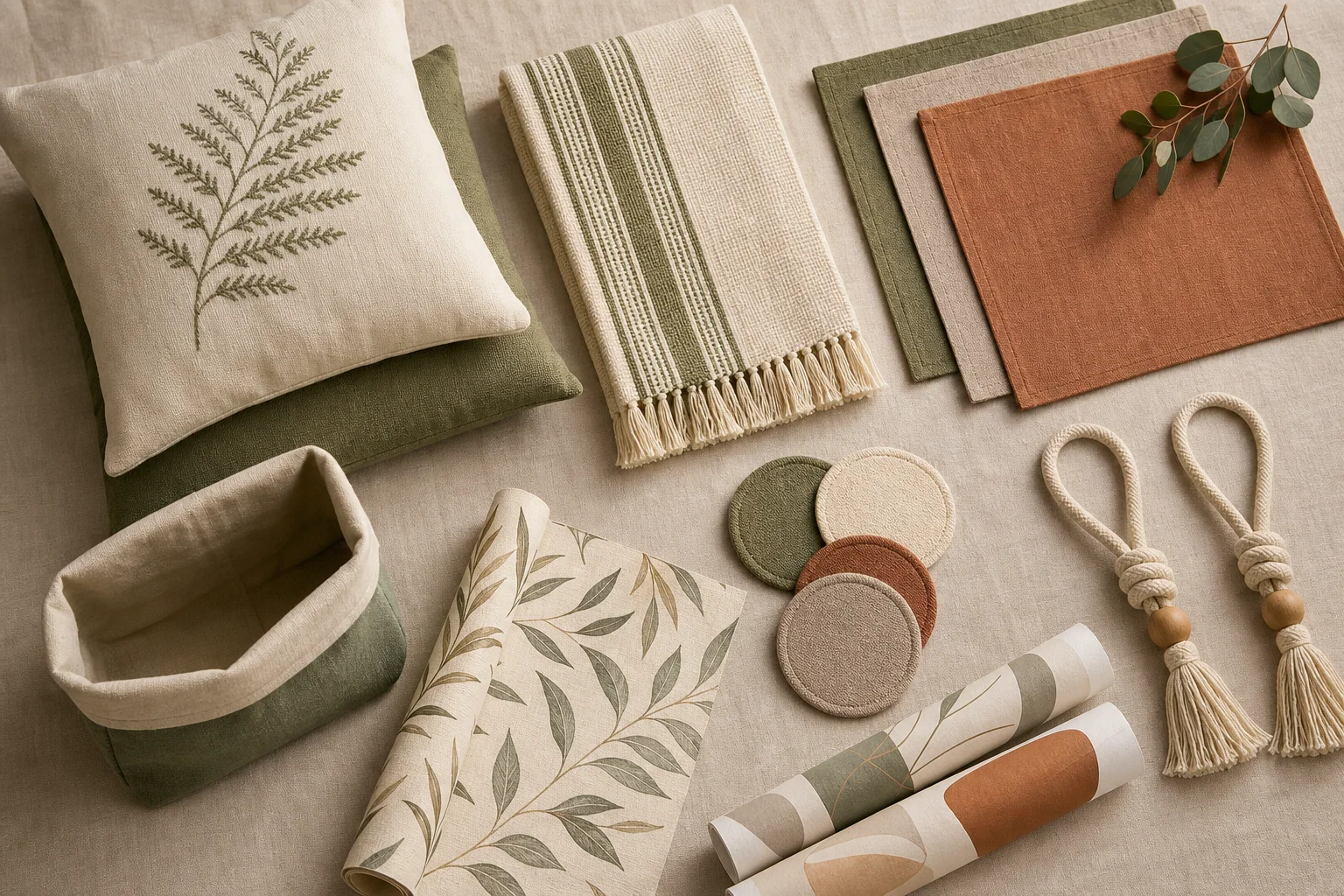
Cushion covers are the cleanest way to sell the tactile side of 2026 decor. Linen-look weaves, embroidery, velvet, boucle-style texture and restrained fringe can change a room in seconds. The cover also folds into a small mailer, which is why it belongs near the top of the list.
Sell covers without inserts. Keep the size range tight, state whether dimensions are measured flat, and use a hidden zipper that opens wide enough for the intended insert. On the sample, check fabric weight, seam allowance, zipper travel, loose yarns and dye transfer. A three-cover color story can support a higher order value without increasing the parcel much.
2. Lightweight throw blankets
Layered comfort appears across 2026 trend coverage, and a light woven throw gives shoppers that look without buying new furniture. Earth brown, olive, muted blue and butter yellow work well as collection colors. A subtle check, stripe or patchwork motif adds the collected feel shoppers are after.
Skip thick chunky knits for an early assortment. They take up more space, snag easily and can look very different after compression. Set a maximum unit weight and packed size, then check shedding, edge finish, odor and recovery after the sample has spent several days in its shipping pack.
3. Linen-look curtain panels
Curtains bring texture and softness to a room, yet they still fold flat. Linen-look polyester or blended fabrics can deliver the visual cue without the wrinkle and shrinkage complaints that come with poorly specified natural linen.
Returns usually start with unclear sizing. Show inches and centimeters, state whether the listing is one panel or a pair, name the header type and describe opacity in plain language. Photograph the fabric in daylight and against a window. Check hem alignment, panel-to-panel color, shrinkage and light filtering on the exact color you plan to sell.
4. Decorative curtain tiebacks
Tassels, trims and vintage details are showing up again, which makes curtain tiebacks a low-cost add-on with strong styling value. Rope, braided cord and antique-tone magnetic versions can sit beside curtain panels or sell as a quick room update.
Always sell a matched pair. Test magnet strength on the intended fabric weight, inspect tassel shedding and confirm that metal finishes don’t rub onto pale curtains. Keep photography honest about scale; a close-up can make a small tieback look far larger than it is.
5. Printed shower curtains
Wellness-led bathrooms are a major 2026 theme. A shower curtain lets the customer add color, botanical pattern or a soft spa palette without buying heavy bathroom accessories. It is also a broad print surface for original artwork.
Use clear fabric composition, finished dimensions and hook-hole count. Check print alignment, stitched hems and water behavior after washing. Don’t promise that a curtain prevents mildew or works without a liner unless the product and care instructions support that claim. Sell the curtain alone or with non-breakable hooks, never with glass accessories.
6. Small washable accent mats
A small flatweave mat can bring pattern to an entry, bedside or bathroom while staying far easier to handle than a large rug. The useful limit is important: cap the assortment around doormat or 2-by-3-foot sizes and avoid thick pile.
Check edge curl, wash shrinkage, color bleed and the marks left by folding. If the listing says non-slip, test the actual backing on common hard floors and write suitable-surface guidance. A cheap mat with an untested backing can become a safety complaint, so this product needs more proof than a pretty lifestyle photo.
7. Unframed art print sets
Gallery walls, personal art and eclectic collections appear throughout the current SERP. Unframed print sets let a seller serve that demand without shipping glass, acrylic sheets or oversized frames. Sets also make the purchase easier because the customer doesn’t have to build a group one print at a time.
Choose two or three controlled sizes and explain whether the frame is excluded in every image caption. Test color, paper weight, trimming and curling. For sellers working with original artwork, the USAdrop POD service can support a print-led route; for sourced prints, approve the paper and packing method before launch.
8. Textile wall hangings
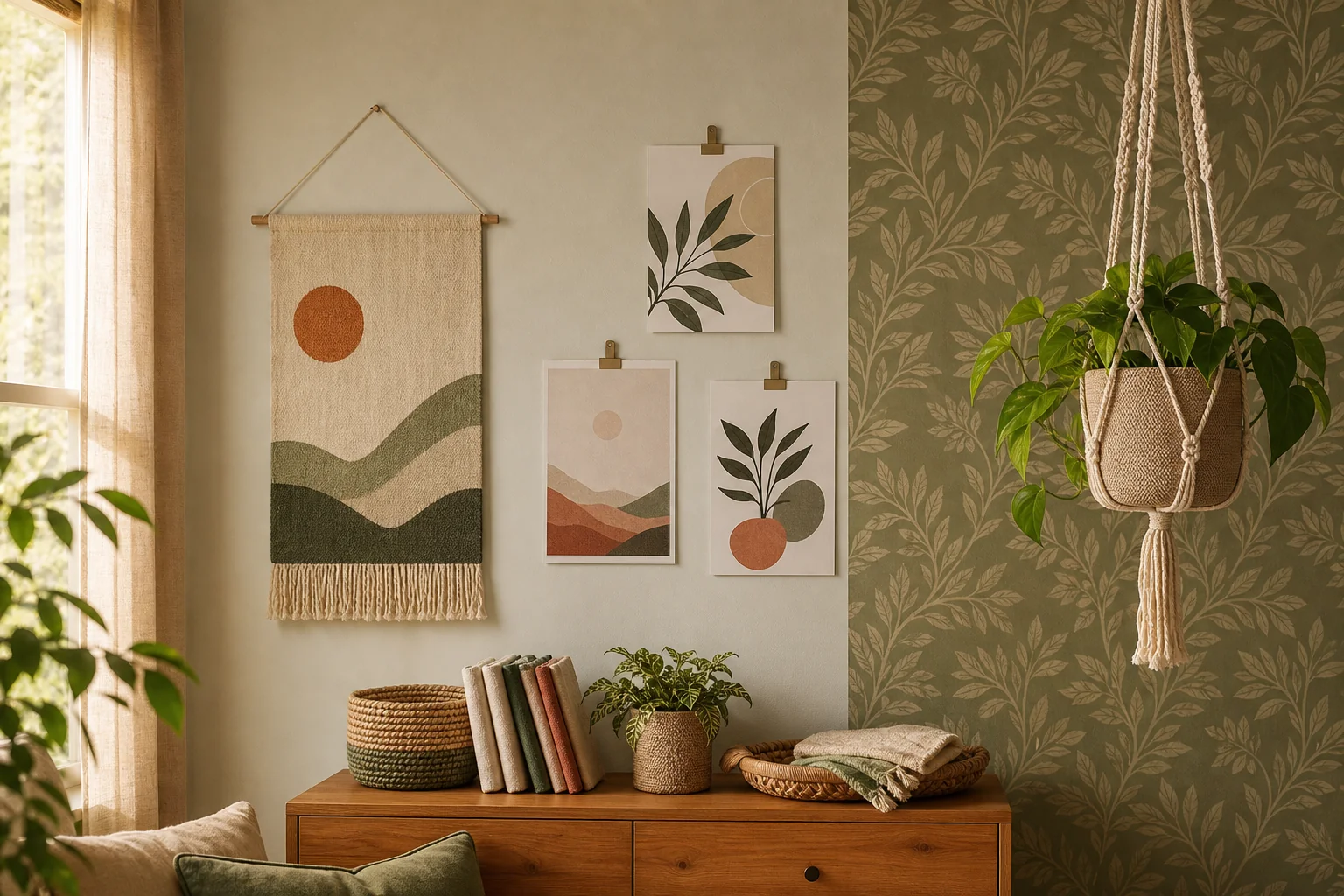
Flat walls are giving way to more tactile treatments. Printed, woven or embroidered wall hangings add texture without a glass front. They can be folded or rolled, and a focused design collection works for bedrooms, home offices and reading corners.
Check symmetry, hem direction, color consistency and the security of loops or hanging points. If a wood dowel is included, measure the final parcel length after packing; a long rod can create a surcharge even when the product is light. A fabric-only version with a sleeve often ships more efficiently.
9. Removable wallpaper panels
Pattern drenching is one of the clearest 2026 signals, and removable wallpaper gives renters or cautious buyers a way to try it. Smaller panel kits and samples are easier to test than wide commercial rolls, and they can be grouped by room or color story.
The risk sits in the adhesive. Test application and clean removal on the surfaces named in the instructions, check print repeat between panels and keep production lots consistent. Tell customers how to prepare the wall and which surfaces to avoid. Cap roll length so the package stays within your route limits.
10. Fabric banners and bunting
Playful and nostalgic details are back, especially in seasonal rooms, nurseries and hobby spaces. Fabric banners, soft pennants and non-electric garlands create that effect with little packed volume. They are also easy to theme around holidays or original illustrations.
Inspect attachment points, print alignment and tangle resistance. Keep long cords away from children’s reach and don’t market the product as a toy. A short adult-decor warning and accurate finished length will prevent many avoidable complaints.
11. Macrame plant hangers
Natural texture still matters, but ceramic planters are a poor parcel product. A macrame hanger captures the craft look and lets the customer use a pot they already own. The product packs down well and can be offered in a few lengths and knot patterns.
Do not include a glass or ceramic pot. Check cord thickness, knot symmetry, ring finish and finished length under light load. Any weight limit needs a real test and installation guidance. Product photos should show the supported pot diameter rather than leaving the buyer to guess.
12. Decorative metal wall hooks
Small hooks can bring an artisan or old-world detail to an entryway, kitchen or bathroom. They also solve a real problem, which gives the product more staying power than a purely decorative object.
Confirm the base size, hole spacing, screw type and wall compatibility. Test the finish for scratches and tarnish, count every hardware piece during inspection, and use only a verified load limit. Sell matched pairs or small sets so the order can absorb fulfillment costs.
13. Table runners
A table runner changes the mood of a dining space with almost no storage commitment. Printed florals, earthy stripes, scalloped edges and embroidery all match the shift toward layered, personal tables.
List exact length and width, then photograph the runner on a known table size. Check hems, pattern centering, shrinkage and dye transfer. This is a good place for small seasonal drops because the base construction can stay stable while the design changes.
14. Fabric placemat and napkin sets
Retail trend reports point to curated, mismatched tables, but breakable china is not a beginner-friendly shipping choice. Fabric placemats and napkins create the same collected effect in a format that folds flat.
Sell four- or six-place sets and label the piece count clearly. Test wash shrinkage, staining, colorfastness and seam shape after laundering. Mixing two coordinated prints gives customers the layered look without making the set feel copied from a catalog display.
15. Felt or cork coasters and trivets
Coasters and small trivets carry the warm, natural material cue into a low-cost accessory. They work best as sets, checkout add-ons or parts of a table-textile bundle rather than as a single paid-ad product.
Check thickness, edge finish, odor and moisture marks. Heat-resistance claims need controlled testing for the actual material and temperature range. Cork can crack at thin points, while felt can arrive compressed or dusty; both need a simple acceptance standard.
16. Decorative kitchen towel sets
A playful stripe, fruit motif or nostalgic illustration can put personality into a kitchen for very little money. Towels also support seasonal collections and original artwork without the breakage risk of mugs or plates.
The economics improve in sets of two or four. Check absorbency, print rub, wash shrinkage and hanging-loop strength. Avoid calling a smooth decorative towel highly absorbent until the sample proves it. The product page should say whether the towel is meant for drying, display or both.
17. Fold-flat fabric storage bins
Visible storage has to look better as rooms become more personal and lived-in. Fabric bins bring color and texture to shelves while solving clutter. They can also fold for shipping, unlike rigid baskets.
Ask for the packed dimensions in the folded state and test how quickly the bin regains its shape. Inspect handle seams, base stiffness, odor and capacity. Skip versions with large rigid panels or metal frames; they remove the shipping advantage that made the product attractive.
18. Fabric planter basket covers
Plants and nature-led rooms still appear in 2026 coverage, but shipping planters creates breakage and dimensional-weight problems. A fabric or felt basket cover gives customers the same softer look around a pot they already own.
State the base diameter, height, and recommended pot range. If the cover has a waterproof liner, test it and explain that standing water should still be avoided. Photograph the product without implying that a plant or ceramic pot is included.
19. Antique-style cabinet knobs and pulls
Small hardware swaps answer the 2026 desire for character and affordable luxury. A set of aged-brass, chestnut or hand-worked-looking knobs can change a kitchen, dresser or vanity without shipping furniture.
Compatibility drives returns. Publish center-to-center measurements for pulls, thread diameter, screw length and projection. Include the exact hardware count, check plating consistency and test one sample installation. Sets of four or six make more sense than a single knob.
20. Brass-tone metal candlestick holders
Brass accents and antique-style objects fit the shift toward collected rooms. A compact metal holder offers that cue without the fragility of glass or ceramic. A pair in staggered heights can create a stronger offer than one piece.
Use stable bases and controlled dimensions. Check wobble, finish rub, candle-size fit, and sharp edges. Sell the holders without candles unless the route and product rules support them, and include normal fire-safety guidance rather than decorative photos that place flames beside fabric.
Home decor products to avoid in a first assortment
Some of the biggest items in ranking trend articles are poor first choices for cross-border fulfillment. The issue is the final parcel, replacement cost, and support burden. Leave these formats out until you have route-specific proof that the margin can absorb them:
- Furniture and oversized shelves. Light furniture can still be billed on dimensional weight and often needs expensive protective packaging.
- Glass mirrors and glass-fronted frames. One damaged corner can turn into a full replacement and a difficult evidence dispute.
- Ceramic vases, planters and figurines. Protective foam increases the box size, yet breakage can still occur.
- Stone, concrete and heavy resin decor. Actual weight and impact damage make the delivered cost hard to control.
- Wired lamps, batteries and liquid fragrance products. Electrical, battery, leakage and route restrictions add checks that a first assortment doesn’t need.
- Large rugs, filled floor cushions and chunky knits. Compression can change the product, and the uncompressed return parcel may cost far more than the outbound shipment.
How to source the best home decor products to sell
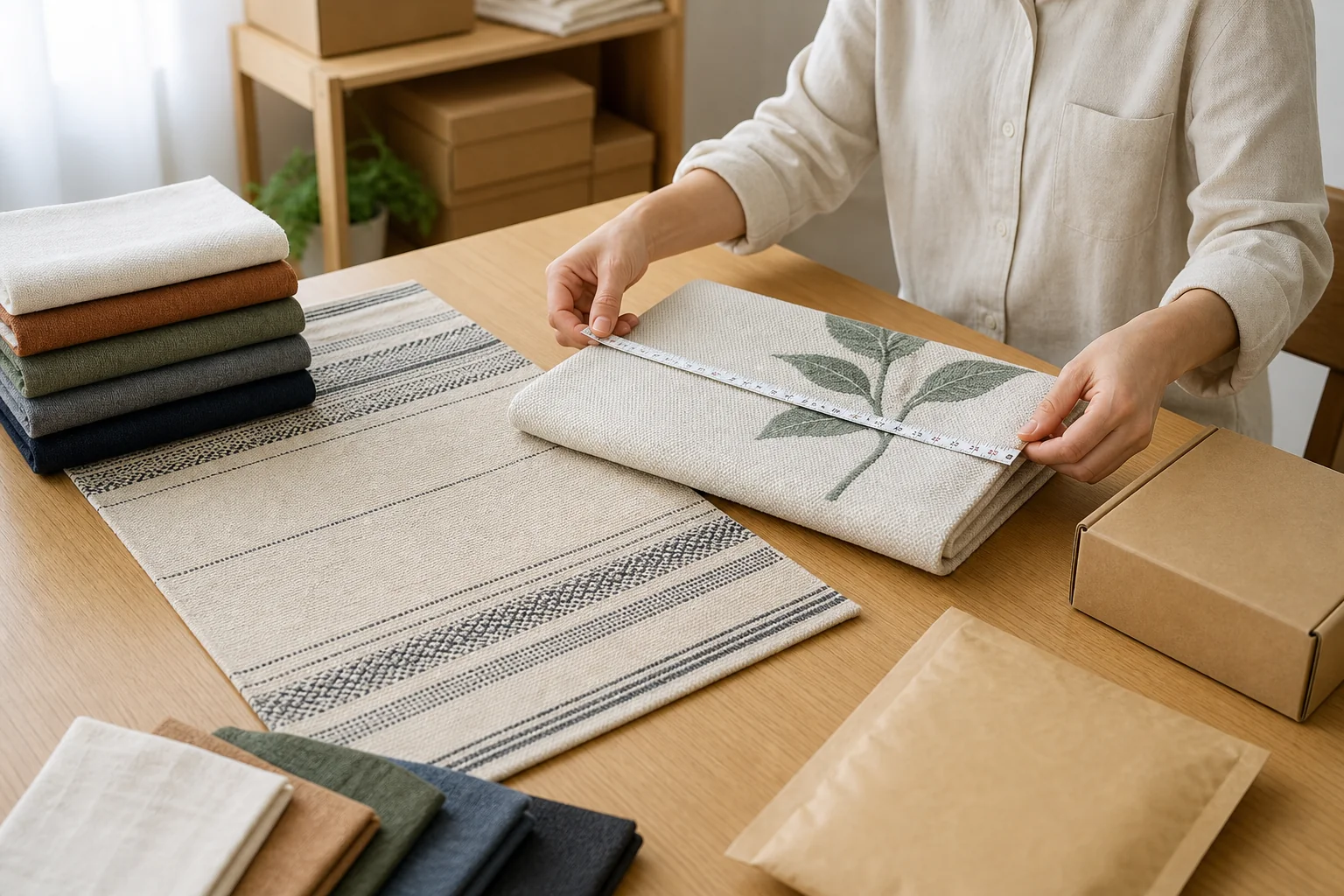
We can start with a written product and parcel specification. A supplier photo is a reference, not an acceptance standard. Use this workflow before you import a listing:
- Set a parcel cap: Choose a maximum packed length, width, height and actual weight for the route you plan to use.
- Request the exact material and construction: Name fabric composition, finish, hardware and exclusions such as glass, ceramic, batteries or liquids.
- Order the real variation: Sample the exact color, size and supplier. A beige sample doesn’t approve the black version.
- Write observable QC checks: Record dimensions, color, stitching, print position, hardware count, odor, stains and packaging condition.
- Run a route test: Send the parcel through the same service your customers will receive and record scans, delivery time and package condition.
- Launch a narrow collection: Begin with a few related items that share packaging and inspection rules, then add designs after the base product is stable.
USAdrop’s product sourcing service can turn a reference image or listing into a supplier request with written limits. The fulfillment workflow then connects order handling, inspection, packing, shipping and tracking. Ask for the quote using the final packed parcel, not the bare product dimensions.
Once the base SKU is stable, small brand touches are safer than a rigid gift box. Review private customization options for labels, flat inserts, stickers or coordinated packaging that doesn’t increase the box size. Sellers using Shopify can also review the Shopify dropshipping workflow before testing a connected order.
How should you merchandise home decor products in 2026?
We need to sell a room idea, not a random feed of products. Pair one anchor pattern with two quieter textures, photograph the group in a real room and let customers buy the pieces separately or as a set. Keep the palette tight enough to coordinate, but avoid making every item match exactly.
- Build by room. A “warm reading corner” collection can combine a cushion cover, light throw, print set and curtain tiebacks.
- Bundle low-ticket items. Coasters, towels and tiebacks usually need sets or add-on placement to support the fulfillment cost.
- Use scale references. Show dimensions beside a sofa, table, window or standard pot, then repeat them in the listing copy.
- Photograph the material closely. Texture is the selling point, so include weave, edge and hardware details rather than only a wide lifestyle shot.
FAQ about the best home decor products to sell
What home decor products sell best?
Products that make a visible room change at a manageable price tend to be easier to market. In 2026, that points to textured textiles, pattern-led wall decor, table accessories and small functional accents. Your own sales data should decide the winners after a controlled launch.
Is home decor good for dropshipping?
Yes, if you choose compact and non-fragile formats. Cushion covers, unframed prints, table textiles and fold-flat organizers are easier starting points than mirrors, ceramics, lamps or furniture. The delivered margin still has to include packing, shipping and expected replacements.
What home decor products are easiest to ship?
Flat and foldable products are usually the easiest to plan around. Unframed prints, cushion covers, table runners, placemats, coasters, towels and small textile wall hangings can stay compact. Confirm the final packed dimensions and run a route test before making a delivery promise.
How do I find a reliable home decor supplier?
Send a written specification that includes material, dimensions, packed parcel limits, target country and banned components. Order the exact SKU, document the approved sample and turn its measurable traits into a QC checklist. Supplier labels matter less than repeatable order-level proof.
Can I private label home decor products?
Many soft goods and small accessories can take a woven label, sticker, hangtag or flat insert. Start with a branding method that doesn’t change the parcel size. Approve the branding sample and add its placement, color and packing instructions to the product specification.
Build a lighter home decor assortment with USAdrop
Pick three to five product formats from this list and write the parcel limits before you ask for quotes. That keeps the first supplier search focused and makes the samples easier to compare.
Send USAdrop a reference link or image through its sourcing service, include the destination market and state that glass, ceramic, brittle inserts and oversized packing are excluded. After the sample passes, connect fulfillment, test one order and add branding only when the delivered product is stable.