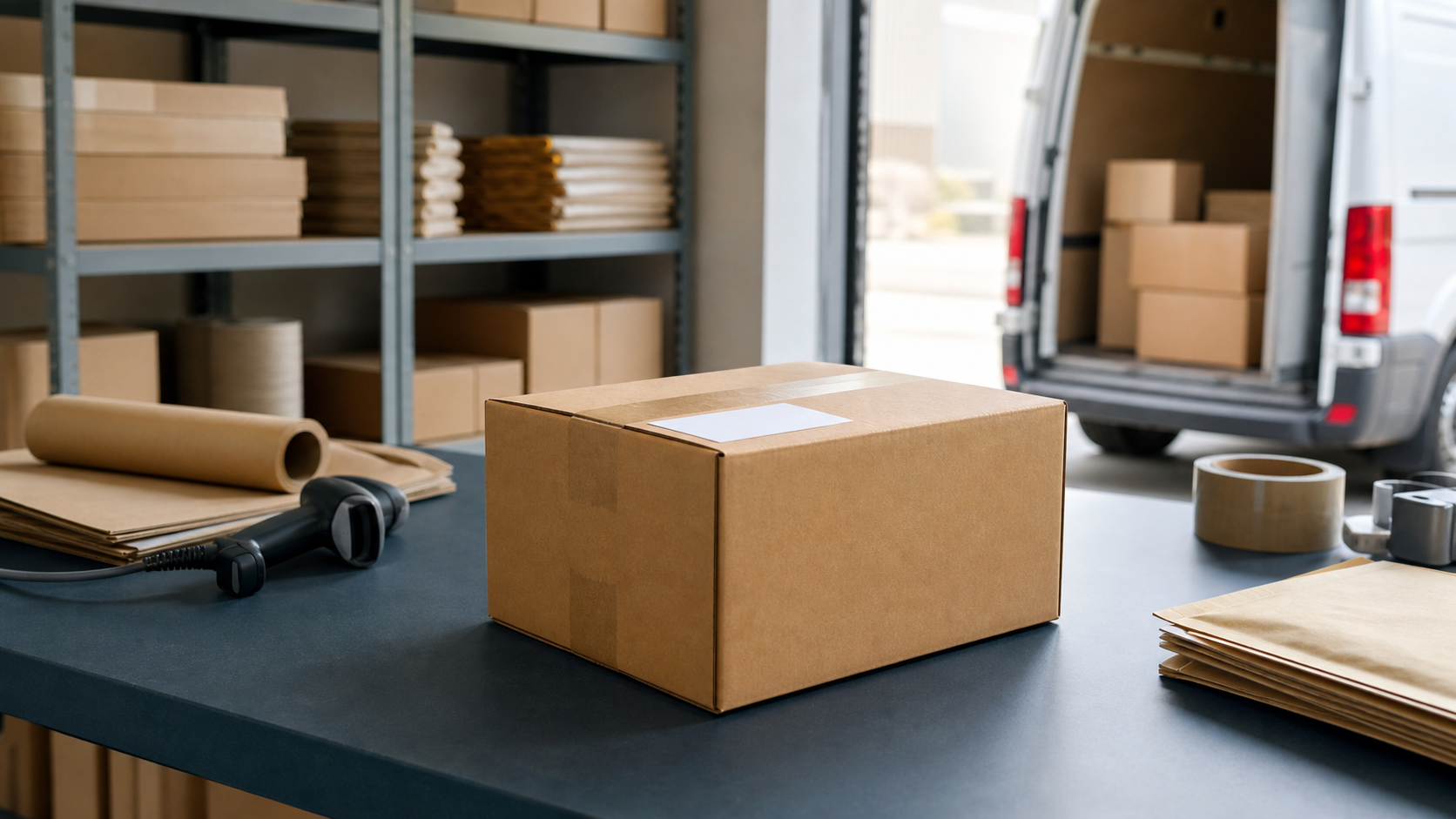
If you run an e-commerce business, parcel shipping is how your products get into your customers’ hands. Each order travels through a carrier network with its own shipping label and tracking number. While the process is straightforward—pack, measure, buy postage, label, and track—the secret is in the details. A box that is just one inch too big or slightly miscalculated can significantly raise your final shipping costs.
What Is Parcel Shipping?
Parcel shipping moves separate, labeled packages that can pass through a carrier’s pickup, sorting, transportation, and last-mile delivery system. Common examples include clothing in a mailer, cosmetics in a small carton, replacement parts, books, and household accessories.
“Parcel” is not one universal size class. Each carrier and service sets its own weight, dimension, and content rules. A box accepted by one service may need another service or freight handling elsewhere. Check the current carrier guide before promising a method or price.
For online sellers, parcel transportation is one part of the wider order fulfillment process, which also includes inventory storage, picking, packing, labeling, returns, and customer updates.
What Counts as a Parcel?
A shipment normally fits parcel service when one person can handle it, it is individually boxed or mailed, and it remains within the selected carrier’s limits. Parcels range from small padded envelopes to substantial cartons.
Do not classify a shipment by weight alone. Long, bulky, irregular, fragile, or hazardous items may trigger special handling, extra fees, or service restrictions even when they are light. A compact 20-pound box and a 20-pound floor lamp create very different handling demands.
How Does Parcel Shipping Work?
Parcel shipping follows a repeatable path from order to delivery:
- Order data is confirmed. The sender checks the destination, product restrictions, promised delivery window, and contact details.
- The item is packed. The box or mailer protects the product without leaving unnecessary empty space.
- The parcel is measured and weighed. Final packed dimensions matter, not the product dimensions shown on a supplier page.
- A service is selected. The shipper compares cost, estimated transit time, tracking, insurance, and delivery coverage.
- The label is created. It includes routing information, a barcode, and a tracking number. International orders also need accurate customs data.
- The carrier receives the parcel. Pickup or drop-off creates the first acceptance scan.
- The network sorts and transports it. The package may pass through several hubs before reaching a local depot.
- Last-mile delivery is attempted. Tracking records delivery, an exception, or the need for another attempt.
The delivery estimate is not the same as a guarantee unless the chosen service explicitly says so. Weather, customs checks, address errors, peak periods, and remote-area handoffs can extend the timeline.
How Are Parcel Shipping Costs Calculated?
Parcel rates usually depend on origin, destination, service speed, package type, actual weight, dimensional weight, and surcharges. Residential delivery, remote areas, additional handling, signature service, and declared value can also affect the total.
Dimensional weight reflects the space a box occupies. The basic formula is:
Dimensional weight = length × width × height ÷ carrier divisor
The carrier compares dimensional weight with actual weight and may charge the higher figure. For example, an 18 × 12 × 8-inch carton produces 12.43 pounds when a service uses a divisor of 139, so its billable dimensional weight may round to 13 pounds. The UPS package measurement guide explains current measurement and billable-weight rules; always confirm the divisor for your carrier, service, and market.
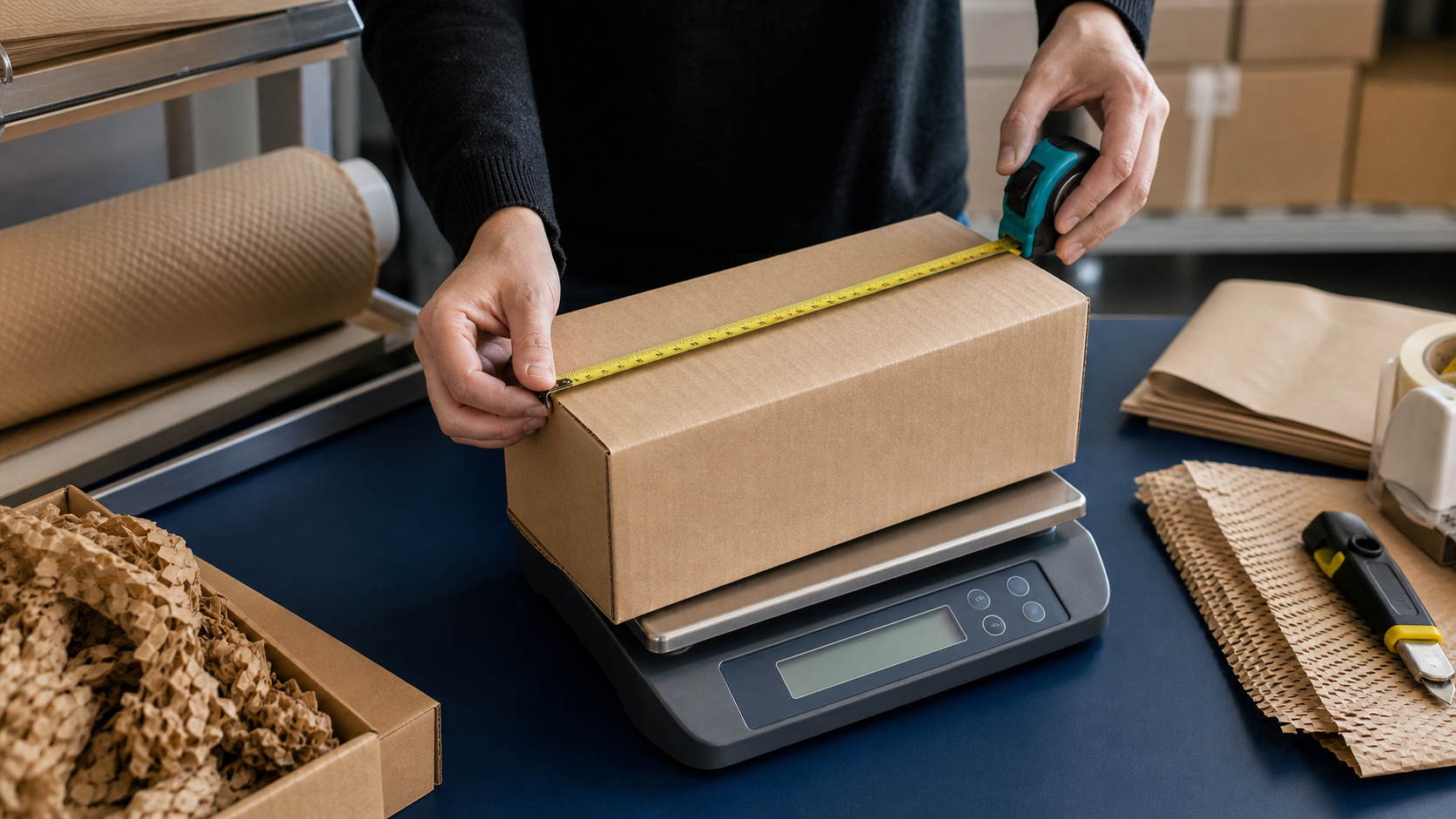
The easiest cost mistake is shipping a small item in a large box. Test a limited set of right-sized packages, record packed dimensions for each SKU, and compare the billed invoice with the quoted label cost.
How Do You Pack a Parcel Safely?
Choose a box or mailer that fits the product’s weight, shape, and fragility. A retail product box is often designed for display, not repeated drops and conveyor handling.
- Use a sturdy outer container with no crushed corners or old labels.
- Wrap fragile surfaces and keep the item away from every outer wall.
- Fill voids so the product cannot shift when the box is gently shaken.
- Seal all main seams with pressure-sensitive packing tape.
- Place the label on one flat face without folding it over an edge.
- Add liquid containment or product-specific protection when needed.
For dropshipping, neutral packaging can protect the customer experience when the supplier is not meant to appear. This guide to blind dropshipping and supplier-neutral delivery explains the operational checks behind that setup.
How Do You Choose a Carrier and Service for Parcel Shipping?
Start with the customer promise, then work backward. Compare services using the packed parcel, the real destination, and the features the order needs.
Check these factors before buying a label:
- delivery estimate and whether it is guaranteed;
- tracking quality and first-scan reliability;
- included liability coverage and claims requirements;
- pickup availability and daily cutoff time;
- address, residential, fuel, remote-area, and handling fees;
- support for returns and delivery exceptions;
- prohibited and restricted items.
Run a small test across representative zones rather than choosing a carrier from one quote. A reliable standard service can be better for margins than the cheapest option if it reduces late deliveries, lost parcels, and support tickets.
What Changes for International Parcel Shipping?
International parcels add customs declarations, product classification, declared value, origin information, duties and taxes, and destination-country restrictions. Poor descriptions such as “gift” or “accessory” can cause questions; use a specific, truthful product description.
Clarify whether duties are prepaid or collected from the recipient. Also build customs time into the delivery range and tell the customer what tracking events may look like during handoffs. Sellers sourcing abroad can review the practical tradeoffs in this guide to dropshipping shipping from China.
Never copy customs values or commodity codes from an unrelated product. When classification is uncertain, ask a qualified customs broker or the carrier rather than guessing.
How Can Ecommerce Sellers Simplify Parcel Fulfillment?
Standardization removes avoidable errors. Keep approved packaging for common SKU groups, store packed weights and dimensions, use address validation, and create rules for service selection. Send tracking automatically and review carrier invoices for adjustments.
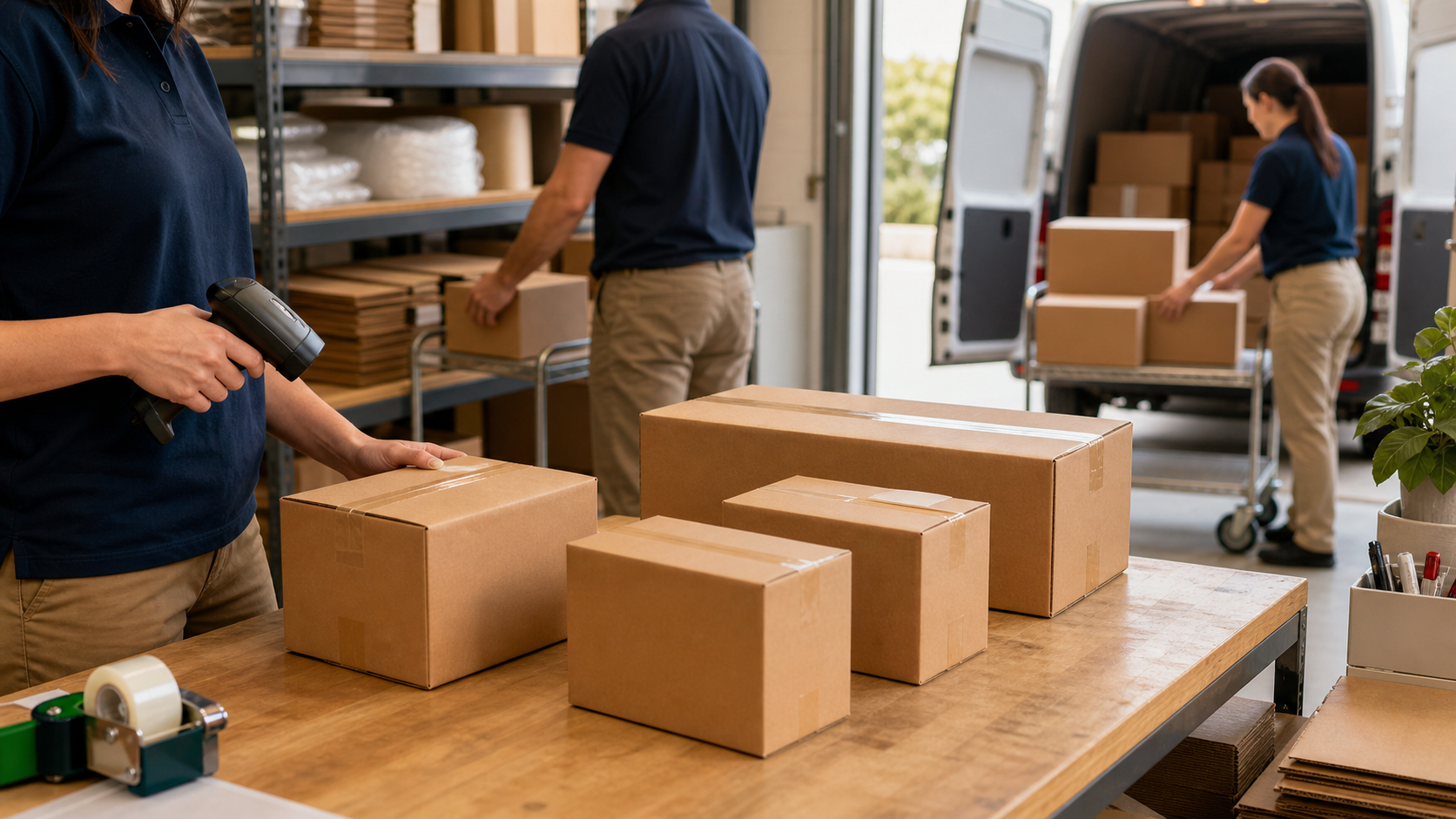
As volume grows, a fulfillment partner can store inventory, pick and pack orders, choose routes, and return tracking data to the store. Compare the exact scope of sourcing and fulfillment services rather than assuming every provider handles packaging, customs, branding, returns, and claims in the same way.
Keep ownership clear even when work is outsourced. The seller still needs accurate product data, realistic delivery promises, and a process for exceptions. In the United States, the FTC shipping rule for online orders requires sellers to have a reasonable basis for the stated shipping time; if no time is stated, the default expectation is shipment within 30 days.
Parcel Shipping Checklist for Beginners
Before the first shipment, confirm:
- The address and customer contact details are correct.
- The product is allowed on the selected route.
- Packaging suits the item and prevents movement.
- Final length, width, height, and weight are recorded.
- The service meets the promised delivery range.
- The label is flat, readable, and free of old barcodes.
- Tracking is saved and sent to the customer.
- The pickup or drop-off receives an acceptance scan.
- The team knows how to handle delays, damage, and returns.
Parcel Shipping FAQs
Is parcel shipping the same as delivery?
Parcel shipping covers the full carrier journey, including acceptance, sorting, transport, tracking, and last-mile delivery. Delivery is the final handoff stage.
Is a padded envelope a parcel?
It can be. Classification depends on the carrier’s size, thickness, rigidity, weight, and service rules, so check the selected service before labeling it.
What is billable weight?
Billable weight is the weight used to price the shipment. Depending on the service, it may be the greater of actual scale weight and dimensional weight.
Does tracking guarantee delivery?
No. Tracking records scans and exceptions, but it does not by itself guarantee a delivery date or prevent loss.
When should I use freight?
Request freight quotes when goods are palletized, oversized, difficult to handle, or split across many cartons. Compare total cost and damage risk, not weight alone.