Why are shipping zones one of the most hidden threats to your online store’s profitability? When you ship a parcel, distance dictates cost. The farther a customer is from your shipping origin, the higher the carrier rate—meaning the same item can generate strong profit in nearby zones but barely break even in distant ones if you subsidize shipping.
This is a major blind spot for many dropshippers. Because the supplier manages warehousing and the carrier sets the transit route, merchants usually just pay the final shipping quote without realizing how heavily it impacts net margins. Yet that single line item can be the difference between a profitable sale and a financial loss. To keep your store healthy, it is essential to track profit by region, set location-aware pricing, and partner with suppliers located closer to your primary customer base.

What Are Shipping Zones?
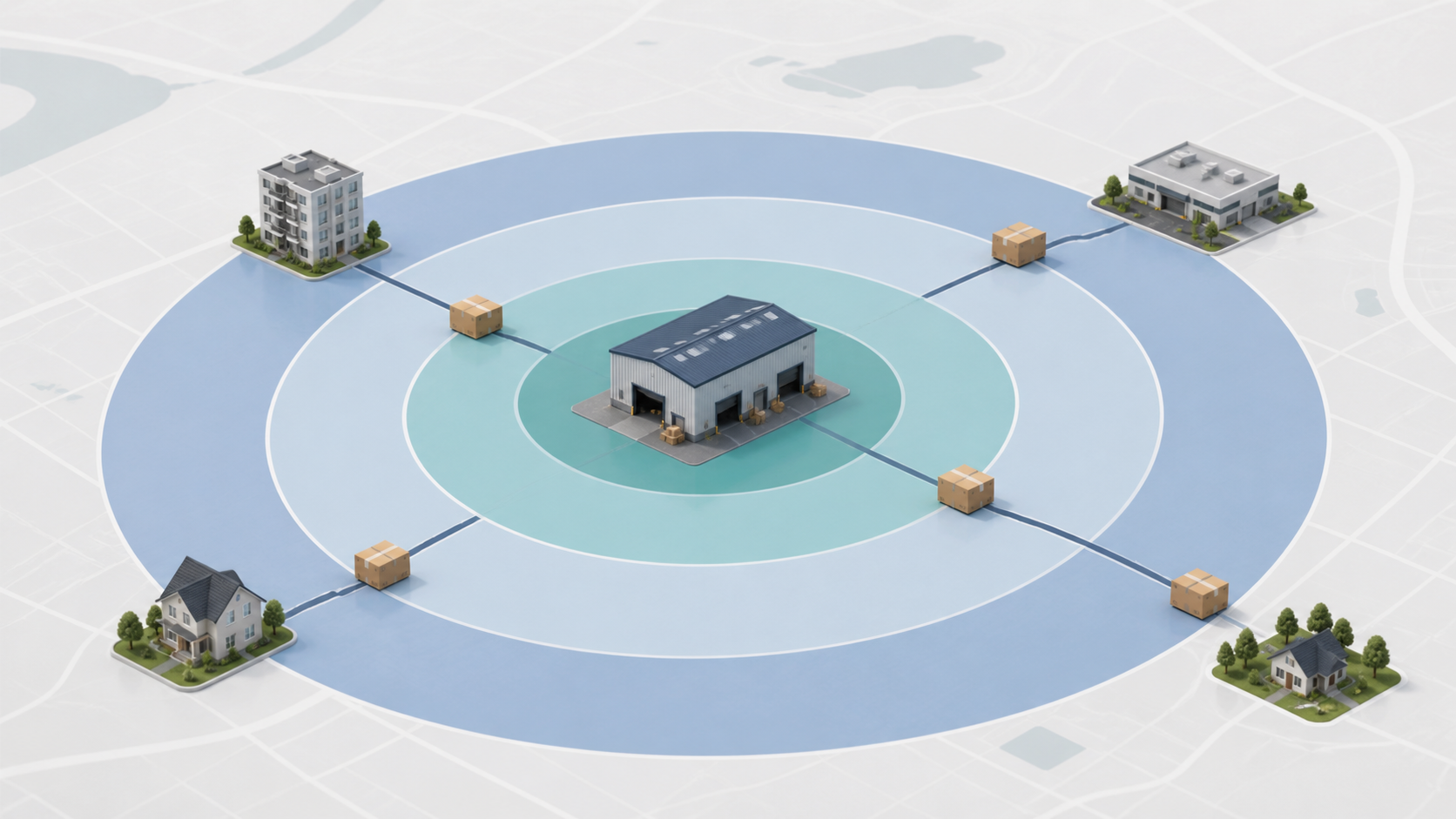
Carrier shipping zones are distance bands used to price eligible parcel services. They are relative to the parcel’s origin, not permanent labels attached to a city or customer. A destination may be close to one supplier and far from another, so the same shopper can fall into a different zone when the fulfillment origin changes.
The USPS distance guide explains that its zoned services use Zones 1 through 9 and that price generally increases with distance. Other carriers publish their own zone charts and service rules, so merchants should verify current quotes instead of assuming that every carrier maps a route the same way.
Shipping platforms also use the term differently. A checkout shipping zone is a merchant-defined group of countries or regions that shares available rates. Shopify’s official guide to setting up shipping zones covers this configuration. In practice, a dropshipping store must manage both concepts:
- Carrier zone: helps determine the label cost from a specific origin.
- Checkout zone: determines what shipping service or fee the customer sees.
Confusing them creates bad pricing decisions. A single flat checkout rate may cover several carrier zones with very different costs.
How Shipping Zones Change Profit
Shipping zones usually influence four profit drivers at once: label cost, delivery promise, pricing, and post-purchase risk. The effect is not identical for every product or route, but it should be visible in the unit economics.
First, a longer route often raises the base transport cost for zoned services. Second, distant delivery may require a faster service to meet the same promise, adding another premium. Third, a merchant may absorb that increase to protect conversion. Finally, longer transit can increase the chance of a delay inquiry, refund request, or replacement, even when the parcel eventually arrives.
Zone is only one input. Billable weight, package dimensions, residential delivery, remote-area fees, fuel adjustments, and peak surcharges can matter just as much. Start with parcel shipping basics if you need to separate these charges before comparing zones.
Calculate Profit by Shipping Zone
Do not judge a shipping method only by its average label price. Calculate contribution profit for each important destination group:
Contribution profit by zone = product revenue + customer shipping fee – product cost – pick and pack – carrier charge – payment and platform fees – acquisition cost – expected return or replacement cost
This is contribution profit, not accounting net profit. It is still more useful than gross margin alone because it exposes the destination-dependent costs attached to an order.
Then calculate the blended shipping cost using your real order distribution:
Zone-weighted shipping cost = sum of each zone’s order share multiplied by its average landed shipping cost
Use shipped orders from the last 30 to 90 days when possible. A national average from a supplier can hide the routes that are eroding margin.
A simple zone-profit example
Assume a product sells for $42. Before outbound shipping, the product, fulfillment, fees, advertising, and expected after-sales costs total $31. The figures below are hypothetical, but the method is reusable.
| Metric | Near-zone order | Far-zone order |
|---|---|---|
| Selling price | $42.00 | $42.00 |
| Non-shipping costs | $31.00 | $31.00 |
| Carrier charge | $5.50 | $9.50 |
| Contribution profit | $5.50 | $1.50 |
| Contribution margin | 13.1% | 3.6% |
The far-zone sale still produces a positive figure, but its buffer is thin. One reshipment or service adjustment could erase several successful orders. A general guide to dropshipping profit margins can help you place this calculation within the wider store P&L.
Order mix also matters. If 60% of orders cost $5.50 to ship and 40% cost $9.50, weighted shipping is $7.10. If a campaign shifts 70% of orders to the far group, weighted shipping rises to $8.30 without any change in product price. Review geography whenever ads expand into a new region.
How to Price Shipping by Zone Without Hiding Losses
There is no universal best rate structure. The right choice depends on margin, product type, customer expectations, and how widely zone costs vary.
- Free shipping: build a realistic zone-weighted cost into the product price. Add a safety buffer, but avoid using the most expensive route as the default if it makes nearby orders uncompetitive.
- Flat-rate shipping: use a flat fee only after modeling which zones it over-recovers and under-recovers. Review the mix each month.
- Threshold shipping: set the free-shipping threshold from contribution profit, not from an attractive round number. Larger baskets can offset delivery cost, but only if the added items carry enough margin.
- Calculated rates: expose a closer estimate at checkout when price precision matters more than a single simple message.
- Regional offers: limit free shipping or promotional rates to destinations where the economics support the promise.
Do not solve a zone problem by defaulting every order to the fastest service. Compare the margin and conversion effect before paying for speed. The framework in this guide to expedited shipping costs helps evaluate when the premium is justified.
Choose Suppliers and Warehouses by Zone
A low product quote is not necessarily the lowest delivered cost. Before approving a supplier or fulfillment location, request the dispatch origin, packed dimensions, billable weight, available services, sample quotes to representative destinations, surcharge rules, and normal handling time.
Test at least three customer locations: one near your main demand cluster, one typical destination, and one costly or remote route. Compare the full cost and delivery estimate, not just the base rate.
If sales are concentrated, regional inventory can shorten average distance and protect margin. It may also improve delivery consistency. However, a second warehouse adds stock allocation, replenishment, and split-shipment complexity. Use order fulfillment services to evaluate the operational questions alongside transport cost.
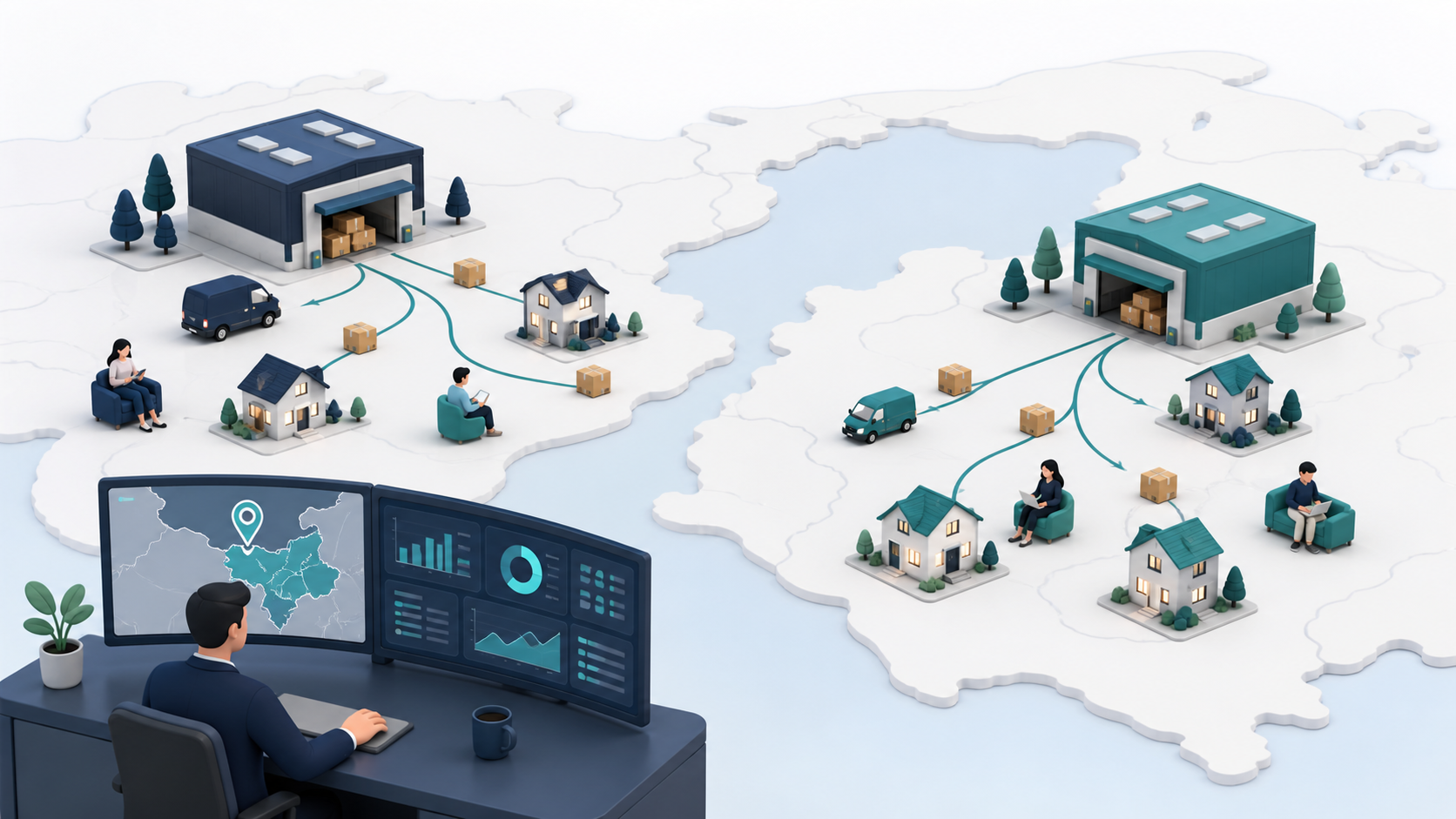
For cross-border sourcing, compare direct delivery with bulk movement into a target-market facility. Direct shipping can suit early testing because it avoids local inventory commitments. Stocking closer to customers may make sense once demand is repeatable and the savings exceed inbound freight, storage, and handling. This guide to dropshipping shipping from China explains the wider route and method tradeoffs.
When Higher Shipping Zones Still Make Sense
A distant order is not automatically a bad order. It may remain attractive when the product is light, the margin is high, the customer pays part of delivery, or the market has a strong repeat-purchase rate. A higher shipping cost can also be acceptable when it unlocks a less competitive market.
Judge the whole customer relationship. A first order with modest contribution may be worthwhile if repeat purchases are proven, but do not use hoped-for lifetime value to excuse unknown unit economics. Keep an acquisition limit for each destination group and reduce spend when actual results miss it.
Shipping Zones FAQ
What is a shipping zone?
A carrier shipping zone is a distance band used for pricing certain services from a parcel’s origin to its destination. A checkout zone is a group of regions that shares the rates shown to customers.
Do all carriers use identical zones?
No. Carriers publish their own zone maps, service rules, rate tables, and surcharge policies. Compare current quotes for the exact origin, destination, parcel, and service.
Can zones change by warehouse?
Yes. Because carrier zones are origin-relative, moving stock or switching suppliers can change the zone for the same customer. Recalculate costs before changing an origin.
Should distant customers pay more?
Sometimes. A regional fee, calculated rate, or minimum order threshold can protect margin. Test the effect on conversion and customer expectations before changing checkout.
How often should zone profit be reviewed?
Review it at least monthly and after material changes to rates, package size, suppliers, warehouses, target markets, or service levels.
Start with one high-volume SKU this week. Export its recent orders, group them by origin and destination, calculate contribution profit for each group, and fix the lowest-margin route before scaling the next campaign.