Can an apparel dropshipping store grow without filling its catalog with hundreds of random styles? Yes—growth depends on far more than finding inexpensive clothing and running ads. Apparel buyers evaluate fit, fabric, color accuracy, presentation, and delivery as a total package. A single weak link in that experience can quickly turn a promising order into an expensive exchange, refund, or negative review.
Building a profitable apparel business requires a focused catalog and a tight operational foundation. The following five apparel dropshipping strategies help e-commerce sellers curate a high-converting offer, minimize avoidable sizing errors, and scale sustainably only after the underlying customer experience is proven.
1. Focus Your Apparel Dropshipping Niche
A focused niche makes product selection, creative direction, and customer acquisition easier. “Women’s fashion” is too broad to guide useful decisions. “Breathable travel clothing for women who pack light” gives the store a customer, use case, visual style, and product filter.
Choose a niche that can support several related purchases rather than one isolated viral item. Review whether shoppers buy tops, bottoms, layers, or accessories for the same need. A coherent assortment can increase average order value without making the store feel like a general marketplace.
Validate demand and operating fit
Demand is only one part of apparel dropshipping product selection. Before listing a garment, check:
- whether customers describe a clear occasion or problem;
- whether the item can be shown convincingly in short videos and photographs;
- whether the delivered cost leaves room for advertising, exchanges, and support;
- whether the supplier can keep the chosen colors and sizes available; and
- whether the garment can travel without frequent damage or presentation problems.
Use marketplace reviews and social comments to collect buyer language, but do not copy another store’s positioning. Look for recurring questions about fit, opacity, warmth, stretch, pockets, or washing. Those questions reveal what your product page must answer.
For initial product ideas, explore USAdrop’s dropshipping product guide and then narrow the candidates according to one audience and one use case.
2. Control Apparel Dropshipping Variants
Every additional size and color creates another inventory record, product image, supplier dependency, and opportunity for a picking error. A 12-color garment in six sizes is not one product operationally—it is 72 variants.
Start with a small capsule rather than a huge apparel dropshipping catalog. Select a few complementary garments, restrict the first launch to proven colors, and make sure the same supplier can support the important variants. A tighter range concentrates traffic and gives each SKU enough order data to guide a decision.
Build a variant scorecard
Track performance at the variant level, not only at the product level. Useful fields include:
| Variant measure | What it tells you | Growth decision |
|---|---|---|
| Conversion rate | Whether the offer attracts the intended shopper | Improve or remove weak options |
| Cancellation rate | Whether stock data is dependable | Pause unreliable variants |
| Exchange reason | Whether fit or expectations are unclear | Correct the chart or content |
| Delivered margin | Profit after product, shipping, fees, and exceptions | Scale only profitable variants |
| Repeat purchase rate | Whether the garment creates lasting satisfaction | Expand around proven styles |
Do not add more colors because a supplier has them. Add a variant when customers request it, the content team can present it accurately, and the supply chain can fulfill it consistently.
3. Improve Apparel Fit and Quality
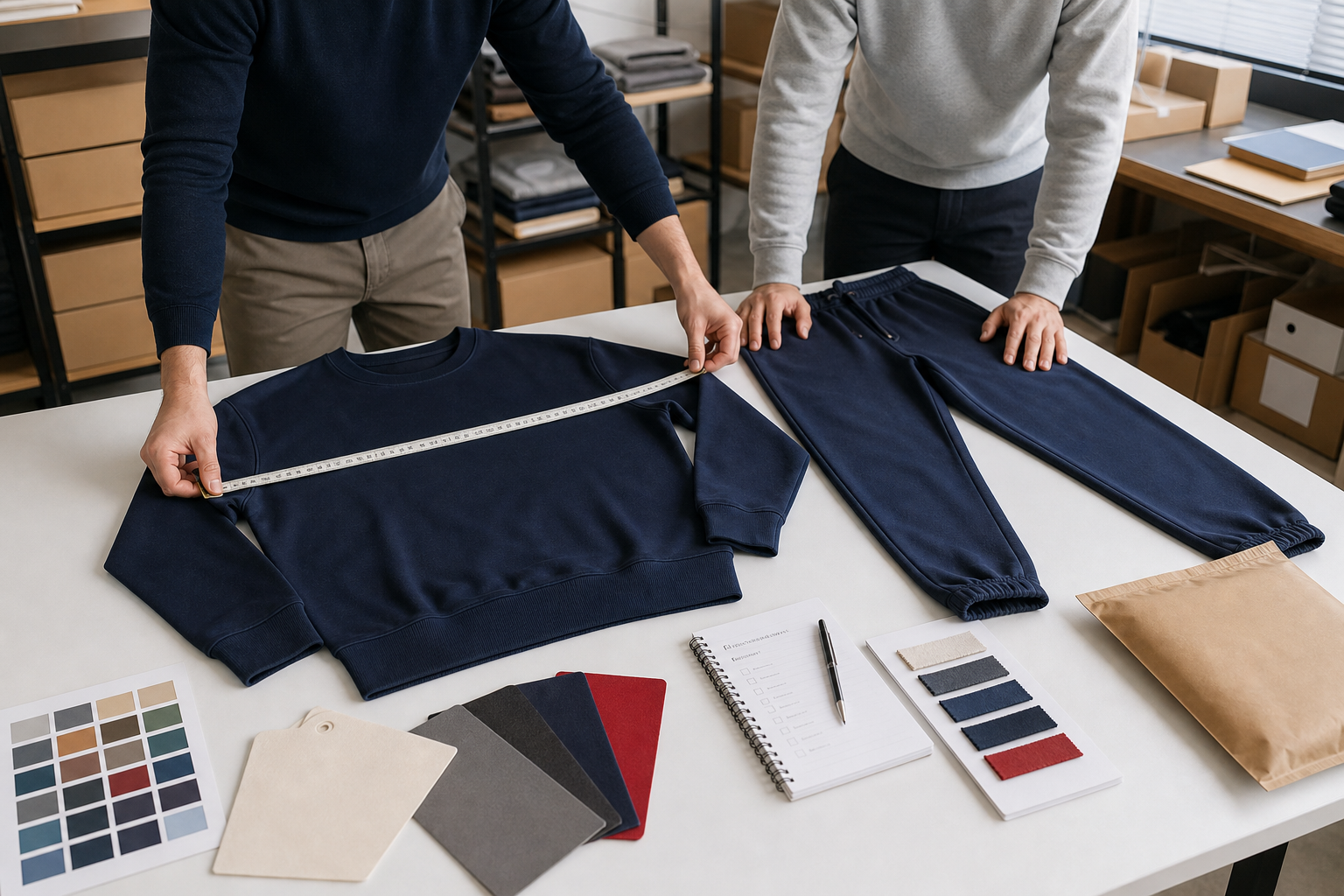
Fit uncertainty is one of the largest obstacles in apparel dropshipping. Labels such as S, M, and L are not universal, and two suppliers may use different measurements for garments that look identical online.
Order the exact samples you plan to sell. Measure the chest, waist, hip, shoulder, sleeve, rise, inseam, and total length as relevant. Compare those measurements with the supplier chart and record any tolerance. Test at least one light color and one dark color because opacity, dye transfer, and visible stitching can differ.
Turn sample checks into customer information
A useful apparel product page should include:
- garment measurements in inches and centimeters;
- clear guidance on whether the fit is slim, regular, relaxed, or oversized;
- model measurements and the size worn;
- actual fiber composition rather than a vague fabric name;
- stretch, lining, opacity, pocket, and closure details; and
- care instructions supported by the sample.
Then perform a simple wash test. Check shrinkage, twisting seams, pilling, print durability, colorfastness, zipper performance, and shape recovery. Photograph the garment before and after testing so the team can compare later batches.
Accurate information will not eliminate preference-based returns, but it can reduce surprises. Your published policy should also explain the evidence and timing required for genuine defects or incorrect variants. USAdrop’s guide to a dropshipping return policy provides a useful starting point.
4. Create Better Apparel Dropshipping Content
Supplier images rarely answer every buying question. They may hide the garment’s back, crop the length, use inconsistent lighting, or show a fit that cannot be evaluated. Reusing the same images as many other stores also makes price the easiest point of comparison.
Create original apparel dropshipping content from the verified sample. Show the product from the front, side, and back. Include close-ups of fabric texture, seams, closures, pockets, and stretch. Record movement so shoppers can see drape and fit rather than only a still pose.
Match creative to the buying decision
Each piece of content should answer one question:
- **Fit:** How does it sit on different body shapes?
- **Function:** Is it breathable, warm, stretchy, or easy to layer?
- **Styling:** What can the shopper wear with it?
- **Proof:** Does it match the description after washing and normal use?
- **Trust:** What will arrive, and how will it be packaged?
Use the same verified facts in ads and on the product page. A video that implies a thick winter fabric cannot lead to a page selling a lightweight blend. Misaligned creative may increase clicks while damaging conversion quality and return economics.
Once a design or store identity has proven demand, packaging, inserts, labels, or print-on-demand elements can make the offer harder to compare directly. Review USAdrop’s POD service and its guide to POD, branding, and customization before choosing a method.
5. Scale Apparel Dropshipping in Stages
Do not scale an apparel dropshipping product because one advertisement receives views. First prove that the correct variants reach customers, the garments match the sample, tracking updates appear reliably, and delivered orders remain profitable after exchanges and replacements.
Run a controlled launch in one target market. Keep the range small and record processing time, first carrier scan, delivery time, wrong-variant incidents, defect reports, fit-related contacts, and delivered contribution margin. Review the results by SKU and supplier.
Use a test-to-stock rule
Pure dropshipping is useful for testing demand without committing to large inventory. When a particular SKU develops stable sales, predictable fit feedback, and acceptable margins, small-batch stocking may improve availability, packaging control, and delivery speed.
Set a written gate before moving a product into stock. For example, require:
- consistent paid orders across several weeks;
- acceptable margin after refunds and support costs;
- verified batch consistency from the supplier;
- a clear replenishment lead time;
- dependable sales by size and color; and
- a target market that benefits from local or regional fulfillment.
This hybrid approach lets the store keep testing new apparel through dropshipping while placing proven variants closer to customers. USAdrop’s sourcing and fulfillment services can support product sourcing, quality checks, store connection, branding, and global delivery as the operating model develops.
Apparel Dropshipping FAQs
Is apparel dropshipping profitable?
It can be profitable when the selling price covers the product, shipping, payment and platform fees, customer acquisition, exchanges, refunds, and support. Evaluate delivered contribution margin by SKU and variant instead of relying on markup alone.
How many products should an apparel dropshipping store launch?
There is no universal number. A small, coherent capsule is usually easier to photograph, price, advertise, and support than a large assortment. Begin with enough products to serve one customer need, then expand from sales and return data.
How can apparel dropshipping stores reduce sizing returns?
Measure real samples, publish garment measurements, explain the intended fit, show model measurements, and analyze return reasons by SKU. Never assume that the supplier’s S, M, or L matches the sizing expectations of your target market.
Is print on demand the same as apparel dropshipping?
No. Print on demand is a form of on-demand fulfillment in which a design is printed after an order. Apparel dropshipping can also involve ready-made garments sourced from suppliers. A store may use both approaches for different products.
When should a store stock a winning apparel product?
Consider small-batch stocking after sales are consistent, returns and defects are understood, supplier quality is repeatable, and local inventory would materially improve delivery or availability. Test the move with a limited quantity before expanding.