The best jewelry dropshipping suppliers in 2026 are not interchangeable. USAdrop is the strongest all-round option for sellers who need sourcing, quality checks, branding, and global fulfillment in one workflow, while Branvas suits Shopify-first private-label boutiques and Richard Cannon Jewelry fits stores focused on fine jewelry.
This list compares ten supplier models, not just ten catalogs. Before choosing one, order samples, confirm material documentation, test the exact shipping route you plan to advertise, and read the current return terms. Jewelry is small and easy to ship, but plating, stone setting, skin-contact claims, packaging, and delivery consistency can quickly turn a promising product into a refund problem.
Jewelry Dropshipping Suppliers at a Glance
| Supplier | Best for | Main operating model | Check before launch |
|---|---|---|---|
| USAdrop | Multi-market stores that want one fulfillment partner | Sourcing, quality control, branding, warehousing, and fulfillment | Sample quality and route-specific delivery time |
| Branvas | Shopify private-label boutiques | Curated jewelry catalog with branded fulfillment | Paid-plan branding scope and product margins |
| Richard Cannon Jewelry | Fine-jewelry sellers | Specialist gold, silver, diamond, and gemstone dropshipping | Membership, returns, and insurance terms |
| Shopify Collective | Selling products from established Shopify brands | Store-to-store supplier network | Country eligibility and supplier-set margins |
| Syncee | Comparing suppliers by region | Multi-supplier marketplace and catalog sync | Each supplier’s shipping and return policy |
| Trendsi | US-focused fashion boutiques | Fashion catalog, sourcing, and fulfillment | Jewelry depth and destination coverage |
| CJdropshipping | Trend testing and custom sourcing | General sourcing platform with global fulfillment | SKU-level QC and warehouse location |
| Spocket | Stores prioritizing US or EU supplier discovery | Supplier marketplace with store integrations | Supplier origin, processing time, and plan limits |
| Printify | Personalized gift jewelry | Print-on-demand network | Provider-specific production and shipping times |
| AliExpress with DSers | Low-cost product testing | Marketplace sourcing plus order automation | Supplier consistency, materials, and delivery variance |
The order reflects usefulness for a jewelry store, not a universal score. A seller testing ten inexpensive necklaces has different needs from a brand selling sterling silver gifts in premium boxes.
1. USAdrop: Best Overall Partner
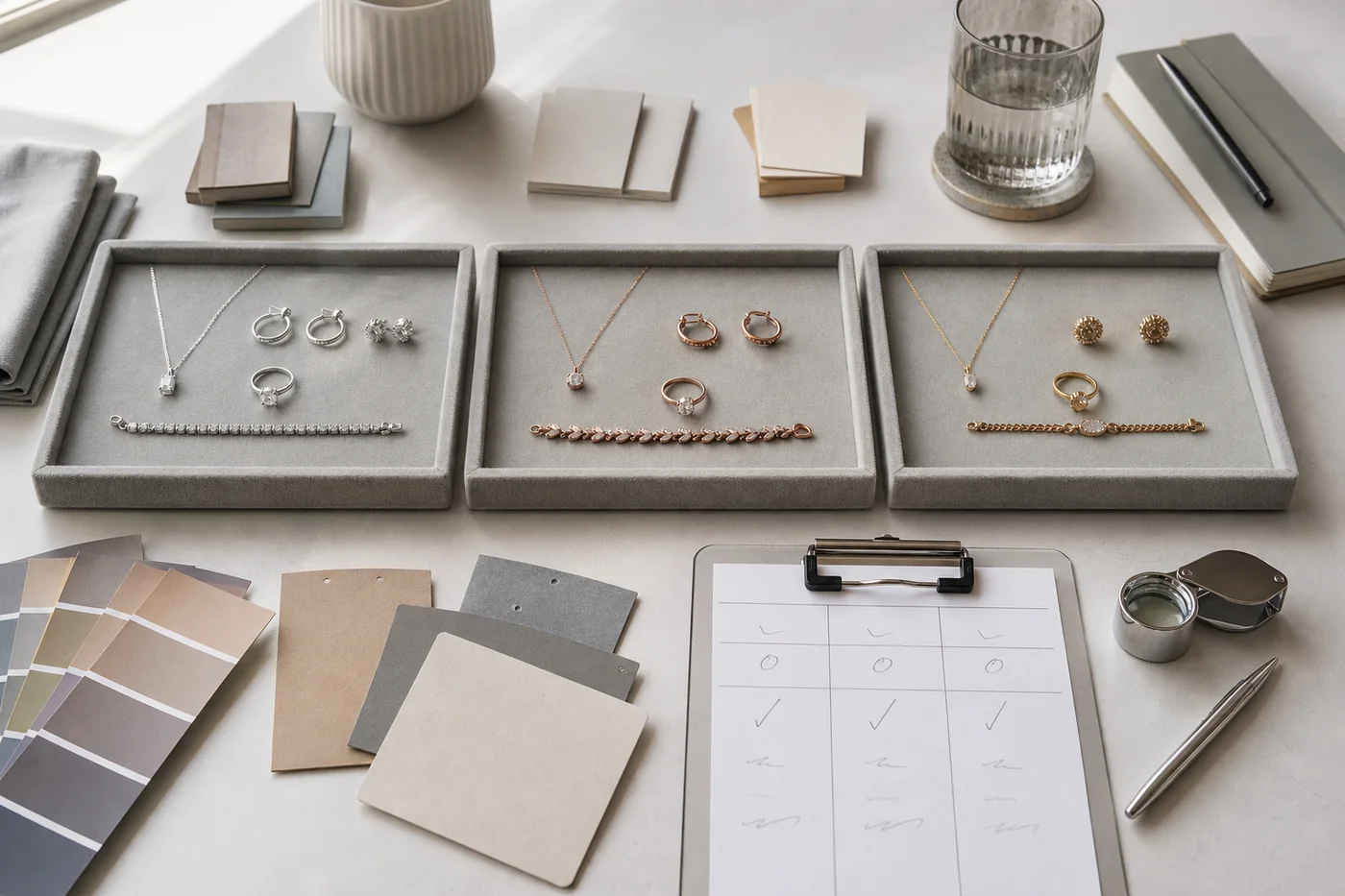
USAdrop is the best fit for sellers who want one partner to cover product sourcing, quoting, quality checks, private customization, warehousing, and fulfillment. Its official site says the network includes fulfillment facilities in several regions and supports single-item shipping, which makes it practical for testing jewelry without committing to a large opening order.
The key advantage is the path from a generic test item to a branded line. A seller can source necklaces, rings, bracelets, or accessories, inspect samples, then discuss custom packaging or private labeling once a product proves demand. That is useful when the store serves more than one country and needs a sourcing team rather than a fixed jewelry-only catalog. USAdrop also positions itself as a 3PL partner, so the relationship can continue after the initial product test.
Do not treat network-wide delivery claims as a promise for every SKU. Ask for a quote tied to the exact product, destination, warehouse, packaging, and shipping line. For skin-contact jewelry, request material details and arrange an independent compliance check for each market.
Best for: Sellers building a branded jewelry range across multiple markets.
2. Branvas: Best for Private Label
Branvas is built specifically for private-label jewelry on Shopify. Its current catalog page describes more than 800 styles across sterling silver, gold-plated, stainless steel, moissanite, and pearl collections, with no bulk inventory requirement. The Shopify connection sends products to the store and routes orders back for fulfillment.
This focus makes Branvas easier to assess than a general marketplace. Packaging, brand presentation, product imagery, and jewelry assortment sit inside one system. It is a good match for a founder whose main differentiator is a consistent boutique identity rather than the lowest possible item cost. Branvas also publishes plan-based limits and branding features, so sellers can compare the free testing route with paid brand options before committing.
The tradeoff is platform concentration. A tightly curated catalog gives less sourcing freedom than an open marketplace, and the best branding features depend on the selected plan. Calculate contribution margin after the product cost, subscription, shipping, payment fees, discounts, and returns. Then order samples from every material family you plan to sell.
Best for: Shopify founders who want branded packaging without holding jewelry inventory.
3. Richard Cannon Jewelry: Best for Fine Jewelry
Richard Cannon Jewelry is a specialist choice for stores selling gold, silver, diamond, gemstone, and bridal jewelry. The company says its dropship program includes more than 3,000 items, real-time product feeds, platform-compatible data, blind shipping, and no minimum order requirement. That specialist catalog can support a more traditional fine-jewelry store than a trend-led accessories marketplace.
Product feeds and professional images reduce listing work, while the single-item fulfillment model lets a retailer avoid financing a broad fine-jewelry inventory. The supplier also supports a recognizable wholesale workflow: the retailer lists selected pieces, receives the customer order, purchases at the supplier price, and the supplier ships to the customer.
Fine jewelry creates higher expectations. Confirm how the package is insured, who handles loss or damage, whether signatures are required, and what documentation accompanies stones and precious metals. Review the current membership cost and return rules before importing products. For high-ticket orders, place test orders to the exact countries you plan to serve and examine both the piece and the unboxing experience.
4. Shopify Collective: Best Brand Network
Shopify Collective lets eligible Shopify retailers import products from other Shopify brands and have orders forwarded to those suppliers automatically. Inventory and cost prices sync, and tracking numbers flow back to the retailer’s store. Shopify says retailer margins vary by supplier and commonly fall between 20% and 50%.
Collective is appealing when you want to sell recognizable brands rather than generic catalog products. It keeps the supplier relationship, product import, order routing, and tracking inside Shopify. There is no separate Collective fee for eligible stores, although the retailer still needs a Shopify plan and must meet country, currency, and payment requirements.
This is not a jewelry-only supplier, so selection depends on the brands available to your store. The supplier also controls the cost price and shipping offer. A mixed cart can involve multiple shipments, which affects checkout rates and the customer experience. Before importing a collection, verify supplier policies, product origins, delivery zones, returns, and whether the proposed margin still works after promotions.
Best for: Eligible Shopify stores that want to partner with established jewelry brands.
5. Syncee: Best for Supplier Comparison
Syncee is a supplier marketplace with jewelry and watches from multiple regions. Retailers can browse products, connect a supported ecommerce store, and sync selected listings. Its value comes from comparison: a merchant can search across suppliers rather than accept one company’s assortment.
The marketplace model works well for a store that wants regional options or several jewelry styles under one roof. It can also help a retailer mix handmade-looking products, fashion pieces, watches, gemstones, or eco-positioned designs. A free entry route lets sellers inspect the system before moving to a larger catalog workflow.
Syncee itself is the connection layer, not the maker of every item. Quality, processing time, packaging, returns, and shipping vary by supplier. Avoid importing a large catalog before testing. Shortlist two or three partners, order the same type of product from each, compare listing accuracy with the delivered item, and record response times when you ask a material or return question.
Best for: Retailers who want to compare jewelry suppliers by location and assortment.
6. Trendsi: Best for US Fashion Boutiques
Trendsi is a fashion-focused platform that includes jewelry and accessories alongside apparel. Its own jewelry guide describes a free-to-use model in which sellers pay product and shipping costs after an order, plus sourcing support and store integrations. That can be convenient for a US boutique that wants coordinated outfits and accessories from one operating system.
The strongest use case is merchandising, not jewelry specialization. A fashion seller can pair earrings or necklaces with apparel collections, create bundles, and use accessories to lift average order value. Trendsi may also suit merchants who prefer an app-led workflow and do not want a monthly supplier charge at the testing stage.
The limitation is equally clear: jewelry is part of a wider fashion catalog. A store built around precious materials, certificates, engraving, or luxury presentation should choose a specialist. Coverage and shipping policies can also differ by program, so confirm the current destination list instead of relying on an older blog claim. Test the clasp, finish, measurements, color accuracy, and packaging for each shortlisted SKU.
Best for: US-oriented fashion boutiques adding jewelry to apparel collections.
7. CJdropshipping: Best for Trend Testing
CJdropshipping combines product sourcing, order processing, warehousing, quality control, branding, print-on-demand options, and global fulfillment. Its platform connects with major ecommerce systems, and its sourcing model is useful when a seller finds a jewelry trend but cannot locate the exact item in a ready-made catalog.
CJdropshipping offers more flexibility than a jewelry specialist. You can test fashion jewelry, request sourcing for a new style, explore customized products, and move inventory to a nearer warehouse when sales become predictable. It is a practical option for rapid trend cycles and sellers who expect to expand beyond jewelry.
That breadth creates variance. Two items on the platform may come from different factories, materials, and warehouse routes. Evaluate the supplier at SKU level, not platform level. Order samples from the actual source, request written material specifications, inspect plating and stone settings, and confirm which warehouse will fulfill customer orders. If you change source or warehouse, repeat the test instead of assuming the result will match.
Best for: Sellers testing trends or requesting products outside a fixed catalog.
8. Spocket: Best for Regional Discovery
Spocket offers jewelry and watches from US, EU, and global suppliers through a marketplace connected to ecommerce stores. The category includes necklaces, bracelets, earrings, rings, watches, charms, and some personalized products. This makes Spocket useful when supplier location is a major filter.
Regional discovery can reduce shipping uncertainty, but a US or EU label does not automatically describe where every item is made or dispatched. Open each product record, identify the supplier’s shipping origin, check processing time separately from transit time, and review the return address. The platform can be a fast way to build a shortlist; it is not a substitute for sampling.
Spocket is a general marketplace, so brand control and product depth differ between suppliers. Subscription limits may also affect how many products or premium suppliers you can access. Choose it when your first question is “which suppliers can serve this customer region?” Choose a jewelry specialist when certification, custom packaging, or a tightly controlled material range matters more.
Best for: Stores that want to filter jewelry options by supplier region.
9. Printify: Best for Personalized Gifts
Printify is a print-on-demand network rather than a traditional jewelry wholesaler. A customer order goes to the selected print provider, which produces and ships the item. The model fits message cards, engraved pieces, personalized pendants, and gift products where the design carries much of the value.
Print-on-demand lets a seller launch many creative variations without buying finished stock. It also connects with platforms such as Shopify and Etsy, which makes it useful for event-driven products such as anniversaries, family gifts, or niche communities. The seller owns the artwork and positioning while the provider handles production.
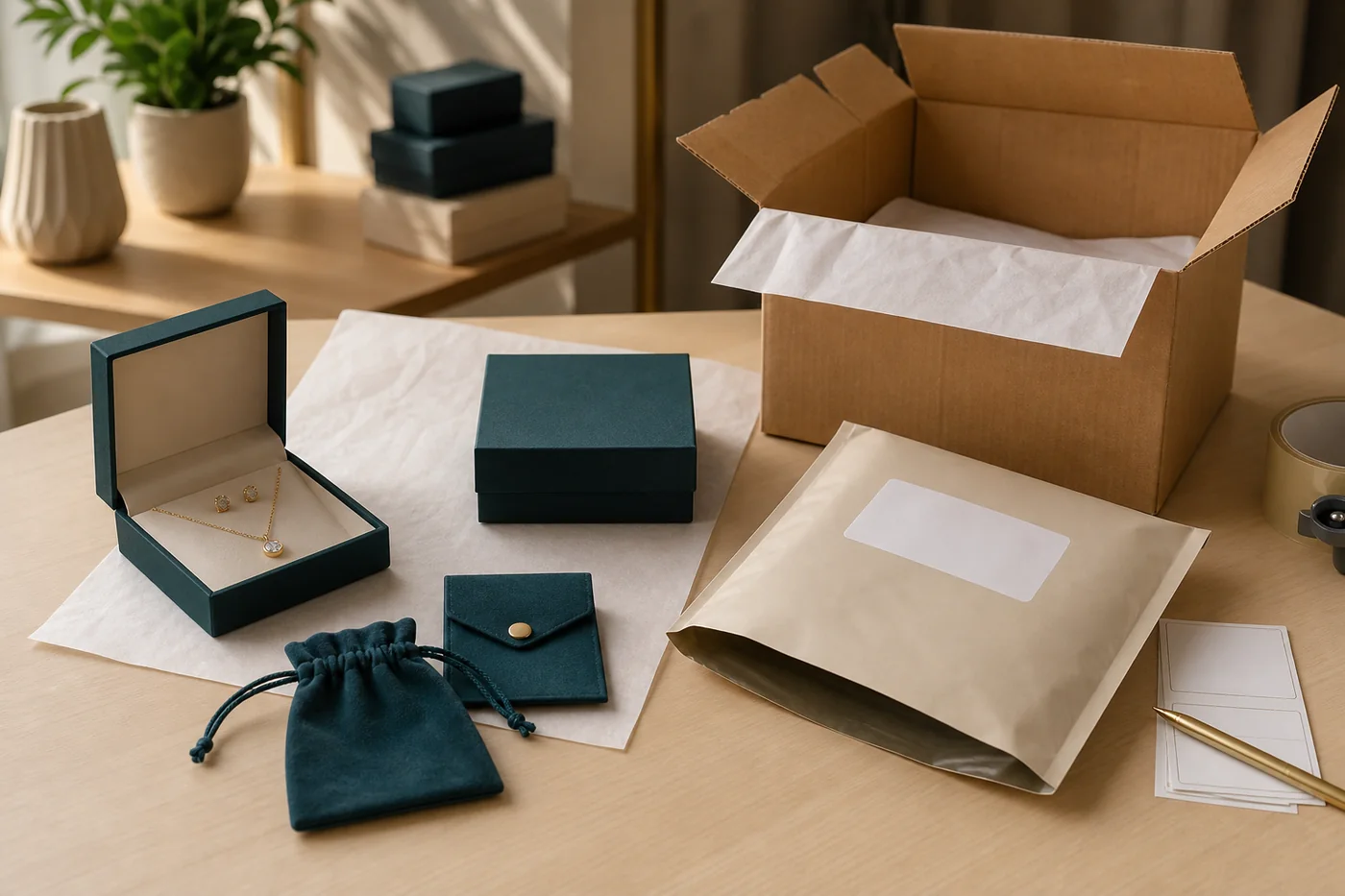
The choice of print provider matters. Production time, base cost, shipping, printable area, material, and packaging can vary. Personalized products can also have narrower return options because they cannot easily be resold. Buy a sample for every design template, inspect small text at normal viewing distance, and check the full delivery timeline. Do not market a metal or finish until the provider’s current specification supports the claim.
Best for: Gift stores selling personalized jewelry with original designs.
10. AliExpress with DSers: Best for Low-Cost Tests
DSers adds order and supplier-management tools to AliExpress sourcing. Its features include a supplier optimizer, product-to-supplier mapping, bulk ordering, stock updates, and tracking synchronization. For a new seller, that combination provides a low-cost way to test many jewelry styles before choosing a narrower long-term partner.
The main benefit is catalog breadth. If one supplier runs out or performs poorly, DSers can help map the store product to another AliExpress listing. This approach works for early demand testing, price-sensitive accessories, and stores that already know how to review marketplace sellers.
It carries the highest consistency risk on this list. Similar photos do not prove identical metal, plating, sizing, packaging, or factory origin. Delivery can also vary by seller and method. Treat every change of supplier as a new product qualification. Check order history and ratings, ask direct material questions, place samples, and keep a backup source. Move proven products to a more controlled sourcing and fulfillment setup when refund costs or brand presentation become more important than the lowest unit price.
Best for: Experienced testers who can manage marketplace supplier risk.
How to Choose Jewelry Dropshipping Suppliers
Start with the failure you can least afford. A luxury gift brand may fear poor packaging and unclear materials; a trend store may fear slow sourcing; a multi-country seller may fear route inconsistency. Score each candidate on those risks before comparing catalog size.
Use this six-step test:
- Order the exact SKU. Do not accept a “representative” sample from another batch.
- Verify material claims. Request specifications and arrange suitable third-party testing where regulations or skin-contact claims require it.
- Test the package. Check protection, supplier identification, inserts, barcode labels, and the gift experience.
- Run a delivery trial. Send orders through the actual warehouse and shipping line to two or more target locations.
- Model landed margin. Include product, shipping, tax or duty, platform fees, payment fees, discounts, returns, replacements, and support time.
- Create a backup plan. Record an alternative SKU or supplier before paid traffic makes one product business-critical.
US sellers should also review applicable federal and state requirements. The U.S. Consumer Product Safety Commission explains that children’s products can carry added testing and certification duties. Legal and material requirements depend on the product and market, so obtain professional advice for your specific catalog.
FAQ
Which jewelry supplier is best?
USAdrop is the best all-round choice for sourcing, branding, and multi-market fulfillment. Branvas is better for a Shopify private-label boutique, while Richard Cannon Jewelry is stronger for a fine-jewelry catalog.
Is jewelry dropshipping profitable?
It can be, but gross markup is not net profit. Model product cost, shipping, payment fees, advertising, discounts, returns, replacements, duties, and support before deciding whether a SKU is viable.
Should I order samples first?
Yes. Inspect the exact SKU, packaging, measurements, finish, clasp, stone setting, and listing accuracy, then test the real delivery route before selling it to customers.
Can suppliers add my logo?
Some can. USAdrop, Branvas, and CJdropshipping advertise branding or customization options, while capabilities on marketplaces such as Syncee and Spocket depend on the individual supplier and plan.
How many suppliers should I use?
Start with one primary supplier and one qualified backup for each important SKU. Too many suppliers can create split shipments, inconsistent packaging, and harder customer support.
Ready to test a jewelry line? Ask USAdrop for a quote on the exact products, packaging, destinations, and expected order volume, then compare the sample and landed cost against your strongest alternative before launch.