If you’re running an ecommerce business or exploring dropshipping, understanding the difference between warehouse and fulfillment center is essential to building a logistics strategy that actually works. These two terms get tossed around interchangeably in casual conversation, but they serve fundamentally different purposes in the supply chain. Choosing the wrong one — or confusing their roles — can lead to slower shipping, higher costs, and frustrated customers. This guide breaks down everything you need to know in 2026, including how modern fulfillment has evolved, which option fits your business model, and why the distinction matters more than ever as consumer expectations continue to rise.
Warehouse vs. Fulfillment Center Defined
A warehouse is, at its core, a storage facility. Its primary function is to hold inventory — often in bulk — for extended periods of time. Businesses that manufacture goods in large batches, import seasonal products, or need to stockpile raw materials rely on warehouses to keep everything organized and safe until it’s needed. Operations inside a traditional warehouse tend to be straightforward: goods come in, they sit on shelves or pallets, and they go out when a large shipment or transfer is scheduled. The pace is steady and predictable rather than fast and reactive.
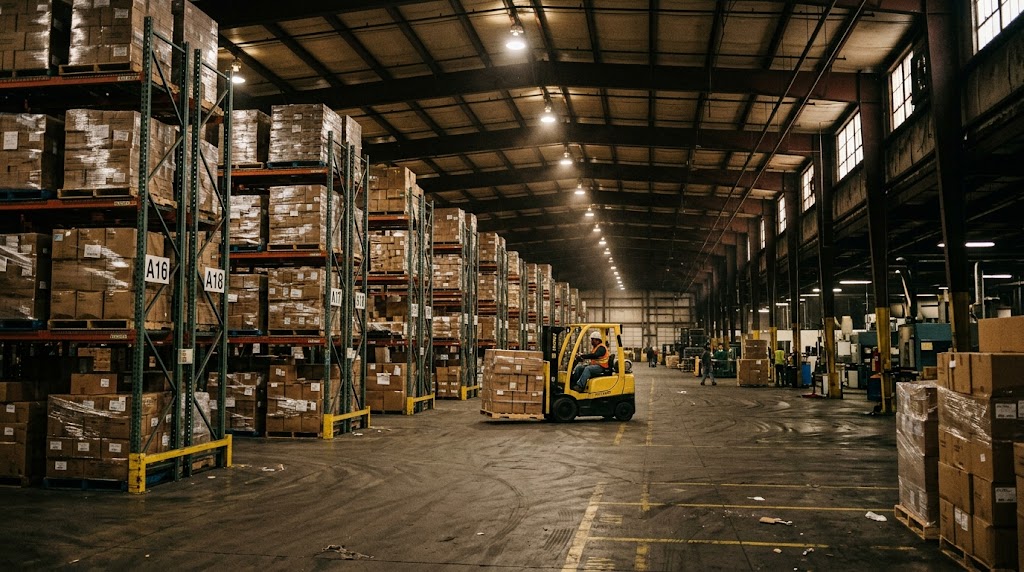
A fulfillment center, on the other hand, is an active hub built around speed and order processing. While inventory is stored there too, the real purpose is to pick, pack, and ship individual customer orders as quickly as possible. Fulfillment centers handle the entire post-purchase workflow: receiving inventory from suppliers, organizing it for rapid retrieval, assembling orders, applying branded packaging, generating shipping labels, and dispatching packages to carriers — often within the same day. Think of a warehouse as a parking garage and a fulfillment center as a pit stop in a race; one holds things still, and the other keeps everything moving.
The difference between warehouse and fulfillment center becomes especially important when you consider how modern consumers shop. According to the National Retail Federation, over 90% of US consumers now consider two- to three-day shipping a baseline expectation. A static warehouse simply isn’t designed to meet that demand on its own.
Core Operational Differences
The most significant operational distinction lies in throughput speed. Warehouses operate on longer inventory cycles. Products might sit for weeks or months before they’re moved, typically in bulk shipments to retailers or distribution points. Inventory management in a warehouse is oriented around maximizing storage density — stacking pallets high, filling every cubic foot, and minimizing the cost per unit of stored goods.
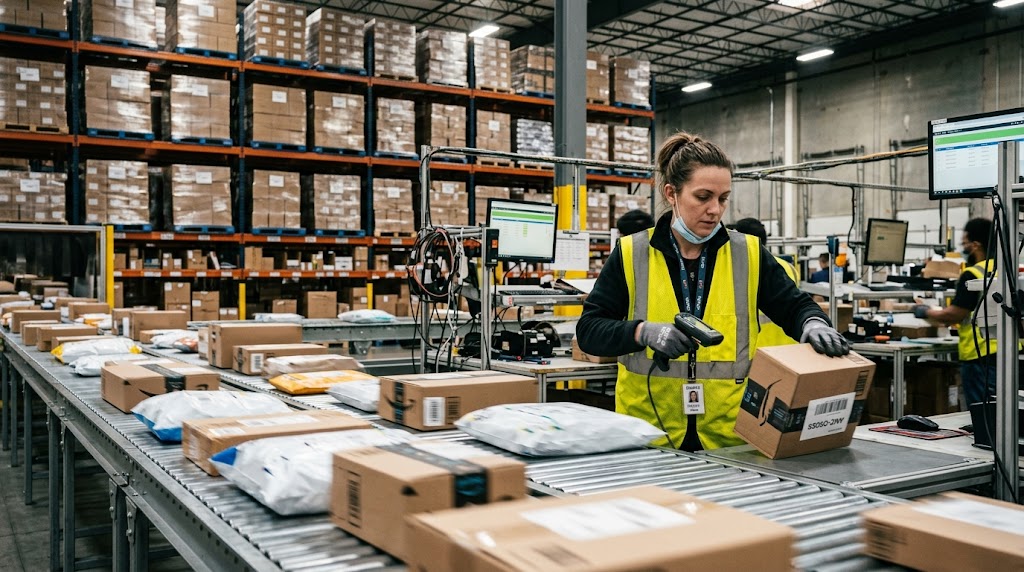
Fulfillment centers operate on a completely different rhythm. Inventory turnover is rapid, sometimes daily. The layout is optimized not for maximum storage but for maximum efficiency in picking and packing individual orders. Workers — or increasingly, automated systems — navigate organized zones to retrieve specific SKUs, assemble multi-item orders, and route packages to the correct shipping carrier. Technology plays a central role: warehouse management systems (WMS), barcode scanners, conveyor belts, and real-time inventory syncing with ecommerce platforms are all standard.
Another key difference is the range of services offered. A traditional warehouse provides storage and perhaps basic inventory management. A fulfillment center bundles storage with value-added services like kitting, custom packaging, returns processing, and real-time tracking integration. For sellers who want to learn what is dropshipping and how it connects to logistics, understanding this service layer is crucial — because in dropshipping, you rarely touch inventory yourself, which means your fulfillment partner’s capabilities directly determine your customer experience.
When to Use a Warehouse
Not every business needs a fulfillment center, and warehouses remain the right choice in several scenarios. If you’re a manufacturer producing goods months before they’ll hit the market — think holiday decorations manufactured in spring or winter apparel produced in summer — long-term storage in a warehouse is cost-effective and practical. The per-square-foot cost of warehouse space is generally lower than fulfillment center space because the infrastructure demands are simpler.

Warehouses also make sense for B2B operations that ship large quantities to a limited number of destinations. If your business model involves sending full pallets to retail chains or wholesale distributors, you don’t need the granular pick-and-pack capabilities of a fulfillment center. The focus is on bulk movement, and a warehouse with loading docks and forklift access is perfectly suited for that.
Additionally, businesses that are just starting out and haven’t yet reached the order volume to justify fulfillment center costs may opt for warehouse storage while they scale. The key is recognizing when you’ve outgrown pure storage and your customers are demanding faster, more individualized shipping — that’s the inflection point where a fulfillment center becomes necessary.
When a Fulfillment Center Wins
For direct-to-consumer (DTC) ecommerce brands — and especially for dropshippers — a fulfillment center is almost always the better choice. The moment your business starts processing individual orders from end consumers, you need the speed, accuracy, and technology that fulfillment centers provide. Every hour of delay between a customer clicking “Buy Now” and their package reaching a carrier translates into lower satisfaction and higher likelihood of returns or negative reviews.
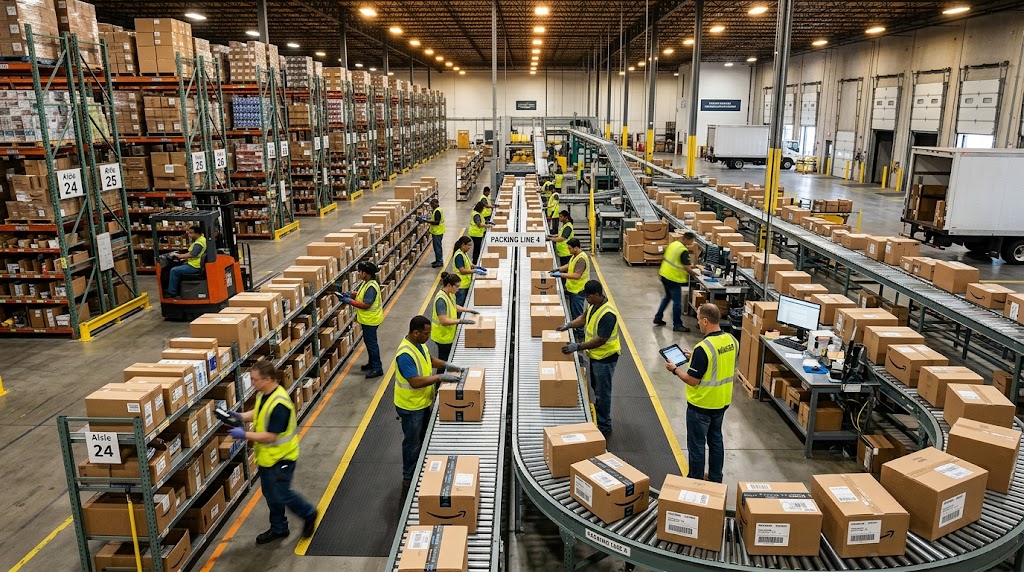
Fulfillment centers also unlock geographic strategy. By distributing inventory across multiple locations, you can position products closer to your customers, reducing shipping zones and transit times. This is where services like dropshipping fulfillment become invaluable — a partner with a distributed warehouse network can route each order from the nearest facility automatically, cutting both costs and delivery windows.
Scalability is another major advantage. During peak seasons like Black Friday, Cyber Monday, or back-to-school rushes, fulfillment centers are designed to flex. They have the staffing models, technology, and carrier relationships to handle dramatic volume spikes without breaking down. A traditional warehouse, with its lean staff and bulk-oriented workflows, simply can’t pivot that fast. For ecommerce sellers, this flexibility isn’t a luxury — it’s a survival requirement.
Costs and Pricing Breakdown
Understanding the cost structures helps clarify the difference between warehouse and fulfillment center even further. Warehouse pricing is typically straightforward: you pay for space. This is usually calculated per pallet position per month or per square foot per month. Additional charges might include inbound receiving fees and outbound loading fees, but the model is simple because the service is simple.

Fulfillment center pricing is more layered because the service is more comprehensive. You’ll typically encounter fees for storage (per bin, shelf, or pallet), receiving (per unit or per shipment), pick and pack (per order plus per additional item), packaging materials, shipping (often at negotiated carrier rates), and returns processing. While this sounds more expensive on paper — and it can be, per unit — the total cost often works out lower for DTC brands because fulfillment centers negotiate bulk shipping rates that individual sellers can’t access on their own. According to Logistics Management, businesses using third-party fulfillment services typically save 10-15% on shipping compared to self-fulfillment.
The real cost comparison isn’t just about line items — it’s about opportunity cost. Managing your own warehouse means hiring staff, buying equipment, maintaining software, and spending your time on logistics instead of marketing, product development, or customer engagement. Outsourcing to a fulfillment center frees up that capacity, which is often worth far more than the fee differential.
Choosing the Right Partner
Selecting a fulfillment partner in 2026 requires evaluating several critical factors: warehouse locations, technology integrations, shipping speed guarantees, pricing transparency, and scalability. The best partners offer a network of strategically placed facilities so your products can ship from locations closest to your customer base. They also integrate directly with your ecommerce platform — whether that’s Shopify, WooCommerce, Amazon, or another marketplace — so orders flow seamlessly from sale to shipment without manual intervention.

For sellers exploring how to start dropshipping, the fulfillment partner decision is arguably the most important one you’ll make. Since you won’t be handling products yourself, your partner’s reliability, speed, and quality control become your brand’s reliability, speed, and quality control. Look for partners with proven track records, transparent pricing (hidden fees are a red flag), and responsive customer support.
It’s also worth considering partners who offer end-to-end services beyond basic fulfillment. Product sourcing, quality inspection, branded packaging, and real-time inventory dashboards are increasingly standard among top-tier providers. A partner that bundles these services simplifies your operations dramatically and lets you focus on what matters most: growing your brand and delighting customers.
FAQ
Is a fulfillment center a warehouse?
A fulfillment center includes storage like a warehouse, but it also handles picking, packing, shipping, and returns processing for individual customer orders.
Which costs more, warehouse or fulfillment?
Fulfillment centers have higher per-order fees, but they often reduce total logistics costs through bulk shipping discounts and operational efficiency.
Can I use both simultaneously?
Yes — many businesses store bulk inventory in a warehouse and replenish a fulfillment center regularly to balance storage costs with shipping speed.
Do dropshippers need a warehouse?
Most dropshippers don’t need a traditional warehouse because their fulfillment partner handles inventory storage and order processing on their behalf.
How fast do fulfillment centers ship?
Most fulfillment centers process and ship orders within 24 to 48 hours, with many offering same-day dispatch for orders placed before a cutoff time.
Ready to stop worrying about logistics and start scaling your ecommerce business? USADROP offers a complete dropshipping solution backed by 80M+ orders, 18 global warehouses, 8.66% lower pricing, and the ability to launch your store in just 24 hours. Whether you need fast fulfillment from a facility close to your customers or end-to-end support from sourcing to delivery, USADROP is built to help you grow. Get started today and experience the difference a world-class fulfillment partner makes.