Quick answer: This page is the profit and margin proof page, separate from the broader pros and cons and worth-it articles.
Related USAdrop resources: is dropshipping worth it, and pros and cons.
You’ve probably seen the ads—people flashing their earnings, claiming they made six figures in dropshipping within months. But here’s what nobody talks about: the actual numbers behind the business. We’re breaking down whether dropshipping really makes money, what you can realistically expect to earn, and what it takes to turn this into a profitable venture.
The dropshipping market is valued at $445.5 billion in 2025 and growing fast. But market size doesn’t tell the whole story. Let’s look at what actually happens when you start a dropshipping business, from the profits to the pitfalls.
What Dropshipping Actually Is

Before we talk money, let’s get clear on what we’re discussing. Dropshipping is a retail fulfillment method where online stores sell products without keeping them in stock. When a customer places an order, the store forwards it to a dropshipping supplier who ships the product to the customer.
You’re the middleman. You set up the storefront, drive traffic, make the sale, and then pass the order to your supplier. They handle storage, packaging, and shipping. You keep the difference between what the customer paid and what you paid the supplier – that’s your profit.
Sounds straightforward. And it is. But simple doesn’t always mean profitable. If you’re exploring ways to streamline your dropshipping operations, consider looking into professional fulfillment services that can help you deliver a better customer experience.
The Real Numbers Behind Dropshipping Income
Let’s cut through the hype. How much do dropshippers actually make?
Most new dropshippers earn between $0 and $2,000 as they test products and learn the basics. Intermediate sellers who have a few winning products often land in the $2,000–$10,000 range. Advanced dropshippers, who make data-driven decisions and scale what works, often reach $10,000 to $50,000+ in monthly income.
But there’s a catch. When we say “income” here, we mean net profit – the money you actually keep, not top-line revenue or gross profit. Many beginners make the mistake of celebrating $10,000 in sales, not realizing their actual profit might be $1,500 after expenses.
Annually, most dropshippers in 2026 make roughly $20,000 and $120,000 per year, while only a smaller, experienced group consistently earn from $120,000 and $600,000+ per year.
The timeline matters too. Reaching the $5000-$10,000 per month generally takes 6–12 months of continuous effort, steady learning, and consistent reinvestment into ads, tools, and testing.
Understanding Profit Margins in Dropshipping
Revenue means nothing if your expenses eat up everything. Profit margins tell the real story.
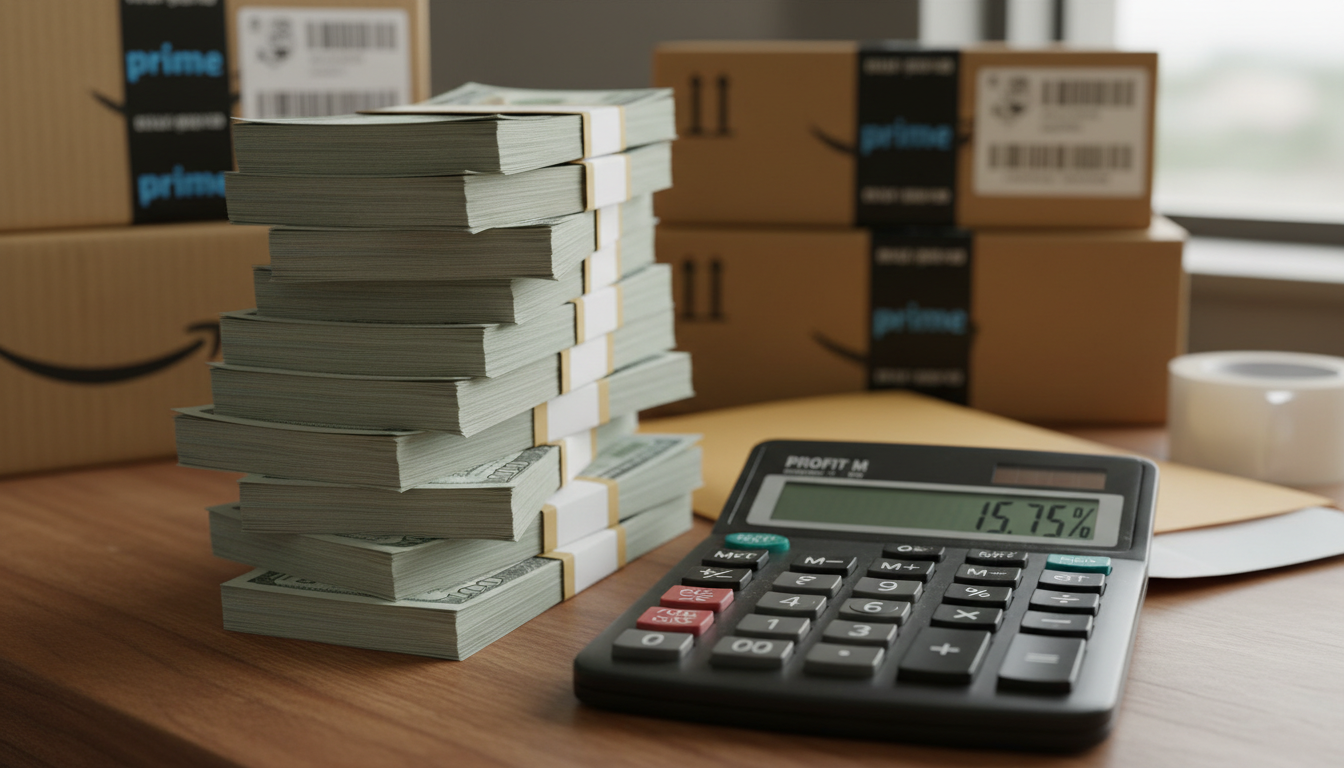
Profit margins typically hover between 15% to 30%, and only 10% to 20% of dropshipping stores manage to stay profitable long-term. That’s a sobering reality check. For every 10 stores that launch, maybe 1 or 2 will still be making money a year later.
For every $10,000 in sales, successful dropshippers typically earn $1,500 to $2,000 in actual profit. That’s the benchmark most people work with. So if you’re doing $5,000 in monthly sales, you might pocket $750 to $1,000 after costs.
Want to improve your margins? Typically, dropshippers experience a gross profit margin ranging from 15% to 40%, while net profit margins—after accounting for all expenses—tend to fall between 10% and 30%. The key is managing your expenses aggressively and choosing products with better margins.
To see where those expenses sit on a single order, work through our dropshipping profit margin calculation at three price points.
For those interested in boosting margins through customization, exploring private customization options can help you differentiate from competitors selling the exact same products.
Success Rates: The Numbers Nobody Wants to Share
Here’s where it gets uncomfortable. Only about 1% – 5% of dropshipping stores become consistently profitable. Yes, dropshipping has created millionaires, but these are usually sellers who mastered product research, marketing, and cost management.
The dropshipping success rate is around 10-20% in the first year. However, this increases significantly for entrepreneurs who properly research their niche, establish reliable supplier relationships, implement effective marketing strategies, and maintain realistic expectations. First-time entrepreneurs who fail and try again see success rates increase to 20%.
So yeah, most people fail. But those who treat it like an actual business—not a get-rich-quick scheme—have a shot.
What Actually Drives Profitability
Making money in dropshipping isn’t random. Certain factors separate winners from losers.
Niche selection matters. The average profit margin in dropshipping ranges from 10% to 30%. Profitable niches (like premium products and tech) and smart pricing strategies can push margins even higher, with some sellers hitting +30%.
Marketing is everything. For many stores, marketing is still the #1 expense and rising CPMs have made paid acquisition harder to scale profitably without strong creative/testing systems. You can’t just set up a store and expect customers to magically find you. Need help with marketing? Check out available marketing material support to enhance your promotional efforts.
Speed and reliability count. Modern customers are far less tolerant of long shipping times, they expect fast delivery (often 2 days instead of 7 to 10 days as before). Your shipping speed directly impacts customer satisfaction and repeat purchases.
Supplier relationships are non-negotiable. Working with unreliable suppliers kills your business faster than anything else. Quality issues, stockouts, and shipping delays all land on you, even though you didn’t cause them.
The Hidden Costs That Kill Profits
Revenue looks great until you subtract everything you spent getting that revenue.
Marketing costs can be brutal. Ad costs keep rising, and what worked last year might not work now. You’re competing against everyone else trying to sell similar products.
Platform fees add up. Whether you’re on Shopify, Amazon, or eBay, they all take their cut. To start dropshipping on Amazon, we need an Amazon seller account, which costs $39.99 per month for a professional account. That’s before you make your first sale.
Returns eat into margins. Shoppers will sometimes return the items they buy from you; that’s just a reality of e-commerce. Returns are expensive and somewhat annoying, but they’re a cost of doing business. On top of that, many returns will reach you in unusable condition, so returns are usually written off as a loss.
Apps and tools aren’t free. Email marketing, analytics, automation—they all cost money. These monthly subscriptions might seem small individually, but they add up fast.
Platform-Specific Earnings
Different platforms offer different earning potential.
Most established dropshippers earn $1,000-$5,000 monthly, with beginners typically earning $200-$1,000 in their first months. Successful stores with proven products and marketing can achieve $5,000-$50,000 monthly, though only 1.5% exceed $50,000 monthly revenue.
Some platforms perform better than others. On Amazon, 94% of dropshippers were profitable in 2024. That’s significantly higher than other platforms. Amazon brings built-in traffic, but you’re also competing against everyone else and dealing with Amazon’s strict policies.
Regional opportunities vary too. If you’re targeting specific markets, consider specialized solutions like LATAM dropshipping services to reach underserved markets with less competition.
The Work Nobody Talks About
Dropshipping isn’t passive income. That’s a myth that needs to die.
Myth: Dropshipping is passive income. Reality: Automation helps, but ongoing attention is required—from customer service to marketing analytics.
You’re constantly testing products, tweaking ads, responding to customer questions, handling disputes, managing suppliers, and analyzing data. A beginner typically spends the first 7–14 days actively testing products, learning how paid ads work, and finally getting their first sale.
The learning curve is steep. You need to understand marketing, customer psychology, basic design, analytics, and customer service. You’re running a real business, which means solving real problems daily.
Emerging Opportunities
The dropshipping landscape keeps changing. Smart operators adapt to new platforms and trends.
Dropshipping stores that maintain an active presence on at least one social media platform tend to outperform those that don’t, generating roughly 32% more revenue on average. This makes sense when you consider that about 7 in 10 shoppers say they’ve bought something after discovering it on platforms like Instagram, Facebook, or TikTok.
Speaking of TikTok, there’s growing opportunity there. If you’re interested in tapping into this massive audience, learn more about TikTok Shop opportunities for dropshippers.
Print-on-demand is another angle. Digital dropshipping—selling digital products without holding inventory—can be very profitable. Margins are often higher because there are no shipping costs, and products can sell globally 24/7. Explore print-on-demand solutions to add customized products with better margins.
So Does It Actually Make Money?
Short answer: yes, but not for everyone.
Yes, dropshipping is still profitable in 2026. The global dropshipping market was estimated at USD 365.67 billion in 2024 and is projected to grow to USD 1,253.79 billion by 2030, representing a CAGR of ~22% from 2025 – 2030.
But profitability depends entirely on execution. Dropshipping can be profitable in 2026, but the challenges are real, and they directly impact net margin. Most dropshippers don’t fail because “dropshipping is dead.” They fail because costs, expectations, and execution standards are higher now.
The business model works. But it requires treating it like a business. You need to research your niche, test products systematically, invest in good marketing, build relationships with reliable suppliers, and constantly optimize your operations.
Dropshippers typically see profits that are 50% higher than merchants who maintain their own inventory. This happens because, instead of having to grapple with costs associated with product design or warehousing, dropshippers primarily handle logistics and sales.
The advantage is real. You just have to be realistic about the work involved.
Conclusion
Dropshipping can definitely make money in 2026, but success isn’t guaranteed or automatic. Most dropshippers earn between $1,000 and $5,000 monthly, with profit margins typically landing between 15% and 30%. The market is growing, opportunities exist, and people are building real businesses.
But only 10-20% of dropshipping stores actually turn profitable in their first year. The difference between success and failure comes down to proper niche research, reliable suppliers, effective marketing, realistic expectations, and consistent effort over 6-12 months.
If you’re willing to learn, adapt, test systematically, and treat dropshipping as a real business rather than easy money, it can work. Just go in with your eyes open about the actual work and realistic timelines involved.
FAQs
Can you really make good money with dropshipping?
Yes, but it takes time and work. Most established dropshippers earn $1,000-$5,000 monthly, with some reaching $10,000+ after 6-12 months of consistent effort. The key is treating it as a real business, not a side hustle. Success requires proper product research, effective marketing, and reliable suppliers. Only about 10-20% of stores become profitable in their first year, so realistic expectations matter more than hype.
What’s a realistic profit margin for dropshipping?
Most dropshippers see profit margins between 15% and 30%, meaning you keep $1,500 to $3,000 for every $10,000 in sales. Premium niches and high-ticket items can push margins higher, sometimes exceeding 30%. The actual margin depends on your niche, supplier costs, marketing expenses, and operational efficiency. Net profit margins (after all expenses) typically fall between 10% and 30%.
How long does it take to start making money with dropshipping?
Most beginners spend their first 7-14 days testing products and learning paid advertising before making their first sale. Reaching consistent income of $5,000-$10,000 per month typically takes 6-12 months of continuous effort, learning, and reinvestment. Early months often involve more testing than profit, with many new dropshippers earning between $0 and $2,000 while they figure out what works.
Why do most dropshipping businesses fail?
Only 1-5% of dropshipping stores become consistently profitable. Most fail because they underestimate costs, choose unreliable suppliers, or don’t invest enough in marketing. Rising advertising costs, customer expectations for fast shipping, and intense competition all make it harder than it looks. The stores that succeed treat dropshipping like a real business, with proper research, testing, and long-term strategy rather than expecting quick money.
Is dropshipping worth starting in 2026?
Dropshipping remains viable in 2026, with the market projected to reach $1,253 billion by 2030. However, standards are higher now—customers expect faster shipping, quality products, and transparent policies. Success requires choosing the right niche, finding reliable suppliers, mastering marketing, and being patient through the learning curve. If you’re willing to put in 6-12 months of consistent work and treat it as a real business, it can definitely be worth it.