Navigating the Complexity of Online Shipping in E-commerce
In the realm of e-commerce, online shipping is the cornerstone of success. Whether you’re running a small online store or a retail giant like Amazon, mastering online shipping logistics is essential.
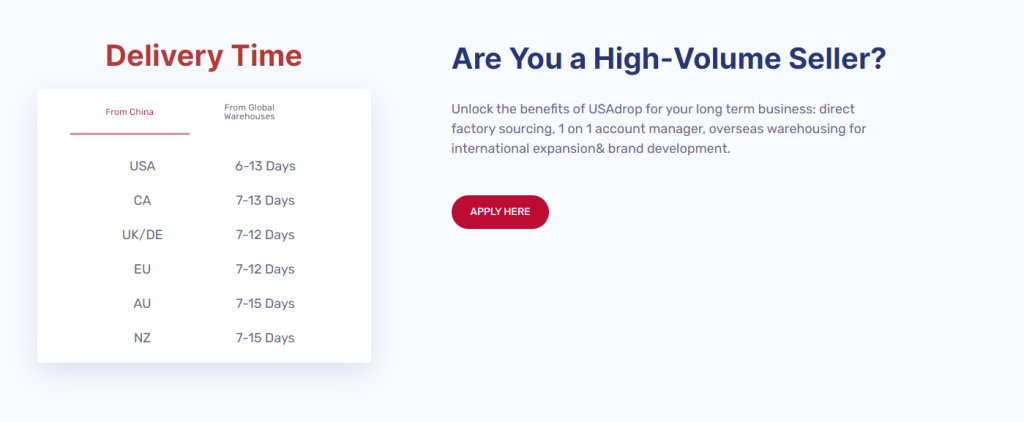
At USAdrop, we’ve spent a decade refining our processes, handling over 60,000 orders daily, and offering same-day shipping services. Since our launch in 2015, we’ve faced numerous challenges related to the complexity of online shipping logistics.
To devise a robust shipping strategy, several factors must be considered, including costs, pricing, packaging, carrier tracking, and insurance.
Today, I’ll share essential guidance and considerations to help you navigate these complexities, just as we did. Stay tuned for more practical tips on optimizing your online shipping strategy and growing your e-commerce business. factors must be considered, from costs to pricing, packaging, carrier tracking, and insurance.
Today, I’ll share essential guidance and considerations to help you navigate these complexities, just as we did. Stay tuned for more practical tips on growing your online business.
1-02-150x150.png)
Online Shipping Costs: Strategic Considerations
Understanding Customer Expectations
Online shipping costs are a significant concern for any e-commerce business. Customers often decide whether to complete a purchase based on these costs. Imagine being a customer on your website: after researching and revisiting product pages, the final decision frequently hinges on the shipping cost. Therefore, you must strategically decide how to handle these costs. Will you pass the entire cost to the customer, set a fixed rate, or offer free shipping? Each option impacts your profit margin and customer satisfaction differently.
Passing the entire cost to the customer may preserve your profit margin but could deter potential buyers. Setting a fixed rate simplifies the buying process, but if not carefully calculated, it could either eat into your profits or result in overcharging your customers. Offering free shipping is highly attractive to customers and can boost sales, but it requires careful planning to ensure it doesn’t erode your profits.
Balancing these aspects is crucial for maintaining a healthy business. By analyzing your online shipping costs and customer behavior, you can find the optimal approach that maximizes both customer satisfaction and profitability.
Calculating Shipping Costs
To make informed decisions about customer shipping rates, it is essential to calculate your online shipping costs accurately. This involves understanding how your orders are packaged, their weight, dimensions, and destinations. Whether shipping locally or internationally, knowing these details is vital. Customers expect fast, reliable, and affordable shipping.
Your strategy might include absorbing some costs, partially subsidizing them, or offering free shipping above a certain purchase threshold. Absorbing shipping costs can enhance customer satisfaction but may reduce profit margins. Partially subsidizing costs balances customer appeal and profitability. Offering free shipping above a certain purchase amount can increase average order value while still managing shipping expenses.
The goal is to offer competitive online shipping options while effectively managing your expenses. By analyzing shipping data and customer preferences, you can devise a strategy that meets customer expectations and maintains your business’s financial health. Balancing cost, speed, and reliability in your shipping strategy is crucial for staying competitive in the e-commerce market.

Leveraging Shopify Online Shipping Apps for Efficiency
Choosing the Right Shipping App
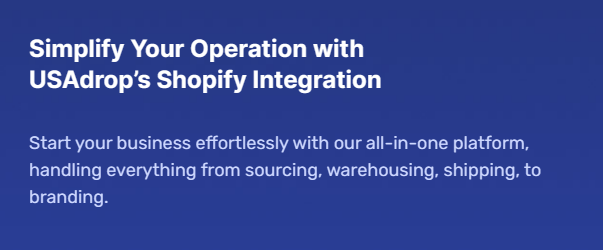
Selecting the right shipping app can greatly alleviate the burden of logistics. With Shopify offering many excellent apps to aid shipping, just a few setups, and the whole process becomes remarkably simple, and you’re good to go. What you need to do is find the shipping app that fits your needs. There are many, and many are good, but if you want our recommendation, then USAdrop, along with the USAdrop app for your Shopify store, is a great choice. Once you’ve integrated USAdrop, syncing your orders after binding USAdrop, once all that information is loaded in the backend, we’ll automatically calculate shipping prices for you. In short, you don’t have to weigh packages every time you print shipping labels; it’s entirely automated. Shopify really makes this easy, but you have to start building shipping practices for your business. But there’s another option, many very successful Shopify stores have used this option very effectively, and that is using a third-party logistics service or 3PL. A 3PL is a place where you can store all your inventory, and when orders come in, they handle the entire shipping process for you. This sounds like a no-brainer choice, and it is for many Shopify merchants, but there are pros and cons to having another company take over the entire shipping fulfillment process. Let’s first discuss some of the advantages of using 3PL.
Advantages of Using 3PL
If you’re shipping parcels that contain only single items, then using 3PL might be cheaper than the resources cost needed to set up your own fulfillment operation. However, if you’re frequently bundling multiple items into one box, like we do, then the picking and packing costs per order make 3PL costs too high for us. Picking and packing costs refer to the fees charged by 3PL for each item taken off the shelf and placed into a shipping box. Another advantage of using 3PL is, depending on how it’s set up, you can offer faster shipping. Many 3PLs offer warehouses nationally or even globally. If you’re able to distribute inventory across warehouses worldwide, particularly if you can distribute inventory across warehouses worldwide, then you can reap many sales rewards in countries far from your own. For me personally, the best reason for using 3PL is how easy and stress-free it is, and its scalability. By keeping inventory in warehouses, you can focus on things other than fulfillment, such as getting more sales opportunities. For many people, it’s hard to find a reason not to use 3PL, but for me personally, I can find reasons for my business. It also comes with some disadvantages of using 3PL, as mentioned, one major drawback is that in some cases, it may cost you more money. In our average order, there are three or more items put in one box, considering you have to pay for each item put into the order, in our case, the 3PL shipping costs are too high and not feasible. But besides that, we have control over the customer experience from a shipping standpoint, we often include notes and gifts in our parcels to reward our more loyal customers. We have more flexibility and control for packaging experiences and presenting our products in a more branded and upscale manner. Many of our customers notice and appreciate the attention we pay to packaging, creating a more personalized experience for them. Therefore, based on these reasons, we choose to handle shipping ourselves. Starting shipping your own products is also easier, but that’s my perspective.

Simplifying and Saving with USAdrop Shipping
USAdrop can indeed simplify and save through online shipping, offering an efficient solution for dropshippers and eCommerce merchants. This substantial discount can greatly reduce shipping costs, enhancing your profit margins and making your business more competitive.With USAdrop, your day-to-day operations are streamlined into a single, cohesive system. This integration covers all critical aspects of your business, from procurement and inventory management to order fulfillment. By consolidating these functions into one platform, you eliminate the need for multiple services and reduce the complexity of managing your operations. This efficiency not only saves time but also minimizes the potential for errors, ensuring a smoother workflow and more reliable service for your customers.A standout feature of USAdrop is its comprehensive tracking capabilities. You can easily track packages sent from Shopify, regardless of the carrier used. This unified tracking system provides real-time updates, allowing you and your customers to stay informed about the status of shipments at all times. Such transparency is crucial for maintaining customer satisfaction and trust, as it enables you to promptly address any issues that may arise during the shipping process.Moreover, USAdrop offers a high level of customization, enabling you to create a shipping setup that best suits your specific needs. Whether you are looking to optimize for speed, cost, or reliability, USAdrop provides the tools and flexibility to tailor your shipping strategy accordingly. This adaptability is particularly beneficial in the fast-paced world of eCommerce, where market conditions and customer expectations can change rapidly.In conclusion, USAdrop not only simplifies the complexities of online shipping but also delivers substantial cost savings and operational efficiencies. By leveraging their discounted shipping rates and integrated platform, you can focus more on growing your business and less on the logistical challenges of shipping. Ultimately, USAdrop empowers you to create a seamless and effective shipping strategy that enhances your overall business performance
Conclusion
As online consumers, we all understand the critical importance of the shipping experience in determining the success or failure of a transaction, underscoring the significance of its optimization. As Shopify merchants, we are fortunate to have access to tools that significantly lighten our load, allowing us to focus on refining our shipping strategies and enhancing customer experiences. Shopify Shipping, in particular, offers a genuine opportunity to simplify operations and save costs, thereby streamlining daily tasks and enabling us to concentrate more effectively on business growth
FAQS
Is using a third-party logistics service (3PL) always cheaper than handling shipping yourself?
Not necessarily. Depending on your business model and order packaging practices, handling shipping yourself may be more cost-effective.
How do I determine the right shipping app for my Shopify store?
Consider your specific shipping needs, budget, and integration requirements. Researching customer reviews and seeking recommendations may also be helpful.
What potential drawbacks might there be to using a third-party logistics service (3PL) for shipping?
Higher costs, less control over packaging and shipping processes, and potential drawbacks such as communication or order fulfillment delays.
How can I ensure customers have a positive shipping experience?
Offering fast, reliable shipping options, transparent communication about shipping times and tracking information, and considering adding personalized touches to packages.
What are some strategies to balance shipping costs and customer expectations?
Offering free shipping above a certain order threshold, incorporating shipping costs into product prices, and regularly reviewing and adjusting shipping rates based on cost fluctuations can help find the balance point.