The best order fulfillment services in 2026 depend on your SKU size, sales channels, delivery promise, and cash flow. For most US ecommerce sellers, start with ShipBob or ShipMonk for stocked DTC inventory, Red Stag Fulfillment for heavy products, Amazon FBA/MCF for Amazon-first volume, and USADROP when sourcing and fulfillment need to move together.
Quick answer: This page is positioned as a provider comparison and selection guide, not a basic definition of order fulfillment.
Related USAdrop resources: order fulfillment definition, and USAdrop fulfillment.
Order Fulfillment Services Compared
Choose the provider that matches the hardest part of your operation, not the prettiest sales page. Fast shipping is table stakes. The real decision is who handles inventory placement, returns, carrier surcharges, and stockouts when your bestseller jumps from 40 to 400 orders a day.
| Service | Best fit in 2026 | Main strength | Check before signing |
|---|---|---|---|
| ShipBob | Shopify, WooCommerce, and DTC brands with stocked inventory | Multi-warehouse DTC fulfillment and solid integrations | Custom quote details, returns fees, kitting costs |
| ShipMonk | Subscription, crowdfunding, and mid-market brands | Flexible workflows for bundles and special projects | Monthly minimums and custom service fees |
| Red Stag Fulfillment | Heavy, bulky, or high-value products | Strong fit for products over 10 lb or larger than standard parcels | Fewer warehouse locations than broad generalists |
| Amazon FBA / MCF | Amazon-heavy sellers and brands chasing Prime-like speed | Huge fulfillment network and marketplace trust | Storage, placement, removal, and brand control limits |
| Flexport Fulfillment | Import-heavy brands that need freight plus fulfillment | Freight, customs, and fulfillment under one vendor | Best for sellers ready for a more involved ops setup |
| Fulfillment.com | Cross-border DTC brands | International fulfillment and global shipping focus | Quote clarity and support model by region |
| USADROP | Dropshipping sellers moving from testing to repeatable scale | Sourcing, QC, packaging, and fulfillment tied together | Best when you want supplier and warehouse coordination together |
Demand is still there. The U.S. Census Bureau reported $326.7 billion in US retail ecommerce sales for Q1 2026, with ecommerce at 16.9% of total retail sales. Growth gives you room. Bad fulfillment takes it back.
Picture a simple order: a customer buys a $29.99 TikTok Shop product on Monday night. If the tracking number doesn’t move by Wednesday, they message you. If delivery takes 13 days after a “3-7 day” promise, they want a refund. The fulfillment provider didn’t just ship a parcel. It shaped the review, the repeat purchase, and your ad account’s payback window.
Fulfillment Fees That Bite
The quote says $3.20 pick and pack. Fine. Then the real invoice arrives: receiving, storage, branded inserts, returns, residential delivery, peak surcharges, and a mystery “special project” fee because your supplier packed 40 cartons with the wrong barcode.

Most order fulfillment services look cheap at the base-rate level. Margin loss hides in exceptions.
Ask for line-item pricing on:
- Receiving: per pallet, per case, per SKU, and nonstandard carton charges
- Storage: bin, shelf, pallet, cubic foot, and long-term inventory rules
- Pick and pack: first item, extra item, batch rules, and order edits
- Packaging: plain mailers, branded boxes, inserts, dunnage, tape, and labels
- Kitting: bundles, subscription boxes, relabeling, polybagging, and repacks
- Returns: label cost, inspection, restock, disposal, and photo documentation
- Account fees: monthly minimums, software, API, EDI, and support tier charges
- Carrier extras: fuel, residential delivery, DAS, peak, oversize, and DIM weight
Carrier extras deserve their own line. The Associated Press reported that USPS sought an 8% temporary price increase on Priority Mail, Priority Mail Express, USPS Ground Advantage, and Parcel Select from April 26, 2026, to January 17, 2027. That kind of change lands on sellers fast, especially if your quote doesn’t say who eats surcharges.
If you’re moving away from cheap marketplace shipping, don’t compare postage alone; our guide to AliExpress Standard Shipping shows why low-cost delivery can still create tracking gaps, long waits, and support tickets that cost more than the shipping savings.
Best Services By Seller
ShipBob works better than Amazon MCF for Shopify-first brands that care about branded packaging, multi-channel orders, and keeping the customer relationship outside Amazon. It isn’t the cheapest option for tiny catalogs with uneven demand, but it gives growing DTC teams a familiar operating model.

ShipMonk is a strong fit when your orders aren’t plain single-SKU shipments. Think subscription boxes, crowdfunding drops, influencer bundles, and product launches where the warehouse has to follow instructions more detailed than “put item in mailer.”
Red Stag Fulfillment is the easy call for products that punish generalist warehouses: kettlebells, cookware sets, garden gear, furniture parts, fitness equipment. If your average carton is 18 lb and carrier surcharges keep wrecking the invoice, start here.
Amazon FBA is still hard to beat for Amazon marketplace conversion. MCF can also handle off-Amazon orders, but you need to watch storage age, inventory placement, removal fees, Amazon packaging rules, and how much control you give up. A seller with 80% of revenue on Amazon can accept those tradeoffs. A brand trying to build a premium DTC experience may not.
Flexport Fulfillment fits sellers importing containers, managing customs, and needing a cleaner handoff from freight to warehouse. It’s less attractive if you’re still testing 12 products from different suppliers and don’t know which one deserves inventory.
USADROP is built for the seller who hasn’t separated sourcing from logistics yet. If your store is still testing products, a provider that pairs dropshipping fulfillment with supplier coordination can beat a standard 3PL because you don’t have to buy 2,000 units before you know the ad angle works.
This advice doesn’t apply cleanly to every category. Frozen food, hazmat, CBD, medical devices, oversized freight, and products needing lot-level compliance require a narrower provider search. A cheap quote from the wrong warehouse is just a delayed problem.
Scalability Limits Before Signing
At 30 orders a day, the warehouse team can fix problems by hand. At 500 orders a day, “by hand” becomes late tracking, wrong picks, and Slack messages nobody answers.
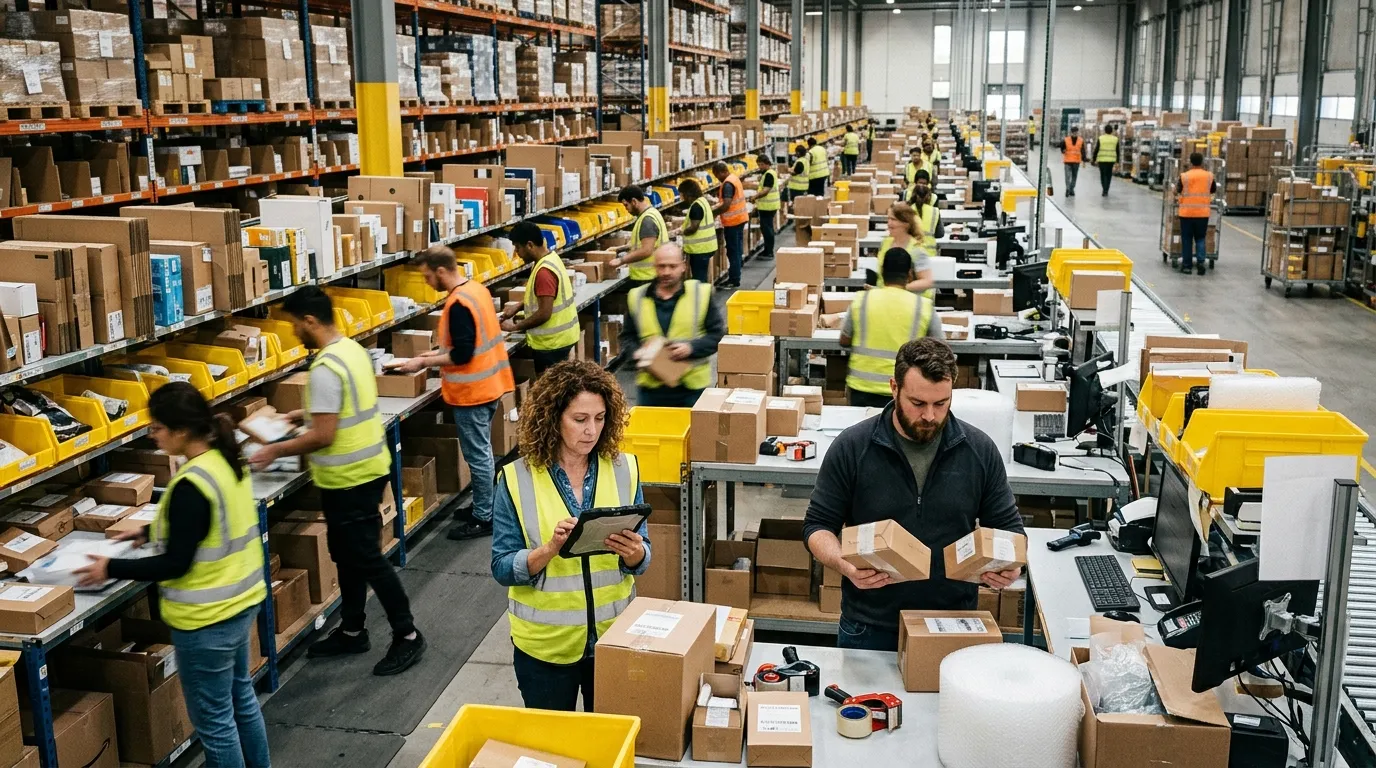
Scale breaks in boring places: inventory split, SKU rules, support queues, and cash timing. A provider might handle your current volume and still fail your next stage because it can’t place inventory close to customers, support your marketplace rules, or process returns fast enough to resell stock.
Use this check before you sign a 12-month contract:
| Limit | Question to ask |
|---|---|
| Warehouse placement | How do you decide which region gets inventory, and who pays transfers? |
| SKU growth | What changes when we move from 50 SKUs to 500 SKUs? |
| Peak volume | What are the Q4 cutoff dates, surge fees, and labor limits? |
| Returns | Who grades returns, updates inventory, and flags damaged units? |
| Marketplace rules | Can you support Shopify, Amazon, Walmart, TikTok Shop, and EDI if needed? |
| Cash cycle | How much stock must we prepay before the first order ships? |
When you source through multiple factories, don’t compare dropshipping suppliers only on unit price; ask who owns labeling, carton specs, customs paperwork, damaged goods, and warehouse intake before stock ever reaches the customer.
One more thing: ask about the exit plan. If the provider makes it hard to pull inventory, export order history, or transfer barcodes, you’re buying more than fulfillment. You’re buying dependency.
Provider Selection Checklist
Run a two-week quote test before you commit. Use one light SKU, one bulky SKU, one bundle, and one likely return. That tiny sample tells you more than a polished sales deck.

- Ask for landed cost by SKU: product cost, inbound freight, receiving, storage, pick and pack, packaging, shipping, returns, and account fees.
- Ask for a sample invoice: real invoices reveal fees that rate cards hide.
- Ask for SLA numbers: receiving time, same-day cutoff, order accuracy, inventory accuracy, and support response time.
- Ask for failure rules: what happens when the warehouse loses stock, ships late, mispicks, or misses a marketplace deadline?
A fair provider won’t promise perfection. They will show you the process for fixing misses, the credit policy when they cause the problem, and the exact point where your account needs a different plan.
For a new ecommerce seller, the best first move is usually simple: avoid locking cash into large inventory too early. For a scaling seller, the best move is different. Split inventory by market, protect your bestseller stock, and stop treating returns as an afterthought.
FAQ
What is order fulfillment?
Order fulfillment is the process of receiving inventory, storing products, picking and packing orders, shipping parcels, sharing tracking, and handling returns. For ecommerce sellers, it directly affects delivery speed, support tickets, reviews, and repeat purchases.
How do fulfillment services charge?
Most fulfillment services charge for receiving, storage, pick and pack, packaging, shipping, returns, and account support. The cheapest quote often becomes expensive when storage, kitting, carrier surcharges, and monthly minimums are missing from the first estimate.
Is FBA cheaper than a 3PL?
FBA can be cheaper for Amazon-first sellers because it supports Prime conversion and uses Amazon’s fulfillment network. A 3PL is often better for DTC brands that need branded packaging, multi-channel control, and more flexible customer data ownership.
When should I outsource fulfillment?
Outsource fulfillment when packing orders is slowing product work, tracking is late, or shipping errors are hurting reviews. A good trigger is when you consistently ship 30-50 orders a day or need warehouse coverage outside your home region.
Which service fits dropshipping?
USADROP fits dropshipping sellers who need sourcing, quality checks, packaging, and global fulfillment in one workflow. A traditional 3PL fits better after you already own inventory and can forecast demand with confidence.
Before you commit to a 3PL, price one real SKU across your top two markets and include returns. If you want sourcing, QC, and fulfillment connected from day one, USADROP can help you launch in 24 hours through 18 global warehouses, backed by 80M+ orders and 10+ years in ecommerce logistics.