Let’s be honest about something the dropshipping hype machine doesn’t want you to hear: for a large percentage of people who try it, dropshipping is an expensive waste of time.
Not because the business model is broken. It isn’t. Thousands of real entrepreneurs generate real income from dropshipping every year. But the version of dropshipping that gets sold on YouTube — the “copy a product, run Facebook ads, retire in 90 days” fantasy — fails people at an alarming rate. And the reasons why are specific, predictable, and rarely discussed.
This article isn’t here to discourage you. It’s here to give you a brutally honest risk assessment so you can decide whether dropshipping is actually right for you — or whether you’re walking into a situation set up for failure.

The Real Failure Rate Nobody Talks About
Industry estimates suggest that 90% of dropshipping stores fail within the first year. That number is thrown around casually, but it rarely comes with context. Here’s what actually happens:
- Most new dropshippers copy a trending product they found on TikTok
- They build a generic Shopify store in a weekend
- They spend $200–$500 on Facebook ads and get little to no results
- They blame the algorithm, pivot to a new product, repeat
- They run out of money and motivation within 60–90 days
This isn’t a failure of effort — it’s a failure of approach. The problem isn’t dropshipping itself. The problem is that most people enter the business without understanding what actually makes it work.
7 Reasons Dropshipping Will Waste Your Time
1. You’re Competing Against the Same Products as Everyone Else

The most popular dropshipping products are visible to every seller on the planet. When a product goes viral on TikTok or appears on a “winning products” list, thousands of stores immediately start selling the exact same item — often with the exact same supplier photos, the same description, and the same ad angle.
By the time most beginners find a “winning product,” that product is already losing.
The math works against you:
- AliExpress and similar platforms have millions of sellers
- Product research tools like Sell The Trend, AutoDS, and Dropship Spy show the same trending products to all their subscribers simultaneously
- Suppliers often sell directly to consumers on Amazon and Alibaba
- Your margins shrink to near zero as competition drives prices down
If you’re selling the same product with the same images at the same price as 500 other stores, why would a customer choose you?
What actually works: Finding underserved niches, creating original content around products, building a recognizable brand identity — all of which require significantly more work than a weekend store build.
2. The Profit Margins Are Razor Thin — Then Ads Eat the Rest
This is the number that most dropshipping courses conveniently omit.
A typical dropshipping scenario:
| Item | Amount |
|---|---|
| Retail Price | $29.99 |
| Product Cost (supplier) | $8.00 |
| Gross Profit | $21.99 |
| Facebook Ad Cost (avg CPA) | $18.00–$25.00 |
| Transaction Fees (Shopify/PayPal) | $1.50 |
| Refunds/chargebacks (5–8% rate) | $1.80 |
| Net Profit Per Order | $0 to –$5.00 |
Yes. After accounting for realistic ad costs, transaction fees, and a normal return rate, many dropshipping stores effectively lose money on every sale — or break even at best.
The only escape is:
- An extremely high conversion rate (rare without brand trust)
- Organically-driven traffic (takes months to build)
- Very high average order values ($75+)
- Or finding a genuine product-market fit with below-average ad costs
None of these happen by accident or within 30 days.
3. Long Shipping Times Destroy Customer Trust
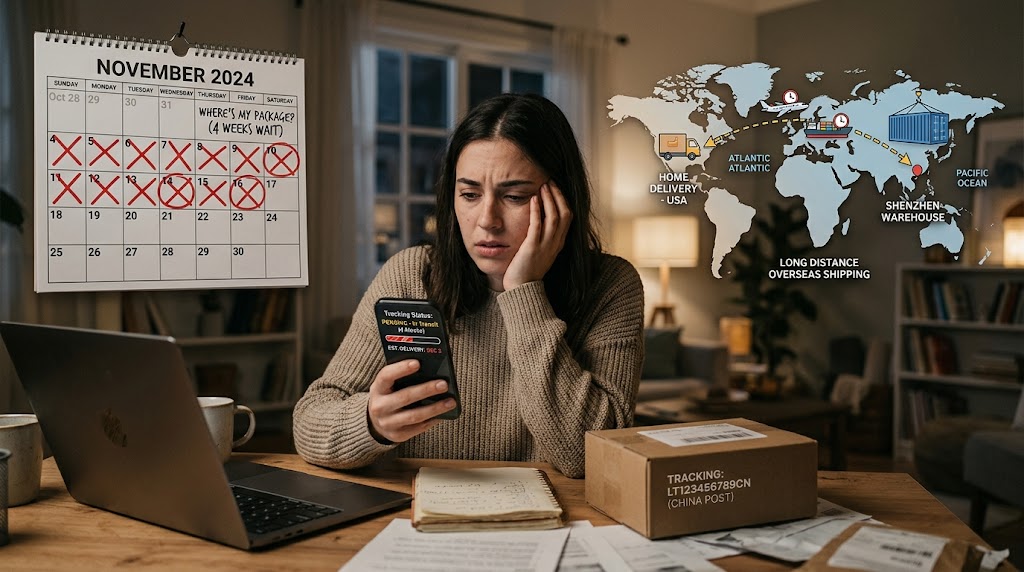
Shipping expectations have fundamentally changed. Amazon Prime has conditioned consumers to expect 1–2 day delivery. When your customer pays $30 for a product and waits 3–4 weeks for a package that arrives in a generic plastic bag with Chinese characters on it, the result is:
- Chargebacks
- Negative reviews
- Paypal disputes
- Social media callouts
The standard AliExpress dropshipping model ships from Chinese warehouses via ePacket or standard shipping. Even the fastest options typically take 10–20 days. Meanwhile, Amazon ships the same product in 2 days with Prime.
This isn’t just inconvenient — it’s a structural competitive disadvantage that undermines every other effort you make.
The solution exists — US-based warehouse fulfillment through platforms like USAdrop cuts delivery to 3–7 days — but it requires a different approach, different suppliers, and often higher product costs that further compress already thin margins.
4. You’re Building on Platforms That Can Kill You Overnight
Your dropshipping business lives on rented land.
- Facebook Ads account banned — Your ad account can be disabled with no warning and no appeal process. If paid ads are your only traffic source, your revenue drops to zero instantly.
- Shopify store suspended — Shopify actively monitors stores for policy violations, counterfeit products, and complaint rates. A single wave of chargebacks can get your store suspended.
- PayPal account frozen — PayPal is notorious for holding funds from ecommerce merchants for 21–180 days, particularly new accounts with high dispute rates.
- Supplier discontinues the product — You’ve built ad campaigns, written content, and generated reviews around a product that no longer exists.
Every one of these has happened to established dropshippers, not just beginners. None of them are hypothetical.
When you have no brand equity, no email list, no owned traffic, and no proprietary products — you are entirely dependent on platforms that treat you as expendable.
5. Customer Service Becomes a Full-Time Job

You are the face of your store. Your supplier is not.
When a product arrives damaged, takes too long, looks nothing like the photos, or gets lost in transit — the customer contacts you. You then have to:
1. Contact the supplier (often via slow email or AliExpress chat)
2. Wait for a response
3. Negotiate a resolution
4. Communicate updates back to the customer
5. Absorb refund costs that the supplier may not cover
At scale, this consumes enormous time. At low volume, it consumes proportionally even more — a single dispute on a 10-order month represents a 10% failure rate that will show up in your payment processor’s records.
And here’s the uncomfortable truth: you’re legally responsible for the customer experience you promise, regardless of what your supplier does or doesn’t do. “My supplier didn’t ship it” is not a legally viable defense when a customer initiates a chargeback.
6. It’s Not Passive Income — It’s a Real Business
This is perhaps the most damaging myth in the dropshipping space.
The pitch: “Set up your store, run some ads, watch the money roll in while you’re on the beach.”
The reality: Running a dropshipping business requires:
- Daily monitoring of ad performance
- Constant product research and testing
- Active customer service management
- Supplier relationship maintenance
- Order dispute resolution
- Store optimization and A/B testing
- Content creation for organic channels
- Keeping up with platform policy changes
This is not passive. It is a business. And like any business, it requires real, sustained work — especially in the early months when you’re still figuring out what works.
The “passive income” framing sets unrealistic expectations that lead most beginners to give up exactly when the real learning is starting to pay off.
7. The Learning Curve Is Expensive
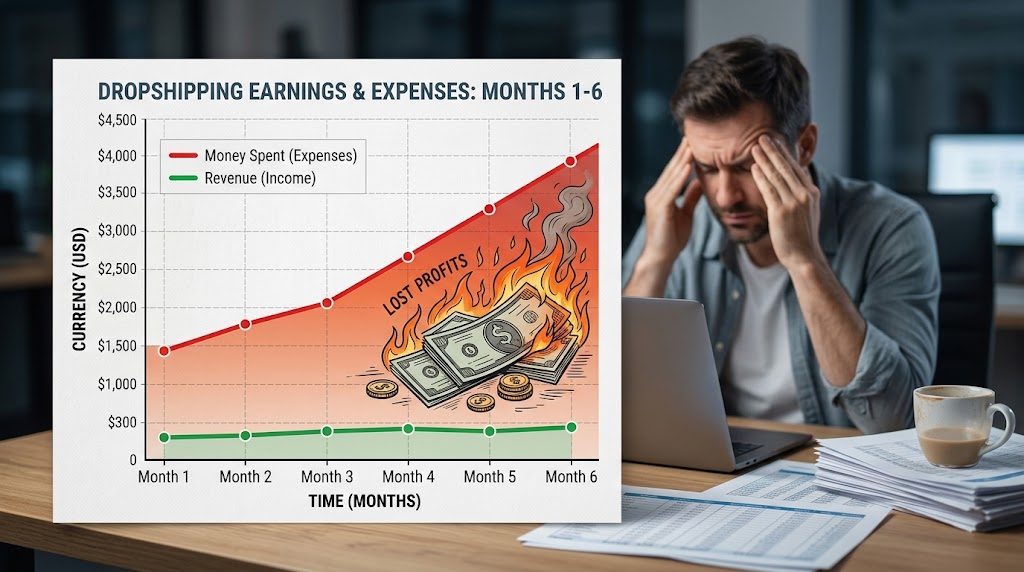
Learning dropshipping costs money. There’s no way around it.
- Courses: $200–$2,000
- Shopify subscription: $39–$79/month
- Apps (email, reviews, upsell): $50–$150/month
- Ad testing budget: $500–$2,000 minimum to get statistically useful data
- Product samples: $100–$300
- Domain, branding, tools: $100–$200
Before you’ve made a single profitable sale, you may easily spend $1,500–$3,000. That’s not unusual — it’s typical. Most people who claim dropshipping “doesn’t work” burned through this budget without understanding what they were learning from.
The expensive part isn’t the money. It’s the time — typically 6–12 months of consistent effort before a store becomes reliably profitable.
So Who Should NOT Do Dropshipping?
Dropshipping is likely to waste your time if:
- You expect results in 30–90 days. Real dropshipping businesses take 6–18 months to find product-market fit, build traffic, and achieve consistent profitability.
- You have less than $1,500 to invest. You can start lean, but you can’t start with nothing. Organic-only approaches work but take longer.
- You’re not willing to do customer service. If you won’t engage with complaints and disputes, your store will get suspended.
- You want passive income immediately. It becomes somewhat passive — eventually. Not at the start.
- You won’t invest in product research. Randomly picking products is not a strategy. It’s gambling.
- You can’t handle failure. Most products you test will fail. Most ad campaigns will lose money before they find an angle that works. The people who succeed are the ones who treat each failure as data.
Who CAN Make Dropshipping Work?
Here’s the flip side. Dropshipping genuinely works for people who:
Have realistic expectations. They plan for 6–12 months of investment before profitability and don’t panic when the first month is rough.
Choose suppliers strategically. US-based warehouse suppliers like those available through USAdrop dramatically reduce the shipping problem — 3–7 day delivery is competitive with Amazon in most categories. This alone eliminates the #1 customer service issue.
Build a real brand. Instead of a generic dropshipping store, they build an identity around a niche. A named brand with a clear audience, original photography, and consistent content performs exponentially better than a faceless product page.
Use organic traffic. TikTok, Pinterest, and SEO take longer but cost nothing once they compound. Stores built on organic traffic are far more resilient than those built entirely on paid ads.
Treat it like a business, not a side hustle. The most successful dropshippers track their numbers obsessively, iterate based on data, and build systems instead of hoping for viral moments.
The Honest Verdict

Dropshipping is not a get-rich-quick scheme. It never was. The people profiting from the “get rich with dropshipping” narrative are overwhelmingly the course creators and YouTube educators, not the people following their advice.
But dropshipping is also a legitimate, scalable business model when approached correctly. The overhead advantages — no inventory, no warehouse, no manufacturing risk — are real. For someone willing to invest 12+ months of consistent effort, build a brand, choose quality suppliers, and learn from data rather than hope, it can work very well.
The question isn’t whether dropshipping is worth it. The question is whether you are set up to make it work — or whether you’re entering it with the wrong expectations, wrong suppliers, and wrong timeline.
If you’re going to try it, do it right:
1. Choose a niche with a real audience and real demand
2. Source from US-warehouse suppliers (USAdrop’s catalog is built for this) to solve the shipping problem from day one
3. Plan for 6–12 months before expecting profitability
4. Build a brand, not just a store
5. Track everything — every dollar spent, every customer complaint, every ad result
Done right, dropshipping isn’t a waste of time. Done wrong — with shortcuts, unrealistic timelines, and the cheapest possible suppliers — it almost certainly is.
USAdrop’s US-warehouse network was built to solve dropshipping’s biggest problem: slow shipping. Browse verified suppliers with 3–7 day US delivery and see why thousands of serious dropshippers use USAdrop to build stores that actually last.