Getting products from your warehouse shelf to your customer’s doorstep sounds simple enough. But once orders start piling up, you’ll quickly realize there’s a lot more involved than slapping a label on a box.
Quick answer: This page owns the definition and process intent for order fulfillment services, including receiving, storage, picking, packing, shipping, and returns.
Related USAdrop resources: best fulfillment providers, and USAdrop fulfillment.
That’s where order fulfillment services come into play. Whether you’re shipping 50 orders a month or 5,000, knowing what these services do and how they can help your business can make the difference between smooth operations and complete chaos.
Understanding Order Fulfillment Services
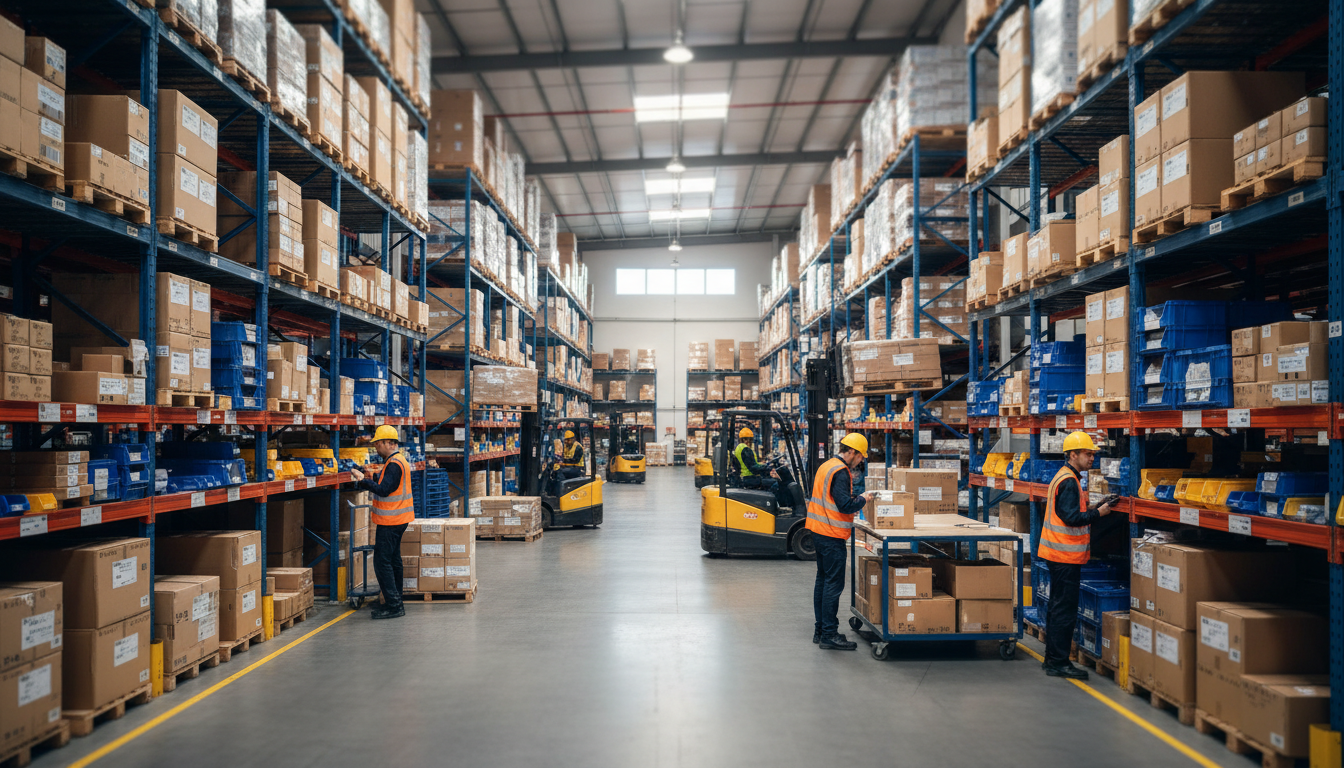
Order fulfillment services are third-party companies that handle the entire process of getting products to your customers. They receive your inventory, store it in their warehouses, pick items when orders come in, pack them securely, and ship them out.
Think of them as an extension of your business. When someone buys from your online store, the fulfillment service gets a notification and takes care of everything else. You don’t need to worry about warehouse space, packing materials, or shipping carriers.
These services go by different names—third-party logistics (3PL), fulfillment centers, or distribution partners. But they all do the same basic job: they manage the logistics so you don’t have to.
The Order Fulfillment Process Step by Step

Every order that ships goes through a series of steps. Here’s how fulfillment services handle each one:
Receiving and Warehousing: Your products arrive at the fulfillment center where staff inspects, counts, and stores them in designated warehouse locations. They use climate-controlled facilities with proper safety measures to protect your inventory.
Inventory Management: Real-time tracking systems monitor stock levels so you always know what’s available. When inventory runs low, you’ll get alerts to reorder before you run out.
Order Processing: When a customer places an order on your website, it automatically flows to the fulfillment center’s system. The order enters their queue for picking and packing.
Picking: Warehouse workers locate the items in your order and pull them from their storage spots. We use various fulfillment strategies to make this process faster and more accurate.
Packing: Items get packed into boxes or mailers with protective materials like bubble wrap or air pillows. Some services offer custom packaging options to match your brand.
Shipping: The packed order gets handed off to carriers like USPS, UPS, or FedEx. Customers receive tracking numbers so they can monitor delivery progress.
Returns Processing: When products come back, fulfillment services inspect them, restock sellable items, and process refunds or exchanges according to your policies.
Types of Fulfillment Service Models
Not all fulfillment services work the same way. Different models fit different business needs:
Third-Party Fulfillment (3PL): You send inventory to a company that handles everything from storage to shipping. This is the most common outsourced model and works well for businesses that want to offload all logistics tasks.
In-House Fulfillment: You manage everything yourself using your own warehouse space and staff. This gives you maximum control but requires significant resources and time investment.
Dropshipping: Products ship directly from manufacturers or suppliers to customers without you ever touching the inventory. This requires minimal upfront investment but offers less control over quality and shipping speed.
Hybrid Fulfillment: Some orders are fulfilled in-house while others go through a 3PL. Companies might use this when they have multiple product lines with different requirements.
Fourth-Party Logistics (4PL): These providers manage your entire supply chain by coordinating multiple 3PLs and other logistics partners. This model suits large companies with complex operations across multiple regions.
Each model has trade-offs between cost, control, and convenience. Most growing ecommerce businesses eventually move from in-house to 3PL fulfillment as order volumes increase.
Benefits of Using Fulfillment Services
Partnering with a fulfillment service offers several advantages that can transform your operations:
Time Savings: You’ll get back hours each week that would otherwise go to packing boxes and scheduling pickups. That time can go toward product development, marketing, or customer service instead.
Lower Shipping Costs: Fulfillment centers negotiate discounted rates with carriers because they ship at high volumes. Many businesses save 15-35% on shipping compared to doing it themselves.
Faster Delivery: Services with multiple warehouse locations can position inventory closer to customers. This enables 2-day shipping or faster delivery without premium fees.
Scalability: When order volume spikes during holidays or promotions, fulfillment services can handle the surge without you hiring temporary staff or scrambling for more space.
Technology Access: Professional fulfillment operations use advanced warehouse management systems that provide real-time inventory tracking, automated order routing, and detailed analytics.
Reduced Errors: Trained staff and barcode scanning systems minimize picking and packing mistakes. This means fewer customer complaints and returns.
Geographic Expansion: Many fulfillment services have international capabilities, making it easier to ship to customers in other countries without dealing with customs paperwork yourself.
For businesses working with TikTok Shop or other fast-paced sales channels, these benefits become especially valuable when order volumes fluctuate unpredictably.
Who Should Use Order Fulfillment Services
Certain business types get more value from outsourced fulfillment than others:
Ecommerce Retailers: Online stores benefit greatly because they deal with constant order flow and varied shipping requirements. Fulfillment services handle the complexity while providing tracking systems that customers expect.
Growing Businesses: When you’re shipping more than 100 orders per month, or when fulfillment tasks start eating up 10+ hours per week, it’s probably time to consider outsourcing.
Seasonal Businesses: Companies with major sales spikes during holidays or specific seasons avoid the hassle of maintaining year-round warehouse space for fluctuating demand.
Multi-Channel Sellers: If you sell on your website plus Amazon, eBay, Walmart, and other marketplaces, juggling fulfillment across all those platforms gets messy fast. Good 3PLs integrate with all major channels.
Brands With Heavy or Fragile Products: Specialized fulfillment centers have experience handling products that need extra care during packing and shipping. They know the right materials and methods to prevent damage.
Subscription Box Companies: Regular monthly shipments with kitting requirements work well with fulfillment services that offer assembly and custom packaging options.
Some businesses also leverage private customization or print-on-demand services, which fulfillment providers can often handle alongside standard order processing.
How to Choose the Right Fulfillment Service
Selecting a fulfillment partner requires careful evaluation of several factors:
Order Volume Capacity: Make sure the service can handle your current volume plus expected growth. Some providers specialize in small businesses while others work better at enterprise scale.
Geographic Coverage: Check where their warehouses are located. You want inventory positioned close to most of your customers for faster, cheaper shipping.
Technology Integration: The service should connect seamlessly with your ecommerce platform (Shopify, WooCommerce, BigCommerce, etc.). Look for real-time inventory syncing and automatic order flow.
Pricing Structure: Understand all fees including storage, pick-and-pack, shipping, receiving, and any additional charges. Watch out for hidden fees for things like long-term storage or special handling.
Specialty Services: If you need kitting, assembly, marketing material support, or other value-added services, confirm they’re available.
Returns Management: Ask about their returns process. Efficient handling of exchanges and refunds keeps customers happy even when things go wrong.
Customer Support: You need responsive account managers who answer questions quickly and help solve problems. Check reviews to see what current clients say about support quality.
Shipping Speed: Verify they can meet your delivery promises. If you advertise 2-day shipping, make sure the fulfillment service can actually deliver on that timeline.
For businesses shipping to Latin American markets, specialized solutions like a LatAm DP solution might be necessary to handle cross-border logistics efficiently.
Common Fulfillment Service Costs
Pricing varies widely based on your needs, but here are typical fee structures you’ll encounter:
Storage Fees: Usually charged per cubic foot or pallet per month. Expect to pay more during peak seasons like November and December.
Receiving Fees: One-time charges when new inventory arrives at the warehouse. Some providers charge per pallet, per item, or per shipment.
Pick and Pack Fees: Charged per order, typically ranging from $2 to $5 for simple orders. Complex orders with multiple items cost more.
Shipping Costs: Actual carrier fees plus any markup the fulfillment service adds. Many pass through their discounted rates without additional markup.
Special Handling: Extra fees apply for gift wrapping, custom inserts, fragile item handling, or oversized products.
Account Management: Some providers charge monthly account fees while others include this in their per-order pricing.
Returns Processing: Fees for inspecting, restocking, and processing returned items.
Get detailed quotes from multiple providers and calculate total costs based on your actual order patterns. The cheapest per-order fee might not be the lowest total cost once you factor in storage and other charges.
In-House vs Outsourced Fulfillment
Should you handle fulfillment yourself or outsource it? Here’s what to consider:
In-house fulfillment makes sense when:
– You ship fewer than 50-100 orders per month
– You need complete control over packaging and presentation
– Your products require specialized knowledge to handle
– You have excess warehouse space and staff capacity
– Shipping costs are minimal due to local customer concentration
Outsourced fulfillment makes sense when:
– Order volume exceeds what you can handle efficiently
– Fulfillment tasks prevent you from working on business growth
– You’re expanding to new geographic markets
– Your customers expect fast shipping (2 days or less)
– Order volume fluctuates seasonally
– You sell across multiple channels simultaneously
Many businesses start with in-house fulfillment and switch to a 3PL as they grow. There’s no magic number, but when fulfillment becomes a distraction from running your business, it’s time to consider outsourcing.
Key Challenges With Fulfillment Services
Outsourcing isn’t without its difficulties. Here are common issues to watch for:
Loss of Control: You’re trusting another company with your customer experience. If they make mistakes, your brand reputation suffers even though you didn’t pack the box.
Communication Gaps: Coordinating between your systems and the fulfillment provider’s systems requires solid integration. Poor communication leads to stockouts or overselling.
Setup Time: Onboarding with a new fulfillment service takes effort. You’ll need to ship inventory, set up integrations, train their team on your products, and test processes.
Cost Variability: Fees can change during peak seasons or if your order characteristics shift. A sudden increase in average order size might significantly impact pick-and-pack costs.
Quality Consistency: Not all fulfillment centers maintain the same standards. You might experience inconsistent packing quality or occasional shipping errors.
Minimum Requirements: Some providers require minimum monthly order volumes or charge penalties if you don’t meet them.
Choose carefully, start with clear expectations, and maintain regular communication with your fulfillment partner to minimize these challenges.
Conclusion
Order fulfillment services handle the complex process of getting products from warehouses to customers. They manage receiving, storage, picking, packing, shipping, and returns so you can focus on growing your business instead of managing logistics.
The right fulfillment partner offers faster shipping, lower costs, and better scalability than most businesses can achieve on their own. But choosing that partner requires careful evaluation of their capabilities, pricing, technology, and geographic coverage.
Whether you’re just starting out or scaling rapidly, understanding what fulfillment services offer helps you make smarter decisions about when and how to outsource these operations. Take time to assess your current situation, projected growth, and specific needs before committing to any provider.