Are you truly earning the trust of local shoppers in the German dropshipping market? Actually, selling in Germany is awesome, but you can’t get away with vague delivery times or junk products. Because customers don’t care who your supplier is—they bought it from your store. That means you’re on the hook for everything from customer support to returns.
According to Germany’s Federal Statistical Office, 86% of people aged 16 to 74 had bought online by 2025, and 70% had purchased during the previous three months. If you want German customers to trust you, you have to get the basics right: a proper German site, legal tax and packaging, safe products, honest delivery dates, and hassle-free returns.
What Does Dropshipping in Germany Mean?
Dropshipping is a retail fulfilment arrangement. You display and sell a product, but a supplier or fulfilment partner sends it directly to the customer after an order is placed. You normally avoid buying a large amount of inventory before demand is proven.
The customer contract, however, is usually with your store. Outsourcing the parcel does not outsource your reputation or legal duties. You advertise the product, collect payment, communicate delivery and resolve late, faulty or misdescribed orders.
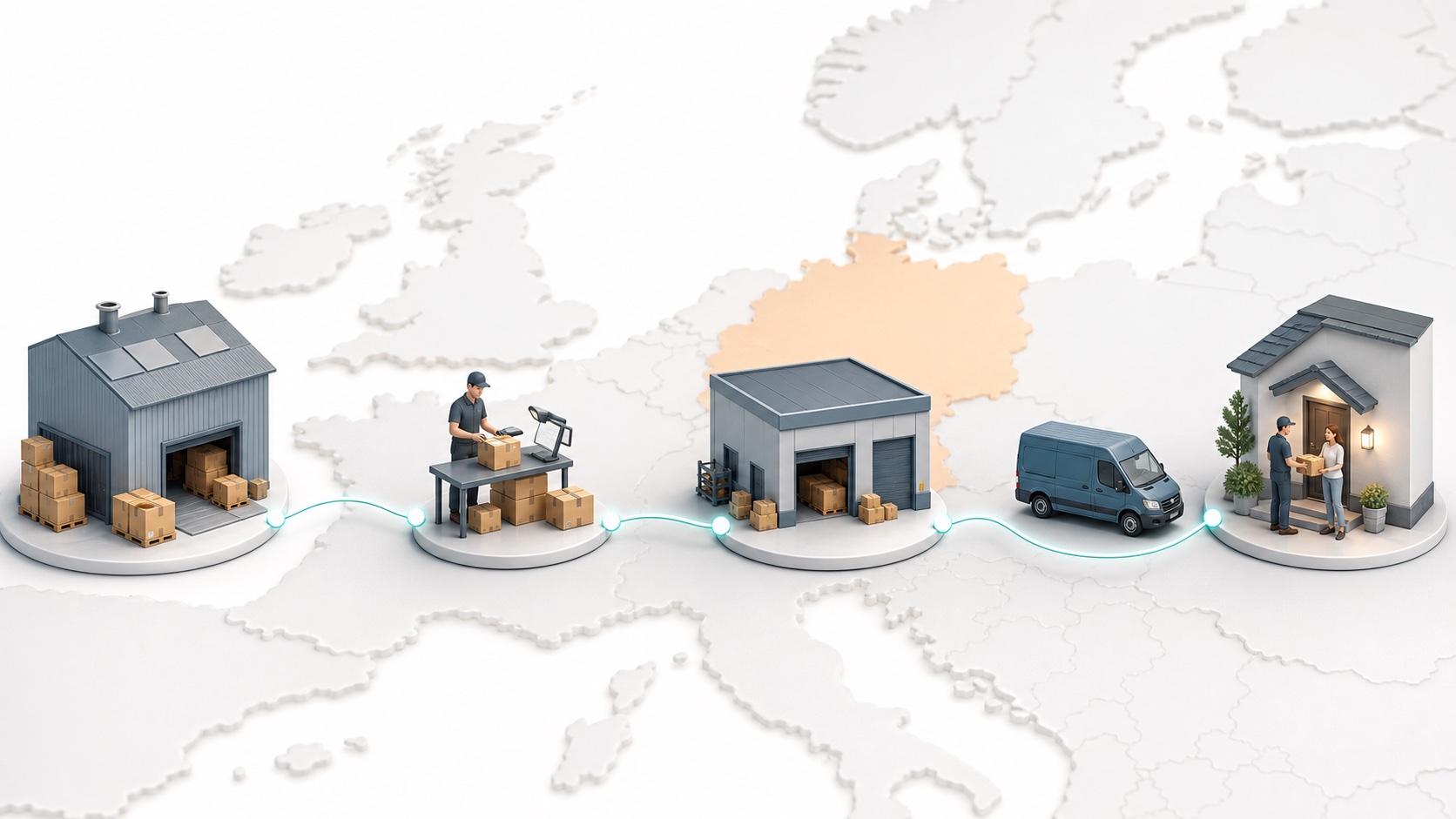
A typical order follows five steps:
- A customer in Germany orders from your website or marketplace listing.
- The order and customer details are sent to the supplier.
- The supplier picks, packs and dispatches the product.
- The carrier delivers it from German, EU or non-EU stock.
- Your business provides support, refunds and returns, coordinating with the supplier behind the scenes.
“German dropshipping” can describe a German wholesaler, an EU warehouse or an overseas factory sending individual parcels. These routes do not have the same VAT, import, packaging, delivery or returns consequences.
Is Dropshipping Legal in Germany?
Yes. Germany does not prohibit a retailer from asking a supplier to dispatch directly to a customer. The business model must still comply with the same rules that apply to other online retailers, plus obligations created by the chosen import and fulfilment route. Our broader guide to whether dropshipping is legal explains why the fulfilment method itself is not the problem; the risks come from how the store, product and supply chain are operated.
For a merchant established in Germany, selling goods for profit will normally be a commercial activity. The business usually needs to register its trade and complete the tax registration process. ELSTER provides the official electronic questionnaire for sole proprietors. Discuss the legal form and tax treatment with a German adviser when the facts are not straightforward.
A foreign business does not automatically become a German company because it has German customers. However, German stock, importing, local activity and the sales channel can still trigger registrations or obligations.
The store itself also needs transparent operator information. Section 5 of Germany’s Digital Services Act requires specified provider details for business digital services to be easily recognisable, directly accessible and permanently available. In normal ecommerce practice, that means a properly prepared Impressum, along with customer terms, privacy information, withdrawal information and other notices appropriate to the store.
Why Germany Is a Strong but Demanding Market
Germany offers scale, strong logistics and EU access. Its experienced buyers compare tax-inclusive prices, tracking, German-language support and returns. Advertising cannot compensate for surprise customs bills or an impractical return address.
Build the offer around five market realities:
- Localisation is more than translation. Product claims, size information, safety warnings, checkout, email notifications and support replies must make sense in German. Machine-translated copy should be reviewed by a fluent speaker.
- The dispatch location matters. “Ships to Germany” is not the same as “ships from Germany” or even “ships from the EU.” Confirm the exact stock location for every SKU and variant.
- Buyers need the complete price. The customer should understand the product price, VAT treatment, delivery charge and any potential import cost before ordering. A cheap product followed by carrier collection fees is a poor offer.
- Returns are part of the product. A margin that works only when nobody withdraws, reports a defect or rejects a damaged parcel is not a real margin.
- Documentation must exist before the listing. Product identification, manufacturer or responsible-person details, warnings, conformity records and packaging evidence cannot be improvised after a marketplace asks for them.
Choose the Right Operating Model
Choose the supply-chain model that matches your customer promise, not simply the lowest catalogue price.
| Model | Main advantage | Main trade-off | Best use |
|---|---|---|---|
| German supplier with German stock | Short domestic route and simpler returns | Smaller catalogue or higher unit cost | Products where speed and trust drive conversion |
| EU supplier or EU warehouse | No routine customs border between EU member states | Stock may be outside Germany and returns remain supplier-specific | Multi-country expansion and broader European catalogues |
| Non-EU supplier shipping per order | Broad choice and low-inventory testing | Import VAT, customs data, longer route and difficult returns | Carefully controlled tests of low-risk, parcel-friendly products |
| Managed sourcing partner | Product sourcing, quality checks, consolidation and branding support | Not automatically domestic German fulfilment | Validated products that need better specifications and brand control |
| Hybrid model | Fast stock for winners plus flexible testing for new items | More systems and inventory rules to coordinate | Stores moving from product tests toward a durable brand |
German or EU stock
Domestic stock offers a short route, no import event at the customer’s door and potentially simpler returns. EU stock can provide similar benefits when goods are already in free circulation.
Do not trust a country filter alone. Ask for the warehouse and return addresses, recent tracking, carrier service and stock data. Confirm that the exact variant is held there rather than rerouted from overseas.
Direct shipping from outside the EU
This model can work for testing, but decide who imports, how VAT is collected, whether duty applies, which customs data are used, and whether the recipient could be charged on delivery.
A route with weak tracking, customs delays or no workable loss claim can cost more after refunds. Avoid oversized, fragile, battery-powered or safety-sensitive products until the supplier has proven a compliant route.
Managed sourcing and brand development
A sourcing partner is useful when the product is already validated and the store needs a defined specification, factory communication, pre-shipment checks, consolidated purchasing or custom packaging. USAdrop provides sourcing, quality-checking, private customisation and global fulfilment services. It is not a German domestic supplier, so a seller targeting Germany must still confirm the SKU’s origin, route, landed cost, processing time, product records and return process.
The practical value is control, not a blanket speed claim. Through a managed sourcing and fulfilment service, a retailer can quote a specification, compare samples and include packaging or labelling requirements in the brief.
How to Start Dropshipping in Germany Step by Step
1. Define one customer and one product problem
Start with a narrow German audience and a clear reason to buy. Research German marketplaces, reviews, forums and search results to learn customer language and complaints. Check whether the value is clear without exaggerated claims and whether the price can absorb VAT, support, returns and acquisition.
2. Select low-friction products
An early product should be compact, robust, easy to demonstrate and difficult to size incorrectly. It remains subject to applicable safety rules but lowers operational exposure while the team learns.
Approach toys, electronics, batteries, cosmetics, food, supplements, protective equipment, medical claims and children’s products cautiously. Many have category-specific duties. “CE certified” is not a complete answer; the applicable conformity process and records matter more than a logo in a supplier photo.
3. Set up the business and tax workflow
Complete the appropriate registration before taking orders. A Germany-based founder should map trade registration, ELSTER, bookkeeping, invoices and VAT. An overseas seller should map the establishment, stock, importer and possible local registrations.
In dropshipping there can be two sales but one physical movement. VAT follows the transactions and transport facts, so use an adviser familiar with ecommerce chains.
4. Shortlist suppliers by evidence
Compare at least two suppliers against the same specification. Request the legal identity, warehouse, stock-update method, ordering workflow, carriers, returns and required product documents.
If you use an agent, directory or platform, separate its role from the manufacturer’s role. A catalogue platform may automate orders without owning the goods. A sourcing agent may negotiate with factories without being the EU importer. Use this dropshipping-agent evaluation guide to structure the operational questions, then document which party owns each responsibility.
5. Order samples through the real route
Send a sample to Germany using the same warehouse, shipping line and packaging intended for customers. A premium courier test proves little if normal orders use an untracked route.
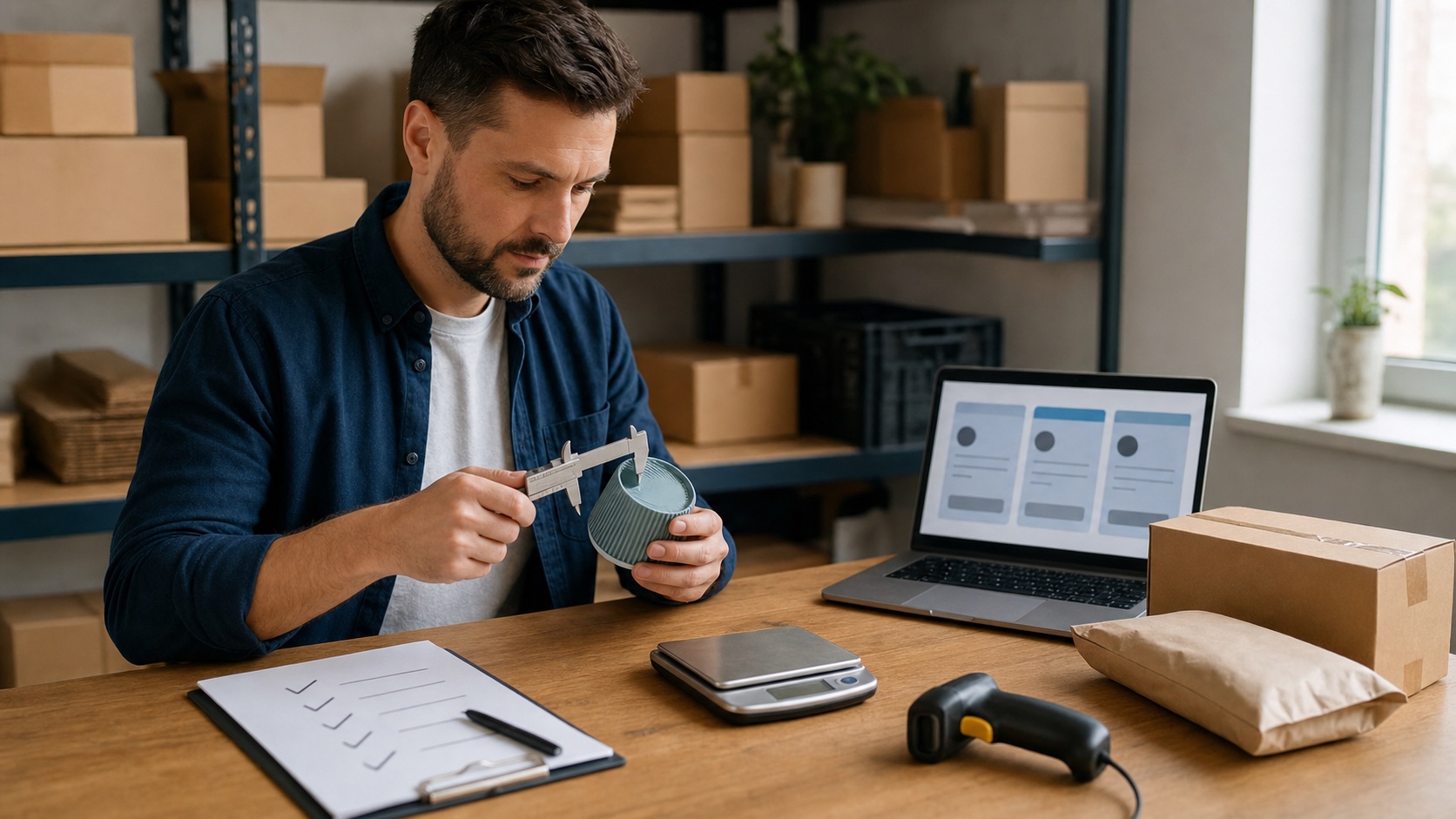
Record processing, tracking, customs events, delivery, packaging, product quality and safety information. Photograph the parcel and run a mock return and damage claim.
6. Build a German-ready storefront
Use natural German throughout the buying journey. Show the required price, delivery, payment, identity, privacy, withdrawal and return information. Do not imply a German office, warehouse or origin that does not exist.
Show the actual variant, dimensions, materials, contents, compatibility and required safety information. Remove unsupported health, environmental, performance and origin claims.
7. Configure order and inventory controls
Connect product, order and tracking data, while monitoring price changes, stock-outs, invalid addresses, missing scans and pre-dispatch cancellations.
Keep manual catalogues small and use a stock buffer. Test whether automated cancellations, partial refunds and tracking updates sync correctly.
8. Create the returns and service operation
Publish a policy that matches consumer rights and the route you can operate. Decide the return address, inspection owner, refund trigger and treatment of non-defective goods.
German-language support needs supplier and carrier information plus authority to resolve lost, damaged, wrong and late orders.
9. Calculate contribution margin
Calculate profit per delivered order. Include VAT, product, fulfilment, freight, imports, payment and platform fees, advertising, discounts, returns, reshipments, chargebacks, support and compliance.
Run at least three scenarios: expected, delayed-delivery and high-return. If the product becomes unprofitable after a modest return rate or a small increase in freight, the offer is too fragile.
10. Launch a controlled test
Start with a small product set and daily order ceiling. Compare promised delivery with actual results and calculate contribution after refunds.
When demand becomes repeatable, consider reserved EU stock, a documented specification, inspection or a small local-fulfilment batch.
How to Vet Suppliers and Fulfilment Partners
Supplier due diligence should produce evidence usable during an order problem or regulatory check. A polished sales page is not evidence.
Verify the business and stock
Check the legal entity, address and contact information. Validate an EU VAT number when relevant. Confirm who owns the inventory, the actual warehouse, recent tracking and how stock is reserved after payment.
Verify the product
Request the current specification, relevant test and conformity records, warnings and instructions. Match each document to the SKU; a report for a similar item is not enough. Identify the applicable EU economic operator and confirm how required traceability appears on the product and online offer.
Verify the service level
Put dispatch, tracking, loss claims, cancellations, returns and reimbursement timing in writing. Score samples consistently; a slightly higher price can produce a better margin when exceptions are resolved quickly.
Germany and EU Fulfilment Strategy
The right fulfilment strategy changes as sales become more predictable.
Stage 1: Controlled product testing
Use per-order fulfilment for a few low-risk products. Keep the promise conservative and do not scale advertising before customer-like test orders arrive.
Stage 2: Reserve or pre-position winning stock
When demand stabilises, compare direct-per-order freight with bulk movement into an EU warehouse. Pre-positioning can improve delivery and returns but creates inventory, VAT, packaging and fulfilment responsibilities.
Stage 3: Build a resilient hybrid network
Qualify a backup for each key product, carrier or region. Preserve the approved specification and track defects by source. The goal is a predictable promise: correct availability, full price, useful tracking and a known return route.
VAT, OSS and IOSS: Keep the Routes Separate
Germany’s general VAT rate is 19%, while reduced or zero rates apply to specified goods. The rate alone does not determine where VAT is due or which registration is needed. Start by drawing the physical movement and the two commercial transactions.
Domestic German stock
If goods are already in Germany and are sold to a German consumer, the transaction is generally handled under German VAT rules. Holding stock in Germany can create a German VAT registration requirement for a foreign business even when sales are reported elsewhere. Confirm the position before inventory is moved.
EU stock sold across borders
Official EU One Stop Shop guidance explains the available schemes. The Union OSS can simplify eligible cross-border B2C VAT reporting: an eligible seller registers through one member state’s portal, applies the customer’s country rate where required, and reports covered sales through OSS.
OSS does not replace every VAT registration. Domestic sales, stock transfers, imports and local inventory can sit outside the simplified return. The EU-wide EUR 10,000 threshold sometimes discussed online has specific conditions and should not be treated as a universal tax-free allowance.
Goods imported directly from outside the EU
The Import One Stop Shop is designed for distance sales of imported consignments with an intrinsic value not exceeding EUR 150. It allows VAT to be collected at checkout and reported through the IOSS system, helping avoid a VAT collection request at delivery. IOSS is different from Union OSS and does not cover higher-value consignments.
Marketplaces can be deemed the supplier for VAT in specified cases, including certain imports up to EUR 150. Do not assume that a supplier or platform’s IOSS number automatically covers your independent website sale. Confirm who makes the taxable sale, whose IOSS arrangement is used, how the identifier reaches the customs declaration, and which value is declared.
For all cross-border models, decide the importer of record and delivery terms in writing. A duty-paid experience may support conversion, while delivery with charges unpaid can create refusals and support costs. The correct choice depends on the route and provider; never describe a shipment as “tax free.”
VerpackG and LUCID for Dropshipping
Germany’s Packaging Act is often oversimplified into “every dropshipper needs a LUCID number.” The official Zentrale Stelle Verpackungsregister guidance draws an important distinction between a pure dropshipping seller, the company that actually sends the packaged goods, and a retailer commissioning a fulfilment provider.
Pure dropshipping
Under the ZSVR’s official drop-shipping guidance, a seller that sells for its own account but never touches the goods is not the producer for the packaging it sells because it does not first place the filled packaging on the German market. It therefore does not register or participate for that packaging in this specific model.
That does not mean the seller can ignore VerpackG. It must verify that its contractual counterparty—the dropshipping sender—is registered in LUCID and meets the system-participation requirement for shipment packaging. A marketplace seller may need to provide evidence of the sender’s compliance. For an international company sending the goods to German customers, the ZSVR says the sender is responsible in the described dropshipping scenario.
Fulfilment or own inventory
The answer changes when you own stock and commission a fulfilment provider to pack and send it. The ZSVR’s fulfilment guidance states that the ordering party carries the relevant packaging duties for shipment packaging: registration, system participation and data reporting. Importing or selling under your own brand can also change the responsible party for retail and grouped packaging.
Map the real operation instead of relying on a label. Keep the sender’s LUCID registration and system-participation evidence, check it periodically, and update the analysis when stock, packaging or fulfilment ownership changes.
GPSR, Product Safety and Seller Responsibility
The EU General Product Safety Regulation applies to consumer products offered online as well as offline. It has applied since 13 December 2024 and strengthens traceability, distance-sale information, complaint handling and corrective-action duties. Product-specific EU laws continue to apply alongside it.
Before listing a consumer product, confirm:
- the manufacturer and product identifier;
- an EU-based responsible economic operator for products covered by the GPSR;
- the name and contact details that must appear on the product, packaging and online offer;
- warnings and safety information in a language German consumers can understand;
- traceability through model, batch or serial information where applicable;
- risk assessment, test and conformity records appropriate to the category;
- a process for complaints, accidents, withdrawals, recalls and authority requests.
If the product falls under harmonised EU legislation, check whether CE marking is required and obtain the relevant EU Declaration of Conformity and technical evidence. CE is not a general quality badge and must not be applied to products outside the applicable rules.
Your legal role depends on the chain. Importing a product from outside the EU can make a business the importer with verification and contact-detail duties. Selling a product under your own name or trade mark can cause an importer or distributor to assume manufacturer responsibilities. Private labelling should therefore start with a compliance review, not a logo file.
Use the EU Safety Gate to screen risk patterns. Connect each listing to its approved factory, model and documents. Pause sales and follow the applicable reporting and corrective-action process if a serious issue appears.
The 14-Day Withdrawal Right and Returns
Under the EU’s distance-selling guidance, customers normally have 14 days after delivery to withdraw from online goods purchases without giving a reason when properly informed. Missing withdrawal information can extend the period by an additional year.
After being told of the withdrawal, the trader generally must reimburse the customer within 14 days. The refund can normally be withheld until the goods arrive or the customer supplies evidence of return. The trader reimburses the original standard-delivery cost; an upgrade such as express delivery does not have to be refunded beyond the standard amount.
Customers can be required to pay the direct return cost only if they were informed in advance. Exceptions exist, including certain personalised, perishable and unsealed hygiene-sensitive goods. Do not apply an exception without checking that the exact product and circumstances qualify.
Withdrawal is different from a faulty-goods claim. EU rules provide a minimum two-year legal guarantee for goods that are faulty or not as advertised, with the retailer responsible for the remedy. A supplier’s seven-day defect policy does not reduce the customer’s rights.
Design the dropshipping return policy around an operational decision tree:
- Is this a withdrawal, damage, defect, wrong item or loss?
- What evidence is reasonably needed?
- Where does the product return, and who issues the label?
- Who inspects it and authorises the remedy?
- How is supplier reimbursement reconciled after helping the customer?
A German or EU hub can consolidate and inspect returns even when outbound goods ship internationally.
Costs and Profit: Use Landed Contribution, Not Gross Markup
A product that costs EUR 12 and sells for EUR 39 does not create EUR 27 of profit. The retail price paid by a German consumer can include VAT, and the order generates several costs before the owner earns anything.
Use this formula:
Net sales revenue − product cost − fulfilment and freight − import costs − payment and platform fees − advertising − discounts − expected returns and reshipments − support and compliance overhead = contribution margin
Model margin by SKU and route, using real return and defect costs. Include the delay between refunding a customer and recovering supplier money.
Track these operating metrics weekly:
- contribution margin per delivered order;
- delivery within the promised range;
- first carrier scan time;
- cancellation, return and defect rates;
- refund time;
- tickets per 100 orders;
- supplier reimbursement rate;
- stock-out and wrong-item rate.
If margin improves only because customer service, compliance work or founder time is treated as free, the product is not ready to scale.
Supply-Chain Risks and How to Reduce Them
Inventory and price drift
Use frequent synchronisation, price buffers, catalogue limits and listing pauses when stock or cost changes. Never substitute a product without customer consent.
Split shipments
Show shipment-level tracking and avoid bundles that depend on uncoordinated warehouses.
Customs delays and recipient charges
Use a partner that validates customs data, importer terms and whether charges are collected before or after delivery.
Quality changes after the sample
Lock the specification, keep a reference sample, inspect batches and record defects by factory and lot.
Supplier concentration
Qualify a backup before the main supplier, carrier or warehouse fails, and keep promises compatible with both sources.
Regulatory document gaps
Approve documents before listing. Remove products when the responsible operator, traceability or required evidence cannot be verified.
Common Mistakes When Dropshipping to Germany
- Pretending to be local. German imagery, a city name or a
.dedomain does not justify claiming German stock or origin. - Confusing an EU delivery destination with EU inventory. Verify the physical dispatch point for each variant.
- Copying a supplier’s delivery headline. Measure processing and transit through the real route and advertise a range with a buffer.
- Treating IOSS as a universal import solution. It covers eligible imported consignments up to EUR 150 and must match the actual sale and customs data.
- Assuming the platform owns compliance. A marketplace, app, manufacturer, importer, agent and fulfiller have different roles.
- Using LUCID advice for the wrong model. Pure dropshipping and fulfilment of your own stock produce different packaging responsibilities.
- Listing first and requesting documents later. Compliance evidence must match the exact SKU before traffic is purchased.
- Sending every return overseas. High postage and slow inspection can erase margin and damage trust.
- Overusing supplier photos and claims. Create accurate German copy based on the approved product and substantiated evidence.
- Scaling revenue before measuring contribution. Growth can accelerate refunds, support work and tax liabilities faster than profit.
Germany Dropshipping Launch Checklist
Before the first order, confirm that you can answer “yes” to each point:
- The business and tax setup fits where the company, stock and customers are located.
- The store has a reviewed German-language buying journey and required legal information.
- The exact product variant has been sampled through the intended route.
- The supplier’s legal identity, warehouse and return address are verified.
- The product has the required manufacturer, responsible-person, traceability, warnings and conformity records.
- Packaging responsibility is mapped, and LUCID/system-participation evidence is stored where required.
- VAT collection, OSS or IOSS use, customs data and importer terms are documented.
- The customer sees a realistic delivery range and no hidden import surprise.
- The 14-day withdrawal process and faulty-goods remedies are operational.
- The margin model includes VAT, freight, returns, support and compliance costs.
- A stop-sale rule and backup plan exist for stock, quality, delivery or safety failures.
Frequently Asked Questions
Is dropshipping in Germany profitable?
It can be, but profitability depends on contribution margin after VAT, freight, advertising, returns, defects, support and compliance—not on catalogue markup. German or EU stock may cost more per unit but reduce delivery and return costs. Test a small catalogue and use actual order data before scaling.
Does every dropshipper need LUCID registration?
No. ZSVR distinguishes pure dropshipping from fulfilment. In a pure model, the sender carries the packaging producer role described by ZSVR, while the dropshipping seller must verify the sender’s compliance. When the seller owns stock and commissions a fulfiller to pack it, the ordering party normally carries the shipment-packaging duties. Check the precise facts.
Can I dropship products from China to Germany?
Yes, if the products, online offer, VAT collection, customs data, importer arrangement, packaging and consumer process comply with applicable rules. Direct import also creates longer-route and return risks. Start with low-risk products, verify the EU responsible operator and documents, and test the complete delivery experience.
Is a CE mark required for every dropshipping product?
No. CE marking is mandatory only for categories covered by specific harmonised EU legislation. For covered products, the responsible parties need the correct conformity assessment, technical documentation, declaration and marking. For other consumer products, GPSR and any relevant category rules still apply.
Must a German customer be allowed to return an online purchase?
For most goods bought online, consumers have a 14-day withdrawal right after delivery when correctly informed. Exceptions exist for specified products and circumstances. Faulty-goods remedies are separate from withdrawal and cannot be reduced to the supplier’s own return window.
When should I move from dropshipping to EU inventory?
Consider pre-positioning stock when demand is repeatable, per-order international freight is expensive, delivery variability limits conversion, or returns need a local process. Compare the operational gain with inventory risk, VAT registrations and packaging duties. A controlled ecommerce fulfilment setup can be the next stage for proven products.